Nutrition

Why Do Beans Make You Fart So Much?

Eat-Beans-for-Better-Belly-Health-Final-752x472.jpg

Beans, beans the musical fruit, the more you eat, the more you toot. The lyrics to the classic childhood song may be silly but, as anyone who’s over-indulged in the bean dip knows, those words can be embarrassingly accurate. However, what’s considered impolite is actually a sign your digestion is on track.

“Beans have soluble fiber, insoluble fiber and amino acids,” says Gretchen George, RD and professor at San Francisco State University. “We need these for healthy balance in our gut and amino acids for protein building.”

We know that beans are so good for you. The real question is: Why do they make you fart so much?

“Flatulence often occurs for two reasons,” explains George. “First, a person is not used to eating fiber.” In this case, George suggests adding it to a diet more regularly and gradually increasing the amount over time.

“Second, the diversity of the microbes in the gut may be low. Eating more probiotics to populate the gut and more prebiotics to feed the microbes in the gut will help.”

Think of these microbes as a microscopic farting factory in the human digestive system. Everyone has naturally occurring microbes in their intestines. When carbohydrates come down the pipe by eating high-fiber foods, like beans (a natural prebiotic), the microbes feed on those carbs and it’s that feeding that creates the gas. The gas then allows our bodies to absorb the nutrients in the food.

To all the people following the latest diet trend to avoid beans (yes, Paleo-people, this means you) you’re missing out on some seriously health-inducing farts.

When you crunch the numbers, beans add up to be about as caloric as lean meat. The difference is that beans are mostly water and fiber, which makes you feel full longer. One cup of pinto beans has 15 grams of fiber (about 62% of your RDA) and 245 calories. The same portion of lean chicken breast has 231 calories and lean tri-tip has a whopping 970 calories, but both provide zero fiber.

“The bulking component of fiber can make a person feel more full and also metabolically have more stability with blood glucose,” says George.  “This aides in control of hunger, thus helping with weight loss.”

Losing weight is obviously the goal for many, but that’s only one of the tootin’ benefits of a bean-heavy diet. While good for the waistline, beans may also help in decreasing your chances of serious diseases like cancerdiabetes and heart disease since being overweight increases the likelihood of developing these diseases. It’s also been proven to lower cholesterol.

Beans are good for you because they make you fart and farting is really good for you. However, does anyone really want to be breaking wind with every step, shimmy and squat? Unless you’re a caveman, the answer is likely no. So there’s a few things you can do about it:

1. COOK THE BEANS YOURSELF 

While canned beans are convenient, you have zero control over the amount of gas-producing starch in them. Try buying good-quality dried beans and then soaking and cooking them yourself.

2. CHANGE THE WATER

Ideally, beans need to soak before cooking, preferably overnight, so they can absorb water and soften. By changing the water a couple of times while they soak, you help remove the excess starch. Then simmer them (using another round of clean water) until tender. Most beans won’t need more than 20 minutes to half an hour if they’re well hydrated, so most of the effort is the ‘set it and forget it’ type.

3. ADD GINGER OR ORANGES

Some people think adding a bit of raw ginger or eating oranges before you eat the beans helps, too. We’re not sure about this, but it’s an old wives’ tale so why not try it? In the end, everyone’s gut is different and will have different reactions. So try both and see how it works for you.

Above all, the next time you’re out and about and feel the need to let one go, don’t be shy. Like a burp is a compliment to the chef, your booty is just ripping you a big message of thanks for giving it the good stuff.

Thanks to Amy Machnak and the myfitnesspal blog for this great article. I’m so glad to have a good reason to talk about farts.
Fitness, Nutrition

What If You Were As Serious About Your Health As You Are About Your Job?

quote 1

Think about this with me for a minute. You have a job. You need a job. It pays you so you can buy things you need and maybe even a few extras. You have to show up every day and give you best effort at your job, because if you don’t there will be trouble. With me?

You won’t let yourself fail at work because you need the job. You are focused at work. You do what needs to be done. You might even go above and beyond the call of duty and eventually get rewarded for it. You have proven that you are capable of focus, consistency over time, and hard work. You are a hard worker!

What if you took even 1/2 of that focus, consistency, and effort and applied it to other areas of your life? Would you be a better spouse, parent, friend? What would your health look like with this kind of effort? I talk to people all the time who are great at their work, but their health is not so great. They don’t have time, or they are too tired they say.

Baloney.

Listen, you need to take care of your health as if it were part of your job. If your health fails, can you work? If you are overweight, stiff, exhausted, or frequently ill can you properly take care of your kids and spouse? In order to be your best at the roles that are most important to you, you need to optimize your health.

So what are you waiting for? It’s never too late to start. You can make changes to your health now that will help you be your best in the future. But don’t wait. There is a sliding scale of returns on your health investment. The longer you wait the harder it will be to get where you want with your health.

Your health is your job. In fact, it is your most important job. I beg of you to take your health seriously. You have one life to live, one chance to make an impact on this world, one chance to leave a lasting and positive legacy for future generations. Don’t be held back from being your best because you chose to lay on the couch and eat junk food. You are better than that. You know you can do it, because you do it at work. Treat your health like your job. Put in the focused effort to eat well, to exercise, and to be consistent at it over time. You will be rewarded for your work and it will feel better than the raise or promotion. You will be your best at life AND your job.

There are lots of ways to go about improving your health. Everyone starts at a different place. There are no cookie cutter solutions. That’s one reason why I think it’s important to have a coach or advocate on your side. Someone who is willing to work with you, to help you, encourage you, kick you in the pants once in a while. Find someone to be that for you. Ask me. I will help you. No nonsense, no fluff, no pills, patches, wraps, or magic elixirs. You can do this. Let’s go!

Fitness

The Truth About Lower Ab Workouts That You Don’t Want to Hear

025a

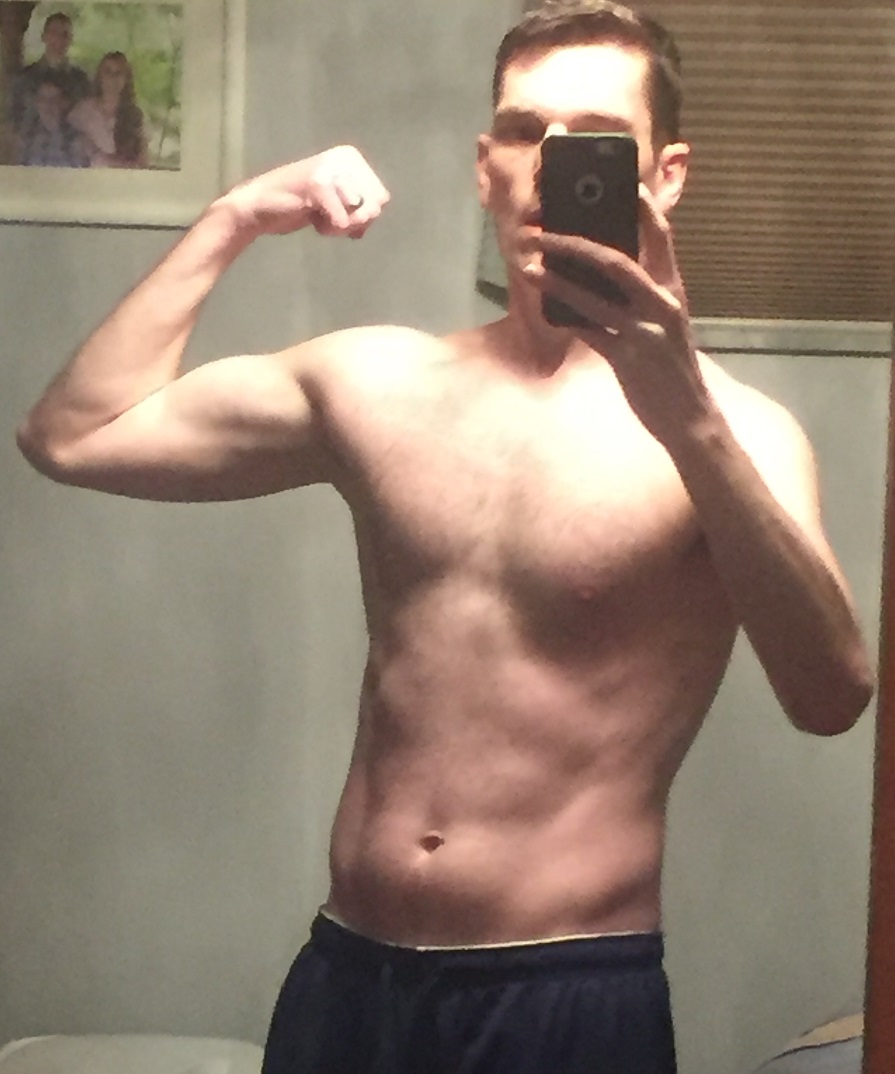
As a Beachbody Coach and CEO of my own fitness, nutrition, and healthy living company, I hear a lot of people complain about their mid-section. I am one of them. Forever I’ve had this annoying fatty area just below my belly button that won’t go away. You can see from the photo above that I still have some work to do, lol. What can I say, I’m a work in progress. 🙂 I digress… So in my quest to help others with this, while helping myself, I’ve learned a few things I’ll share with you now.

There are several misconceptions behind the question of how to deal with this lower ab area, so I’ll take them one at a time.

You Can’t Isolate Parts of Muscles

Thanks in large part to the bodybuilding approach to fitness—in which you divide your body into segments, like a butcher’s diagram of a beef steer—many people believe that muscles, and even parts of muscles, can be worked in isolation from one another. So they believe it should be possible to perform an exercise that specifically targets that six-inch square section of flesh below their navels.

Unfortunately, it doesn’t work like that. Muscles tend to work in groups. Even a simple action like getting up from a chair activates muscles from your neck to your ankles. And forget isolating a part of a muscle. Much like bungee cords, muscles tend to stretch and shorten along their entire lengths.

That’s true of the rectus abdominus, or six-pack muscle, as well. Contract the “lower abs,” whatever those are, and you inevitably contract the entire muscle from its point of origin at the front lower edge of your rib cage to its point of insertion at the front of your pelvis.

There are, of course, effective ways to build a rockin’ six-pack. There’s just no such thing as working your “lower abs.” You either contract your abdominal muscles—all of them—or you don’t.

The Truth About Lower Ab Workouts That You Don't Want to Hear

Your Muscles Probably Aren’t the Problem Anyway

What most people think of as weakness or lack of tone in the lower abs is more likely just a dollop or two of fat around their waist. In both men and women, the lower belly tends to be an area where even relatively lean people carry some fat. Can I get a witness?!?Women’s fitness magazines like to call these areas “trouble spots,” though personally I find it more troubling when people obsess over seeing veins pop out in areas where both the Vera de Milo and Farnese Hercules were smooth. Hope that last link made you laugh!

Just because you can pinch an inch—or two, or seven—around your lower belly doesn’t mean the muscles underneath are weak. Consider this: most football linemen carry a few extra inches of fat around their bellies. Average body fat for these athletes, according to an NCAA Sport Science Institute study, is almost 25 percent.

But the strength and durability of a lineman’s core muscles—which enable him to deal out dozens of bone-crushing, full-body blows in a 60-minute game—is world class. The upshot: carrying some body fat around your middle doesn’t mean your core is weak. And having a strong core doesn’t guarantee that you’ll be lean. Which is a perfect segue into my next point…

You Really, Seriously Can’t Spot-Reduce

Although following strategies for reducing overall body fat can help your abs’ overall appearance, there’s no surefire way to target fat in specific areas. Go for a run and you might burn fat off your face rather than your legs. Rip off 50 pushups and you might burn fat from your thighs rather than your chest.

Trainers have been saying this for decades, but if you need further proof, check out this National Center for Biotechnology Information study showing that exercising the abs, though it does plenty for your core endurance, does little to decrease the fat on top of those muscles.

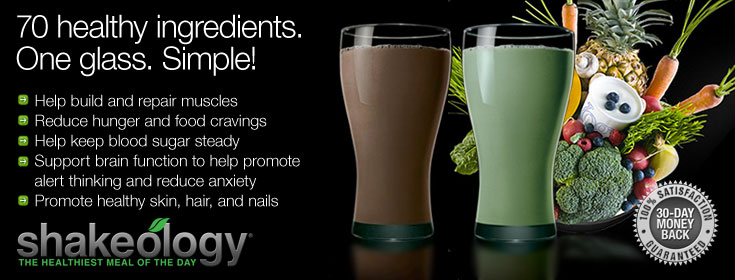
Where’s the good news in all this? Your entire abdominal musculature—top, middle, sides—will get stronger and more toned when you work them, just like the rest of your muscular system does. Planks, leg lifts, and many other ab-focused moves you’ll find in any Beachbody program will all help get your abs where you want them to be. And the fat cells on top of those muscles will shrink with a smarter diet. For example, a daily dose of nutrient-dense Shakeology can help you reduce cravings and lose weight (or maintain weight in my case). A mindset shift about food as fuel vs. a reward helps too. Eating real foods instead of packaged, chemical and sugar filled stuff marketed as health food is also key.

So if you’re looking for motivation to recommit to smart diet and good exercise habits, your “lower abs”—or whatever you want to call that area—might be it. Just don’t call it your trouble spot.

And if you wanna try some of the best workout programs ever created not just for abs, but total-body fitness, I encourage you to check out Beachbody On Demand. Hundreds of workouts are available for streaming anytime, anywhere. It sure has been a game changer for my healthy living journey! Combine BOD, a healthy eating plan, and my personal support to help you crush your goals, and you have everything you need. We can work on our “lower abs” together!

*Credit Andrew Heffernan and the Team Beachbody blog for doing the heavy lifting on this article.*