Fitness, Nutrition

Fit Food Spotlight: Sweet Potatoes

Sweet potatoes are not only delicious, they are also a nutrient powerhouse filled with complex carbs to provide steady energy throughout the day and during workouts. Easy to eat, easy on the gut and easy to cook, sweet potatoes are a great food to incorporate into your healthy eating plan.

FIT FOOD BENEFIT #1 – STEADY ENERGY DURING WORKOUTS

A medium-sized sweet potato contains 90 calories primarily from carbohydrates with some protein. The 20g of carbohydrates in one medium sweet potato are composed of 13g from starch (complex and slow-burning), 3g from fiber (complex and slow-burning) and 4g from sugar (fast-acting). The mix of complex and simple carbohydrates make sweet potatoes a great pre-workout ingredient for long-lasting, sustainable energy during any type of workout.

FIT FOOD BENEFIT #2 – RICH IN CANCER-FIGHTING ANTIOXIDANTS, VITAMINS AND MINERALS

Sweet potatoes are an excellent source of vitamin A, providing 89% of your daily value. They are also good sources of vitamin B5 and B6, providing 16% and 15% respectively. Vitamin A is a powerful antioxidant, which helps the body combat cellular damage. B-vitamins provide an energy boost, improve brain function and cell metabolism. In addition to antioxidants and B-vitamins, sweet potatoes are also a good source of calcium, iron, magnesium, phosphorus, potassium, sodium and zinc. Compared to other common pre-workout foods like white bread toast, sugary cereals or granola bars, sweet potatoes enhance the quality of your overall diet in addition to providing a great energy boost for workouts.

FIT FOOD BENEFIT #3 – CONTROLLING BLOOD SUGAR

Sweet potatoes with the skin have a glycemic index of 41, which is relatively low compared to other carbohydrate-rich foods. This makes them not only great for slow-burning fuel for workouts but also controlling blood sugar for those who live with pre-diabetes, diabetes or hypoglycemia (low blood sugar). Studies show sweet potatoes to be a beneficial source of complex carbohydrates for people with pre-diabetes and diabetes.

FIT FOOD BENEFIT #4 – VERSATILE AND EASY TO MAKE

Poke holes in a sweet potato with a fork, pop it in the microwave and press the potato button. If your microwave doesn’t have a button specifically for cooking a potato, try 3–5 minutes. A microwaved sweet potato with a dollop of 0% plain Greek yogurt and salsa on top makes a great pre-workout meal in less than five minutes. In addition to cooking them in the microwave or roasted whole in the oven, try making potato cakes or potato pancakes.

THE BOTTOM LINE

Sweet potatoes are an easy pre-workout snack to provide a valuable boost of energy to enhance performance and add nutrients to your overall diet. Their nutritional profile helps to control blood sugar and provides a steady stream of energy throughout your day and workout. In addition to being a great pre-workout snack, they are filled with beneficial antioxidants, fiber, vitamins and minerals to benefit overall health and prevent disease. On top of all those benefits, they are delicious, satisfyingly sweet without adding too much sugar and easy to make.

Kristen Arnold, MS, RDN, CSSD  is a registered dietitian (RD), professional cyclist and cycling coach. She is a board-certified specialist in sports dietetics (CSSD), received her master’s in human nutrition (MS) from Ohio State University and is a Level2 USA Cycling coach with Source Endurance LLC. Her private practice nutrition counseling business focuses on performance nutrition for athletes. Kristen competes in national-level cycling races across the USA as a professional cyclist for ButcherBox Pro Cycling.


Fitness

7 Healthy Habits for Your Second Half

Everyone knows one key to long term healthy living is to stay active. But many aged in their 40’s or 50’s find their body doesn’t behave like it used to — joints hurt, muscles are stiff and stamina is very different than when they were 20 or 30.

Thankfully, taking action right now can help prevent, and certainly delay those ailments so you keep doing your favorite sports and activities into your golden years. Let’s look at 7 things you can do now that your future self will thank you for.

1 REMEMBER: FOOD IS FUEL

Eating the right kinds of food helps you maintain a healthy body weight, gives your body the vitamins and nutrients it needs and keeps your immune system in tip-top shape. Eating the wrong kinds of food, however, can lead to weight gain and chronic inflammation, which could worsen aches and pains and impact your recovery. Your body is a finely tuned machine that requires premium fuel to function optimally. Focus on eating whole foods — lean meats, lots of veggies and fruit and good sources of carbs — and drinking plenty of water.

2 REST EASY

Many people struggle to get the necessary amount of sleep and ultimately rely on caffeinated drinks to help them get through the day. If you’re pushing your body week after week, year after year, then you need to make sure you improve your sleep quantity and quality. That’s because deep sleep is when your body repairs and rebuilds itself from all your training and exercise. Read How To Sleep for more specific tips. 

3 GET QUIET

Stress from work, family, finances, etc., adds up fast. Stress puts a lot of strain on your autonomic nervous system, increases your stress hormones and negatively affects your health. This makes it to harder to recover from exercise, limits the results you’ll see and may even contribute to injuries and health problems.

To prevent this, take at least 10 minutes every day to decompress. Turn off your phone, close your computer, put in some earplugs or headphones, close your eyes and focus on breathing from your belly. I prefer to have some quiet time first thing every morning, before the demands of the day hit me. Prayer, reading for personal development, and journaling are all great exercises to help you calm your mind and set your intention for the day. Mental health is super important, so don’t neglect this one.

4 “LIVE TO FIGHT ANOTHER DAY”

If you are active and pushing hard, you will likely get hurt or injured at some point. Although it’s tempting — or even a badge of honor — to “push through the pain,” for long-term results, this is a bad idea.

Don’t just think about today’s game or today’s workout. Think about the long game. Your healthy living journey lasts for life. If you tweak something in the gym or on the court, shut it down for the day. Rest, repair, recover and come back healthy and strong.

5 MIX WORKOUT INTENSITY

Workouts like sprints intervals, heavy weights and intense circuits are great, but they can also be stressful on your body. Everything from your joints to your nervous system needs time to rest and recover after hard-hitting training. But if you do them all the time, it will lead to fatigue and potentially cause injuries.

Instead, add at least 1–2 low-intensity workouts every week. For 20–40 minutes, do easy aerobic work to get the blood flowing, (which helps your muscles recover and improves your cardiovascular health), and finish with some gentle foam rolling, stretching and breathing. Find a way to get some yoga into your routine. It doesn’t have to be all weird and spiritual, but the movements and stretches are literally the fountain of youth.

6 BE CREATIVE

The more you specialize in only one sport or one style of training, the more likely you’ll develop overuse injuries and muscle imbalances because of all the repetition. Instead, incorporate new sports, movements and skills into your life. For example, if you ski, try martial arts. If you’re a runner, then add swimming to your routine. If you love to lift weights, take do some yoga once a week.

7 STAY MOBILE

As we age, our mobility and flexibility naturally declines, which can increase the risk of injuries and make it harder to do the activities we love. To enjoy plenty of exercise — no matter your age — take the time now to improve the range-of-motion in your body. Take care of your hips. Before every workout, do a dynamic warmup where you open your body and move properly. On your off-days, take a few minutes to stretch to help your body stay loose and mobile.

Thanks to Anthony Jeung from My Fitness Pal for doing some heavy lifting on this article.

Fitness, Fortitude, Nutrition, Personal Development

ConQuer Your Mind Part 2 – “Your Driving Force”

The following video expands on the chapter two idea “Compelling Why” from my e-book How To ConQuer Your Mind To Achieve Your Goals.

A common obstacle to goal achievement is obstacles. “Wow, that’s brilliant Chad. You are quite the guru.” I hear you. Just hang in with me. There will be obstacles to any goal worth achieving. Often, we give up when faced with obstacles because it just gets too hard. Ever been there?However, a clearly defined driving force will motivate you through your obstacles. Do your goals have a compelling driving force behind them? Watch the video to learn more.

You can get the e-book for free from the Team Quadzilla Facebook page, or directly HERE. Stay tuned for more videos to supplement the e-book content.

Fitness, Personal Development

Team Quadzilla FAQ

What is Beachbody?

A: Beachbody is the creator of the nation’s most popular fitness and weight loss solutions including P90X, 80 Day Obsession, PiYo, LIIFT4, Shakeology, and Beachbody Performance.  With a comprehensive approach that combines fitness, nutrition, and support, they created a complete solution for people who want to transform their lives, physically and mentally. Whether you want to lose weight, build muscle, or just learn more about nutrition and exercise, Beachbody has programs, products, and content to help you accomplish those goals. Beachbody’s purpose is to help people achieve their goals and enjoy a healthy, fulfilling life.

What is a Beachbody Coach?

A: That’s me.  I’ve been a Beachbody coach since 2014 because I want to help people live a healthy lifestyle and I believe Beachbody products are well suited to help.  My role is to encourage people like you to make healthy choices and reap the benefits of doing so. By reaching out to help others in this way I  get to do something that I enjoy, it helps me be accountable for my own healthy lifestyle, and it offers me the opportunity to make some money doing what I already do anyway.

What is a Team Quadzilla Challenge Group?

A: We regularly host “virtual” fitness & nutrition accountability groups either on social media or my favorite “pocket accountability partner,” the Beachbody Challenge Tracker phone app. Together we commit to hold each other accountable to stick to healthy choices for the duration of the challenge – usually 30-60 days. In the private group we share encouragement, healthy eating tips and advice, motivation to press on when the going gets tough, and strategies to defeat the common obstacles to achieving healthy living goals. Everyone’s goals will be different, but my hope is that healthy habits will be formed, body fat will be lost, energy, confidence, muscle, and fortitude will be gained, and we’ll all be encouraged by our success so much that we’ll keep right on going with healthy eating and regular exercise.

What is 90/10 Nutrition?

A:  Our go-to healthy eating resource is 90/10 Nutrition. I first learned about 90/10 in 2015 and it has since completely changed the way I eat. Their healthy eating philosophy is simple and straightforward. There is no calorie counting or restrictions. They provide free video training through the 90/10 Academy. 90/10 Nutrition offers nearly 1,000 healthy recipes, an active online community, a meal planner and shopping list generator,  and a blog with tons of helpful information about healthy eating. Their mission is to help you change the way you look at food so that healthy, real food nutrition becomes the way you eat forever.  Full disclosure: I receive a small commission from paid memberships to the 90/10 Nutrition program. I wouldn’t be their ambassador if I didn’t fully believe in their program.

How do I choose a workout regimen?

A:  I’ll answer with another question.  What do you like to do?  Whatever physical activity you like to do is probably the easiest thing you can choose to start with.  If you have workout videos at home already, I recommend dusting them off and trying that.  You don’t have to go to a gym to workout.  I don’t. Angie & I do Beachbody workouts 4-5 days a week with our Beachbody On Demand service that gives us access to ALL their programs. Having a world-class super trainer on screen and in our ear each morning is really encouraging and motivating. I can help you pick a program that suits you. I promise there is a plan for you and it will help you get fit, strong, flexible, and lose weight. Workout videos not your thing? That’s OK too. I will help you create a plan from my stock of Quadzilla Fitness Challenges or a specific training plan to suit your needs. Just ask!   

Do I have to buy anything to part of Team Quadzilla?

A: NO.  Absolutely not.  Team Quadzilla Challenge Groups are free to join. I truly want to be an encouragement to form healthy habits and help you meet your goals for fitness, nutrition, weight loss, event training, personal development, whatever! Subscribing to my blog or monthly newsletter is free also. If you are interested in healthy living content for your body, mind, and soul then you could benefit from joining Team Quadzilla.

Isn’t Team Quadzilla just your “front” to get me to buy Beachbody stuff from you?

A: Sheesh! Fair question though. Honestly, NO.  It is true that as a Beachbody Coach I get credit for the Beachbody products purchased through me as your coach, but making money from Beachbody is not my primary purpose. Regardless of what you buy from Beachbody, the credit will go to some coach – that’s how the Beachbody business works. If you are going to buy from Beachbody, I would appreciate if you enlist me as your coach. There are no strings attached.  I’m not going to hassle you about buying anything and I won’t even bother you about coaching or encouragement if you don’t want me to.  Through the course of working together through Team Quadzilla, you will likely learn about some Beachbody offerings that may help you on your healthy living journey. You will also learn about marriage, relationships, healthy habits, personal development, and Jesus. Team Quadzilla aims to work on our whole self, not just physical fitness.

OK, I’m in. What do I do now?

A:  Please send me a private FB message or email me to let me know your interest.  I’ll ask you about your healthy living goals, as well as your obstacles to achieving them. After all, you can’t be held accountable for something you don’t define!  I’ll connect you with the resources that I think would help you and get you involved in an appropriate challenge group. Taking action is up to you of course, but I’ll be by your side throughout your healthy living journey to encourage, inspire, hold you accountable, kick you in the pants when you need it, etc.

Hey, by your reading this far you have proven you interest in healthy living and Team Quadzilla. We’d love to have you on the team. Together, we’ll crush goals and become the very best version of our unique selves. Still have questions? Comment below or send me a message.

Fitness, Nutrition

Ask the Dietitian: What is Your Opinion of the Ketogenic Diet?

Full-fat everything you want — it sounds like a dream diet to lose weight on, right? The ketogenic diet, or keto diet for short, has risen to diet trendom. Health-wise, the ketogenic diet has also been shown to be beneficial for mental disorders, epilepsy, type 2 diabetes  and even weight loss. Even so, this diet is quite controversial.

Let’s explore this diet together, so you can make an informed decision for your personal health.

WHAT IS THE KETOGENIC DIET?

The ketogenic diet is a high-fat, low-carb and moderate protein diet. Despite recent popularity, the “classic” KD has been used for almost 100 years to treat children with epilepsy. It was later adapted into the well-known commercial weight-loss program, the Atkins diet. Different versions of this diet exist, but these two are among the most common:

  • Classic Ketogenic Diet: This diet uses a ratio of 3:1 or 4:1 for fat to nonfat (Think: protein and carbohydrates) in grams.
  • Modified Atkins Diet: This diet restricts carbohydrates to 20 grams of “net” carbs daily. “Net” carbs are defined as total carbohydrates minus dietary fiber.

Take a look at the chart below to see how the KD stacks up against what experts recommend; the difference is drastic. Keep in mind that the definition for a “classic” KD may be different than what people who practice a more mainstream ketogenic lifestyle for weight loss will consume. A modified version of the KD is more flexible on the number of carbs you can have in a day, so low-carb vegetables (think: broccoli, spinach, lettuce) won’t count against you. High-fat, keto-friendly foods include those higher in saturated fat (e.g., bacon, cheese, butter) and lower in saturated fat (e.g., olive oil, avocado, nuts and seeds).

*Note: A well-balanced diet rich in fruits, veggies, whole grains, lean protein and healthy fats will likely have a macronutrient (e.g. fat, protein, carbs) profile within the “acceptable macronutrient distribution range” (AMDR).

HOW DOES THE KETOGENIC DIET PROMOTE WEIGHT LOSS?

You may wonder how eating up to 90% of your calories from fat while turning a blind eye to calories can lead to weight loss. Nobody knows exactly but researchers have a few good guesses:

  • Fuel Switching. Eating a lot of fat and severely limiting carbs pushes you into “ketosis,” a state where mostly fat is burned instead of carbs. Even the brain, an organ that preferentially uses glucose (a sugar) for fuel must adapt to using fat in the form of ketones.
  • Appetite Control. Those on the KD claim it dampens their appetite. This is because ketones may play a role in signalling satiety within the brain.
  • Metabolically Expensive. Just because you transitioned into ketosis and can burn fat more efficiently doesn’t mean your body won’t need carbs at all. To keep blood sugar within a reasonable range, the liver converts protein into glucose through a process called “gluconeogenesis.” OK, biology lesson stops here. Just know that this process demands a lot of energy and burns an additional 400–600 calories daily.

The KD may be great for short- and medium-term weight loss, but there’s no clear outlook on what it will do to your health in the long run — and this puts many experts on edge.

WHY IS THE KETOGENIC DIET SO CONTROVERSIAL?

The US News expert reviews give the KD about 2 out of 5 stars. Right off the bat, here are two major reasons why this diet sank so low:

  1. It promotes foods high in fat, even saturated fat, which is bad for heart health. A diet that puts few limits on bacon, butter and full-fat cream automatically draws backlash.
  2. It can eliminate whole food groups if followed stringently. This includes high-carbohydrate vegetables, most fruits and whole grains. This could lead to nutrient deficiencies in the long run.

READ MORE > EVERYTHING YOU NEED TO KNOW ABOUT THE DASH DIET 


ARE THERE ANY BENEFITS?

Despite the controversy, let’s balance pros and cons. Yes, the KD is solid therapy for children with epilepsy, but they’re always under careful clinical supervision to correct for any micronutrient deficiencies. The KD is showing promise as therapy for Type 2 diabetes, cancer and neurological disorders such as Parkinson’s, Alzheimer’s, autism, etc. but the science isn’t yet well-established. The same applies for long-term weight loss.

THE VERDICT

Hopefully I’ve given you enough food for thought. In my opinion you should still try to lose weight first by following a well-balanced diet full of fruits, vegetables and whole grains. But, to be frank, I’m flexible on the ketogenic lifestyle, especially if you’re pursuing this diet with the help of a qualified health professional.

Clearly, the KD is restrictive and isn’t for everyone. Be realistic about whether this diet will align with the lifestyle you want. If you have a sweet tooth or love your fruits and veggies, you will likely struggle on keto. Those who are vegetarian or vegan will also find the KD challenging.

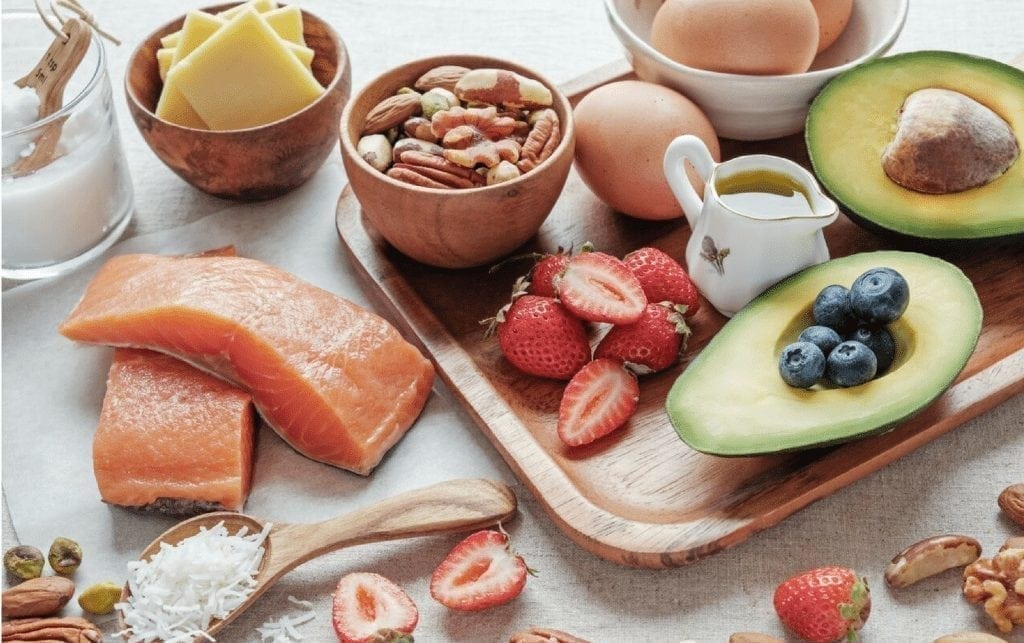
Finally, just because the diet is a poster child for all-you-can-eat bacon doesn’t mean you have to eat this way. There are healthy fats to choose including avocado, olive oil, walnuts and fatty fish.

by Trinh Le, MPH, RD

My humble opinion on the matter is that while Keto might be a great kick-starter for your weight loss goals, I don’t see this diet as sustainable (or healthy) for the long term. I firmly believe “balance is best,” and that includes real food from all the food groups in proper portions. You don’t need to restrict food groups or count calories when you follow my favorite resource for healthy eating – 90/10 Nutrition. Start with 90/10 first. You might find like me that you can “Eat like this forever!”