Fitness, Nutrition

12 Fitness Myths Busted

Fitness advice abounds. Just ask Google. Or your friend. Or remember what you did in high school gym class many years ago. It’s hard to know what to believe anymore. Like the diet industry that tells you a new evil food, then later tells you it is healthy (hello eggs), fitness advice can be confusing. Read on to get the facts about 12 fitness misconceptions that will help you feel great and perform your best.

MYTH #1: STRENGTH TRAINING MAKES YOU BULKY

Truth: It’s pretty hard for women to bulk up from a normal strength-training routine because they don’t have as much testosterone as men (the difference in this hormone level makes men more prone to bulking up). In fact, if weight loss is your goal, strength training can actually help you lean out, but you must also keep your nutrition in line. Since muscle is metabolically active, simply maintaining lean muscle mass requires higher energy. The more lean muscle you have, the more calories your body will burn at rest. #science.

MYTH #2: A GOOD WORKOUT ALWAYS RESULTS IN SORENESS

Truth: While soreness and workout intensity are sometimes connected, how tired your muscles feel isn’t always a good indicator of a solid workout. Being sore just means that a significant amount of stress was applied to the muscle tissue. You can have a great workout and not be sore the next day. Proper recovery will help prevent achy muscles. Refuel within the first 30 to 45 minutes post-exercise, stay hydrated, and get enough sleep—all of these things can help boost recovery and minimize soreness.

MYTH #3: EVERY WORKOUT REQUIRES 100% EFFORT

Truth: Sort of. You should try your best to stay focused, be present, and give 100 percent during every workout. However, not every workout requires a high level of intensity. If you are sore every day, muscle recover is limited which can lead to overtraining and injury. Target going extra hard two to three times per week, or as often as your body can recover from excessive soreness.

MYTH #4: YOU CAN LOSE FAT FROM CERTAIN BODY PARTS

Truth: There is really no such thing as spot-training. Fat cells are distributed across your entire body. To lose fat from a specific spot, you need to lose overall body fat. High-intensity interval training can work wonders. After an intense workout, your body needs to take in oxygen at a higher rate to help it return to its natural resting state. This process requires the body to work harder, burning more calories in the process. Incorporating strength training can help you hit your goals too, since having more lean muscle will help your body burn more calories at rest. (Psst—here is an entire library of workouts that are insanely effective for weight loss. You can get them all for less than one lunch out per month)

MYTH #5: CARDIO IS THE BEST WAY TO LOSE WEIGHT

Truth: Yes, traditional cardio workouts will help create a day-to-day calorie deficit (with a healthy diet), which is essential for losing weight. But in the long-term, since having more lean muscle mass helps your body burn more calories at rest, you’ll be adding to this deficit without doing a thing. A combination of both high-intensity cardio and strength training is a good idea. And don’t forget, when it comes to weight loss, having a smart nutrition plan is essential.

MYTH #6: YOGA ISN’T A “REAL” WORKOUT

Truth: There is a broad range of yoga, so don’t be stuck on the “spiritual experience” and gentle, relaxing stretches. Speaking from personal experience, yoga is a legit workout, and should be added to your routine. Yoga is the ‘fountain of youth’ in that it helps to keep you flexible while stretching out the soreness that comes from other workouts, and the balance work is imperative for injury prevention as you age. If your vision of your future self includes keeping up with the grandkids and not waking up every morning stiff and creaky, then add simple yoga routines to your game. I learned yoga from the Beachbody Yoga Studio on BOD, so I never need to take a class. Yoga at home is the ticket.

MYTH #7: STRENGTH TRAINING REQUIRES HEAVY WEIGHTS AND MACHINES

Truth: Strength training simply means using resistance to work your muscles—and that resistance doesn’t necessarily have to come from a machine or a heavy weight. (Hello, killer bodyweight exercises!) Aside from your own bodyweight, you can also use tools like kettlebells, medicine balls, and resistance bands to add resistance. None of that around? Try PiYo – the program that launched my healthy living journey.

MYTH #8: WORK OUT EVERY DAY

Truth: Totally false—can I get an Amen! Exercise breaks down muscle fibers so they can rebuild stronger. Rebuilding muscle requires rest, so give your body time to recover from working out. Aim for one or two days per week of active recovery rest days— doing something that doesn’t put stress on your body, like gentle stretching or a walk. I’ve found a groove with 4 workouts a week taking Wednesday and weekends off, which gives me capacity to enjoy other activities without feeling too worn out.

MYTH #9: 20 MINUTES OF CARDIO IS THE MINMUM TO GET RESULTS

Truth: There is no magic duration to do cardio or any workout for that matter. If you are not an exerciser, ANY extra movement is better than none. Low impact, low intensity, short duration, long duration… these exercise variables are less important that just challenging YOUR body. Everyone is different in how they respond to exercise, their personal goals, fitness level, etc., so challenge yourself without comparison to others. And let’s be clear about results & weight loss: Exercise is only part of the formula. Your fastest weight loss results come from what you eat, so getting nutrition right is key. You can’t outwork a bad diet. Get your free Clean Eating Guide here.

MYTH #10: YOU NEED TO STRETCH BEFORE A WORKOUT

Truth: There’s an important difference between the terms ‘stretch’ and ‘dynamic warm-up.’ While it’s true that you shouldn’t just jump right into a workout, dynamic warm-ups are where it’s at—you can save those static stretches for afterwards. Your pre-workout goal should be to improve mobility and elasticity in the muscles. This is best done with foam rolling and a dynamic warm-up, where you keep your body moving (instead of holding stretches still). This preps your body for work and helps increase your range of motion, which means you can get deeper into exercises, work longer and harder, and reduce injury than without proper warmup.

MYTH #11: CRUNCHES ARE GREAT FOR YOUR ABS

Truth: Meh. Crunches do work part of your abs, but they’re not the most efficient exercise you can do to strengthen your midsection. Abdominal muscles are designed to work most effectively when you’re standing upright. Try Shaun T’s Focus T25 or Transform:20 on Beachbody on Demand for entire programs that will shred your core with zero crunches. My Progressive Plank challenge also works really well.

MYTH #12 I CAN EAT THAT _______ SINCE I JUST EXERCISED

Truth: Sorry to burst your bubble, but exercising is not a license to eat junk food. What you eat is far more important than how much or how hard you exercise. While it’s true that exercise burns calories, you will be disappointed to know how much exercise it takes to cover a donut (run a 5k) for example. It’s important to change your mind about making food a reward for good behavior, because you will always underestimate the calories in your food, and overestimate your calorie burn from exercise. Instead, think of food as fuel for the finely tuned machine that you are. And don’t be discouraged about having treats now and then. When planned into your day as part of a mindful, balanced nutrition plan the overall impact of your treat is pretty small. One day of bad food choices will not make you fat, just as one great day of exercise won’t make you fit. Take the long term approach and make healthy eating a lifestyle and you will see results.

Fitness, Nutrition

10 Easy Healthy Eating Resolutions

10-Easy-Healthy-Eating-Resolutions-752x472.jpg

Ah, the New Year. Everyone is talking about the tricks to making this your best year yet. But “have the best year yet” is a pretty lofty resolution that probably gets ditched before Groundhog Day. Am I right, or am I right? Instead, why not resolve to make small changes that add up to a great year – starting with eating healthier – cuz it seems everyone vows to eat better in January.

Here are 10 healthy-eating resolutions to help you feel and look your best, no joke. The great news is they’re all easy — so you can choose one or all 10! Regardless, I promise even one small change from this rock star list will lead to a healthier you.

1. DITCH THE PACKAGED PRODUCTS

The first (and best!) way to clean up your diet is to ditch the packaged products lurking in the pantry. That’s right, the ones that are full of all of those chemical preservatives and fillers you can’t pronounce. Read the ingredients list and not just the nutrition label. Ingredients is king when it comes to healthy eating. Cookies, crackers, canned soups, instant grain mixes and microwave meals: Pitch them all and start fresh with a clean pantry.

Ask yourself how many of those things you really need. Then, figure out the ones you can make yourself. We can help! For example, make your own nut butter or a one-hour jam with fresh produce (and no preservatives). Instead of keeping ancient jars of salad dressing, mix up your own vinaigrette.

2. FILL YOUR PANTRY WITH PRODUCE-FRIENDLY STAPLES

Now that your pantry has been cleaned of packaged products, you’ll need to restock with healthy grains, herbs, spices and ingredients that will help you transform all that fresh, seasonal produce into delicious meals! Great olive oil, lemons, whole grains, legumes and a nice loaf of whole-grain bread are good places to start!

3. DRINK MORE WATER

Healthy eating means healthy drinking too. A super simple way to keep yourself full and reduce the portions you eat is to start each meal with a large glass of water. Many of us don’t drink enough water anyway, and there are so many health benefits to being well hydrated. Substitute your daily soda with water and watch your body change! You will feel better, have more energy, and you will lose weight with this one thing.

4. BUY A RICE COOKER, SLOW COOKER OR AN INSTANT POT

If you’re still making everything on the stove top a la minute, you’re missing out on a great healthy eating hack (and therefore missing out on a nearly-no-brainer way to make healthy meals). Pick up a rice cooker, slow cooker or Instant Pot and completely revolutionize the way you cook and eat this year. The model you choose depends on how you eat; slow cookers (recipes) are the least precise of the bunch, but high-end rice cookers have functions for every grain you can imagine wanting to cook and they’ll cook it precisely while you’re out playing, working or getting in your workout. (Your rice cooker will even cook oatmeal perfectly while you’re sleeping so you wake up to a delicious breakfast!) Instant Pots are great, too, and cook entire meals in pressure-cooker style. Regardless of the model you choose, picking one of these counter top helpers sets your healthy eating on the right track.

5. EAT FOR COLOR

Having great ingredients on hand is key to making and eating healthy, delicious meals but pairing the foods together to make them nutritious and balanced is also vital. Aim to get 4–5 different colors in your bowl at each meal. It’s easier than you think, and certainly more fun. By adding colorful foods to each plate, you’ll add interesting flavors and appealing textures — and each of those ingredients brings a whole lot of nutrition to your meal. Crunchy purple cabbage, brilliant orange pumpkin, vibrant and fresh cilantro and crunchy black sesame seeds are all great examples of ingredients that might not be in your repertoire but guarantee you’ll never have one of those boring green salads again! And, if you find yourself in a pinch, you can always add a colorful smoothie to your lunchbox or breakfast spread.

6. BYOL (BRING YOUR OWN LUNCH)

Bringing your own lunch is another super-simple way to guarantee a great, healthy meal in the middle of the day. It’s a money saver, too. Practice the eat-for-color rule above, and prepare yourself a little mini-picnic with great leftovers from last night’s dinner. It doesn’t take much more than a bit of forethought to produce a great packed lunch. By bringing your own meal, prepared in your own kitchen, you’re doing something good for your body and your wallet.

7. BATCH COOK FOR THE WEEK

This year, make a vow to have leftovers. Really! And, promise yourself that every week you’ll spend a little time preparing them — all at once. By picking a day each week to batch cook for the week ahead, you’re setting yourself up for a week of healthy meals. Select a protein, grain and several colorful vegetables to prep and have on hand so meals come together in a snap. This makes colorful eating and lunch packing a breeze, and means you’re never feeling left in a lurch when it comes to dinner.

8. MAKE BREAKFAST AHEAD

When life gets crazy, breakfast is the easiest meal to miss. But, we all know it’s also the most important meal to eat. Eating a balanced breakfast helps keep your metabolism running and is vital to loading up your system with healthy nutrients you’ll use throughout the day to work, play or exercise. Without them, your body and brain get sluggish and you lose motivation and focus. By making breakfast ahead in Mason jars to take with you as you rush out the door in the morning, you’re making sure you never head into a nutrient deficit, and instead head into the day feeling ready to face it! I love having my daily dose of dense nutrition for breakfast every morning. It’s technically made ahead, takes only 2 minutes to mix, and keeps me full until lunch.

9. MAKE SALAD FOR DINNER

Even if you batch-cook and fill your pantry and refrigerator with beautiful, healthy ingredients, there will be nights when you realize you just really didn’t think about dinner. For nights like that, keep a bunch of kale or spinach on hand and make it your salad for dinner night. Even just once a week, you’ll find that this lighter, fresh, healthy, balanced meal is a nice way to re-balance yourself. Alternatively, you can have breakfast for dinner to mix it up.

10. SWAP YOUR SWEETENERS

No healthy eating strategy should be without healthy treats, so vow to swap out refined sugars for healthier options at every meal. Think about the source of the sugar and consider using maple syrup or honey instead of refined sugar. And, when you’re reaching for dessert, try having fresh fruits and antioxidant-rich dark chocolates instead of their super-sweetened counterparts.

Special thanks to Lentine Alexis for doing the heavy lifting on this article and for my friends at 90/10 Nutrition for helpful links that make this article a great resource.

Fitness, Nutrition

6 Appetite-Control Strategies to Curb Overeating

woman-drinking-water-bottle-960x640-752x472

It can be hard not to overeat. You eat a healthy meal at home, think you’re doing well, then you head out (to almost any destination) and are surrounded by junk food. You get hungry, and pretty soon you’re at the local burger joint, diet forgotten.

Or maybe you stick to the “right” foods, but they’re just so good that you can’t have just one portion. We’ve all been there.

The following six strategies can change the game for you. Give these a try and see if you feel healthier, enjoy your meals more and find it more difficult to overeat.

1. ADD VINEGAR AND CINNAMON TO MEALS TO CONTROL BLOOD SUGAR

Looking to add some flavor to your food and noncaloric drinks? Forget the sugar; there are plenty of spices and flavors that will make your food both tastier and healthier. Vinegar, which has been shown to lower the glycemic index (which means you metabolize the food more slowly), adds acidic flavor to salad dressings, sauces and roasted veggies without a lot of calories.

For sweet-smelling warmth, add cinnamon to everything from coffee and smoothies to chili. Like vinegar, cinnamon slows the rate at which food transits from your stomach to your intestine — this keeps you full longer, and helps prevent the post-meal slump.

2. EAT WHEN YOU’RE NOT HUNGRY

When you get really hungry, you overeat. Duh, no kidding. When you overeat, you feel full, but then your insulin levels spike, causing you to feel tired, then hungry again … so you overeat again.

Instead of trying to resist hunger, beat it to the punch. If you eat when you’re either not hungry or only slightly hungry, you’ll eat less and tend to eat more slowly. Eating less throughout the day is great, but having more energy is certainly a nice bonus, too.

3. DRINK WATER, NOT LIQUID CALORIES

In addition to tiredness and brain fog, mild dehydration can cause a sensation that’s easily mistaken for hunger. On the other hand, liquid calories such as juices and sodas don’t fill you up, and their rapid digestion causes insulin spikes. So pass on the sweetened drinks and stick with sparkling or still water — you can flavor it with lemon, strawberries or cucumber if you want, but don’t pack your drinks full of calories.

There’s much debate about how much water you should drink. A good rule of thumb is to aim to drink about 1/2 your body weight in ounces of water a day – even more if you do intense exercise. Also, be sure to drink a glass about 20 minutes before each meal to take the edge of your appetite.

4. EAT SLOWLY

When you swallow food, there’s a sizable delay before you feel any satiation from it. This delay is usually between 10–30 minutes. Because of this delay, we tend to eat more food than we really need. And the faster we eat, the more we tend to consume, particularly later on in a meal.

The solution: Chew each bite 10 times. Following this simple rule will cause you to eat more slowly, allowing your mind to catch up to your stomach. You’ll also enjoy your food more when you take the time to savor it. Preaching to myself here, as I still have plenty of work to do on this one!

5. HAVE A SMALL, FLAVORLESS SNACK BETWEEN MEALS

This trick was discovered by the late Seth Roberts: What he did was consume a shot of olive oil or a glass of water with a tiny bit of sugar (an exception to the rule on sugared beverages above) between meals. I prefer a handful of unsalted almonds. Doing this once a day dramatically reduced my appetite — this can be particularly true if you have a lot of weight to lose.

This is one of the weirdest things I’ve ever tried, but it worked for me. The reason this works: It apparently regulates ghrelin, a hunger hormone, by weakening flavor-calorie associations. For this to work, the snack must be bland, and you should consume nothing else but water for at least an hour before and after the snack. Other plain nuts or peanuts work well for this too.

6. TRY THE “FRONT DOOR SNACK TECHNIQUE’

This is one of my favorite body hacks. Knowing that your willpower is reduced when you’re hungry, and there’s more tempting junk food outside the home than in it, you should fill up on healthy food before leaving home. Keep a healthy snack, such as fruit, almonds or a Lara Bar, right next to your front door, and eat some before you leave home. This will cause healthy food to “crowd out” unhealthy food in your diet, and make it much easier to pass on the junk food.

If these don’t help, you may also consider the portion control containers and accompanying recipes & meal plans to help you regulate your food consumption. Each of these ideas takes a little effort, and a change in your mindset about food, but you are worth it!

Credit to John Fawkes and the Myfitnesspal Blog for doing the heavy lifting on this article.

Fitness, Nutrition

You Can’t Compete With What You Eat

13227727_1329137880434974_498363236178847707_o

The truth is that body transformation has more to do with what you eat than how much you exercise. The saying, “You can’t out work a bad diet,” is exactly true. I am living proof of that. During triathlon training a few years ago I experimented with different ‘diets’ – most of them were calorie based. The basic premise was to shove calories down my throat like garbage into the incinerator. Making fire for sure, but not burning efficiently at all. In fact, my physical shape did not change at all even though I was swimming, biking, and running 10-13 hrs/ week!  If you really want to see changes in how you look and feel from the inside out, you gotta get the food part right.

Ugh. I know. It’s so hard. Cookies…

Here are a few things I’ve learned so far on my journey:
1. Remember: FOOD IS FUEL! Your results are dependent upon how well you fuel your body. Don’t think of food as a reward or use it for comfort. That’s a hard habit to break! Recognize your weakest time of the day and plan ahead for it.

2. Several smaller meals allow you to better absorb nutrients and keep your blood sugar steady. Try to eat three meals a day, with two or three snacks in between. Yay! Snacks!

3. Here’s a good one:
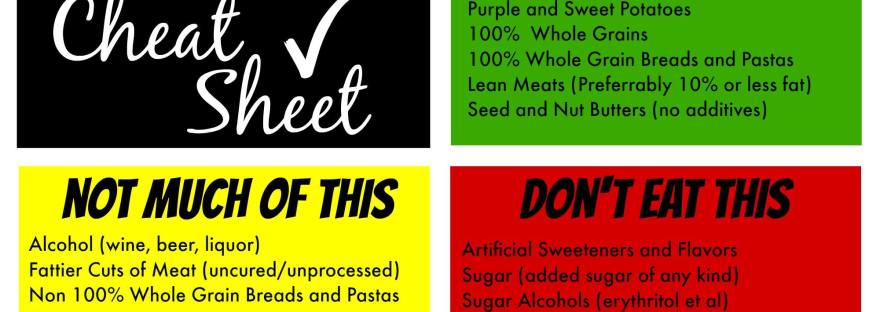
Eat Less CRAP:
Carbonated drinks
Refined sugar
Artificial sweeteners and sugars
Processed foods

Eat More FOOD:
Fruits and veggies
Organic lean proteins
Omega-3 fatty acids
Drink water

4. DON’T GIVE UP!
One bad meal does not ruin you, just as much as one good meal would change you. It’s all about CONSISTENCY OVER TIME. Put the bad meal behind you and KEEP GOING. It will take time, but I promise it will pay off!

5.For additional meal ideas, visit my recipe section on my website, search “clean eating recipes” on Pinterest, and be sure to check out my favorite clean eating resource at 90/10 Nutrition!
CLEAN EATING just means taking out all of the additives to processed food; eating food in it’s purest form. Changing just a few things here and there in my family’s diet has made a huge difference!

Fitness, Nutrition

12 Bad Habits That Are Making You Fat

News flash: your metabolism slows as you age. In a review of data on energy expenditure, researchers found getting older is associated with progressive declines in basal metabolic rate. On top of that, many daily habits can drain your metabolism even further, making it easier to pack on the pounds.
But you don’t have to go down without a fight. Address the following list of bad habits and watch your metabolism and energy levels improve.

Bad Habit #1: Skip breakfast

Eating a nutritious breakfast is a great way to start your day. Because your metabolism slows during sleep, eating can fire it up and help you burn more calories throughout the day.

When you eat breakfast, you’re telling your body that there are plenty of calories to be had for the day. When you skip breakfast, the message your body gets is that it needs to conserve rather than burn any incoming calories.

Rush University Medical Center

Bad Habit #2: Eating the wrong breakfast

OK, so it’s about more than just eating something in the morning. Your body is like a finely tuned machine and it needs to be fueled properly with real food. If you grab a sugary donut or eat a muffin in the car, you’re setting yourself up to crash later. Instead, choose something with filling protein and fiber like eggs, Greek yogurt and berries or whole-wheat toast topped with peanut butter.

Bad Habit #3: Sitting too much

Going from your office chair to your car to your couch can lead to a very sedentary routine. And sitting for extended periods puts your body into energy-conservation mode, which means your metabolism can suffer. Solution: consider adding some movement while at your desk, or try a Team Quadzilla Fitness Challenge.

Sitting for long periods is thought to slow metabolism, which affects the body’s ability to regulate blood sugar, blood pressure and break down body fat.

UK National Health Service

Bad Habit #4: Neglecting strength training

Cardio is great, and it can quickly burn calories, but once you’re done running or cycling, your calorie burn quickly returns to normal. When you do HIIT and resistance-based workouts, however, your calorie burn stays elevated for longer as your muscles repair themselves. Per the American Council on Exercise (ACE): “Strength training is a key component of metabolism because it is directly linked to muscle mass. The more active muscle tissue you have, the higher your metabolic rate.” And, according to ACE, a pound of muscle burns an additional 4–6 calories daily compared to a pound of fat.

Bad Habit #5: Not eating enough protein

Protein feeds your muscles, promotes satiety, and is an important component to sustain a healthy weight. Eat too little, and you may have trouble building or maintaining muscle mass — and per the above, we know muscle’s importance to metabolism. Also, protein requires more energy to break down than carbs or fat, so you’ll burn more calories during digestion.

Bad Habit #6: Not drinking enough water

In a study published in The Journal of Clinical Endocrinology & Metabolism, researchers found drinking 500 milliliters of water (about 2 cups) increases metabolic rate by 30%, and that spike lasts for more than an hour. So, drink water throughout the day to stay hydrated, and you’ll get the added benefit of a boosted metabolism.

Bad Habit #7: Stressing out

When stress levels increase, your body produces a hormone called cortisol. Cortisol leads to increased appetite, cravings for comfort foods, decreased desire to exercise and reduced sleep quality — all things that negatively impact metabolism. So, while you can’t always control your stress levels, managing stress can go a long way toward protecting your body’s internal fire.

Bad Habit #8: Binging refined carbs

If you eat sources of refined carbs like white bread or pastries regularly, it could be slowing down your metabolism. Research shows those who consumed the most refined carbs burned fewer calories and had higher rates of the appetite-stimulating hormone ghrelin than those who adopted lower-carb diets that focused on complex carb sources.
“Refined carbohydrates from the diet turn into blood sugar very quickly; blood sugar is used for energy by the body [but] if it’s not used for energy, it can quickly turn into fat stores,” explains Lee Murphy, RD, senior lecturer of nutrition at the University of Tennessee.
Carbohydrates are important for energy, but skip refined carbs in favor of fiber-rich, unprocessed carbohydrates such as sweet potatoes and other starchy vegetables and whole-grain bread or pasta.

Bad Habit #9: Ignoring dairy

According to research published in the journal Nutrients, people with the highest intake of milk, cheese, yogurt and other dairy products had the lowest rates of obesity. This is part of a growing body of research linking dietary calcium to improved regulation of energy metabolism.
“Dairy products are sometimes known as metabolism boosters, in part, because they contain protein and calcium — both possibly helping maintain muscle mass while potentially promoting weight loss,” says Murphy.
Before you start eating dairy at every meal, Murphy cautions your calorie counts and fat intake should remain within recommended guidelines.

Bad Habit #10: Sleeping in a warm room

A small study found sleeping in a cool room — either leaving the air conditioning running in the summer or turning down the heat before bed in the winter — could increase levels of so-called brown fat, which burns calories to generate heat. The ideal overnight temperature, according to the research: a cool 66ºF (19ºC).

Bad Habit #11: Not sleeping enough

One bad night’s sleep is enough to leave you feeling sluggish, impair your cognitive processing, and make you more likely to overeat. String together several nights in a row — or a lifetime of inadequate sleep — and science shows decreased metabolism and hormonal imbalances may follow.

Bad Habit #12: Chowing on fast food

You already know ordering a burger and fries at the drive-thru adds a lot of extra calories, “but it could also cause your metabolism to slow to a crawl,” says Whitney Linsenmeyer, PhD, RD, assistant professor of nutrition at Saint Louis University and spokesperson for the Academy of Nutrition and Dietetics. While you might be more likely to reach for a higher-fat meal in times of stress, “the high-fat content takes more time to digest,” she explains.
This can slow down metabolism, while stress compounds the problem. In one study, women who experienced at least one stressor over the past 24 hours burned 104 fewer calories after eating a meal containing 930 calories and 60 grams of fat than those who were not stressed. The difference could add up to an 11-pound weight gain in one year.

So there you have it. How many of these bad habits do you relate to? Fret ye not, there is hope. Take one at a time and work on it with small reasonable goals and ask someone to hold you accountable. Success follows your consistent work on the commitment to be better every day. Special thanks to Kevin Gray and Jodi Helmer for doing some heavy lifting on this article.