Fitness, Nutrition

12 Bad Habits That Are Making You Fat

News flash: your metabolism slows as you age. In a review of data on energy expenditure, researchers found getting older is associated with progressive declines in basal metabolic rate. On top of that, many daily habits can drain your metabolism even further, making it easier to pack on the pounds.
But you don’t have to go down without a fight. Address the following list of bad habits and watch your metabolism and energy levels improve.

Bad Habit #1: Skip breakfast

Eating a nutritious breakfast is a great way to start your day. Because your metabolism slows during sleep, eating can fire it up and help you burn more calories throughout the day.

When you eat breakfast, you’re telling your body that there are plenty of calories to be had for the day. When you skip breakfast, the message your body gets is that it needs to conserve rather than burn any incoming calories.

Rush University Medical Center

Bad Habit #2: Eating the wrong breakfast

OK, so it’s about more than just eating something in the morning. Your body is like a finely tuned machine and it needs to be fueled properly with real food. If you grab a sugary donut or eat a muffin in the car, you’re setting yourself up to crash later. Instead, choose something with filling protein and fiber like eggs, Greek yogurt and berries or whole-wheat toast topped with peanut butter.

Bad Habit #3: Sitting too much

Going from your office chair to your car to your couch can lead to a very sedentary routine. And sitting for extended periods puts your body into energy-conservation mode, which means your metabolism can suffer. Solution: consider adding some movement while at your desk, or try a Team Quadzilla Fitness Challenge.

Sitting for long periods is thought to slow metabolism, which affects the body’s ability to regulate blood sugar, blood pressure and break down body fat.

UK National Health Service

Bad Habit #4: Neglecting strength training

Cardio is great, and it can quickly burn calories, but once you’re done running or cycling, your calorie burn quickly returns to normal. When you do HIIT and resistance-based workouts, however, your calorie burn stays elevated for longer as your muscles repair themselves. Per the American Council on Exercise (ACE): “Strength training is a key component of metabolism because it is directly linked to muscle mass. The more active muscle tissue you have, the higher your metabolic rate.” And, according to ACE, a pound of muscle burns an additional 4–6 calories daily compared to a pound of fat.

Bad Habit #5: Not eating enough protein

Protein feeds your muscles, promotes satiety, and is an important component to sustain a healthy weight. Eat too little, and you may have trouble building or maintaining muscle mass — and per the above, we know muscle’s importance to metabolism. Also, protein requires more energy to break down than carbs or fat, so you’ll burn more calories during digestion.

Bad Habit #6: Not drinking enough water

In a study published in The Journal of Clinical Endocrinology & Metabolism, researchers found drinking 500 milliliters of water (about 2 cups) increases metabolic rate by 30%, and that spike lasts for more than an hour. So, drink water throughout the day to stay hydrated, and you’ll get the added benefit of a boosted metabolism.

Bad Habit #7: Stressing out

When stress levels increase, your body produces a hormone called cortisol. Cortisol leads to increased appetite, cravings for comfort foods, decreased desire to exercise and reduced sleep quality — all things that negatively impact metabolism. So, while you can’t always control your stress levels, managing stress can go a long way toward protecting your body’s internal fire.

Bad Habit #8: Binging refined carbs

If you eat sources of refined carbs like white bread or pastries regularly, it could be slowing down your metabolism. Research shows those who consumed the most refined carbs burned fewer calories and had higher rates of the appetite-stimulating hormone ghrelin than those who adopted lower-carb diets that focused on complex carb sources.
“Refined carbohydrates from the diet turn into blood sugar very quickly; blood sugar is used for energy by the body [but] if it’s not used for energy, it can quickly turn into fat stores,” explains Lee Murphy, RD, senior lecturer of nutrition at the University of Tennessee.
Carbohydrates are important for energy, but skip refined carbs in favor of fiber-rich, unprocessed carbohydrates such as sweet potatoes and other starchy vegetables and whole-grain bread or pasta.

Bad Habit #9: Ignoring dairy

According to research published in the journal Nutrients, people with the highest intake of milk, cheese, yogurt and other dairy products had the lowest rates of obesity. This is part of a growing body of research linking dietary calcium to improved regulation of energy metabolism.
“Dairy products are sometimes known as metabolism boosters, in part, because they contain protein and calcium — both possibly helping maintain muscle mass while potentially promoting weight loss,” says Murphy.
Before you start eating dairy at every meal, Murphy cautions your calorie counts and fat intake should remain within recommended guidelines.

Bad Habit #10: Sleeping in a warm room

A small study found sleeping in a cool room — either leaving the air conditioning running in the summer or turning down the heat before bed in the winter — could increase levels of so-called brown fat, which burns calories to generate heat. The ideal overnight temperature, according to the research: a cool 66ºF (19ºC).

Bad Habit #11: Not sleeping enough

One bad night’s sleep is enough to leave you feeling sluggish, impair your cognitive processing, and make you more likely to overeat. String together several nights in a row — or a lifetime of inadequate sleep — and science shows decreased metabolism and hormonal imbalances may follow.

Bad Habit #12: Chowing on fast food

You already know ordering a burger and fries at the drive-thru adds a lot of extra calories, “but it could also cause your metabolism to slow to a crawl,” says Whitney Linsenmeyer, PhD, RD, assistant professor of nutrition at Saint Louis University and spokesperson for the Academy of Nutrition and Dietetics. While you might be more likely to reach for a higher-fat meal in times of stress, “the high-fat content takes more time to digest,” she explains.
This can slow down metabolism, while stress compounds the problem. In one study, women who experienced at least one stressor over the past 24 hours burned 104 fewer calories after eating a meal containing 930 calories and 60 grams of fat than those who were not stressed. The difference could add up to an 11-pound weight gain in one year.

So there you have it. How many of these bad habits do you relate to? Fret ye not, there is hope. Take one at a time and work on it with small reasonable goals and ask someone to hold you accountable. Success follows your consistent work on the commitment to be better every day. Special thanks to Kevin Gray and Jodi Helmer for doing some heavy lifting on this article.

Fitness, Nutrition

Losing Weight In Your 40’s And Beyond – 4 Tips

News Flash: People who may have maintained their weight easily in their 20s and 30s, start to feel more challenged when they pass the big 4-0. Can I get an AMEN?! We shouldn’t be surprised since we know we’ve begun to lose lean muscle mass and experience far more hormone fluctuations at midlife and beyond. So we ask ourselves:

Am I doomed to that middle-age spare tire and growing bigger in all the wrong places?

The golden rule of weight loss — eat less than you your body burns — is more difficult as you age because your body changes metabolically. The internal furnace simply doesn’t burn as hot as when you were younger. But that doesn’t mean you have to give up – as so many mid-lifers do.

As with any healthy habit, the key to success is consistency and mindfulness. So maybe you’ll need to be more focused and dedicated to your goals than when you were younger. Read on for some tips:

1. CONSIDER YOUR EATING PATTERNS
The good news about getting older is you’ve had time to understand how nutritional changes affect your health. You’ve gained experience about the impact of certain food choices, and now it’s time to put that knowledge to use. As metabolism slows with age, you might not be able to get away with some of the indulgences that your body used to forgive you for.

That doesn’t mean you must starve yourself or jump on the latest fad diet. Rather, it should prompt you to be more conscious about your choices and patterns, including portion sizes, the timing of your meals and snacks, and the choices of the foods you eat.
You are smart enough to know your unhealthy habits regarding food, so this is the time to address them mindfully.

2. ADDRESS PORTION SIZES
It’s no secret our culture works against our plans to maintain a healthy weight. Processed foods and fast food options abound, and our frantic pace of life increases the temptation to shove anything into our mouth NOW. Cooking at home is de-emphasized in favor of convenience, and portion sizes have changed significantly from even a couple decades ago.

Packaged food “serving size” doesn’t necessarily mean that’s how much you should eat. Tracking portion size is super helpful. Consider using the popular Beachbody Portion Fix containers and nutrition guide* to help you see what you should be eating every day. You will be surprised at how full you will feel when you eat the right foods in the proper portions.

3. WATCH CARBS AND CALORIES
Carbs and calories are not all evil. It’s the QUALITY of the carbs and calories that counts. Processed foods are often “empty calories” that offer the double whammy of little sustained energy, and only short term hunger satiation. Resist the temptation to choose pre-packed, processed foods with long ingredients lists on the label. At the same time, you need to eat, so resist the temptation to starve yourself to lose weight. Whole, real food is best.

When you’re older, keep in mind that your metabolism is already slowing down, and starving yourself will only reduce your metabolism. The ‘starvation effect’ means that your body holds onto fat when you don’t eat enough, so your suffering completely backfires.

4. LIFT HEAVY STUFF
Science: As you age, your muscle mass loss causes your resting metabolic rate to decrease, changing your calorie-burning mechanism. In other words, your internal furnace does not run as hot as it used to. That can be even more pronounced by a poor diet, smoking, alcohol use, sedentary behavior and genetics.

Further, as muscle tends to turn to fat when not used, you may also lose balance, coordination and strength. This is why it’s so important to keep active as you age. Don’t be one who retires to the lazy-boy because you are too weak to walk, pedal, travel, play with your grandkids, etc. But the good news is you can increase strength starting today, regardless of your starting point.

Resistance training performed a few times per week can not only help you regain what was lost, but can also increase bone mass, and studies have suggested it might improve sleep, help cardiovascular health, boost your mood and a list of other benefits.

It can be more challenging to lose or maintain weight as you get older. But getting more conscious about what, when and why you’re eating — and adding strength training* to your routine can help you age better.

*For more information about nutrition plans, exercise plans, building healthy habits, etc., reach out to me for personalized advice and resources.

Fitness, Nutrition

Reading Food Labels – Let’s play a game!

Everyone likes games, right? Especially when you are guaranteed to WIN. Let’s play!

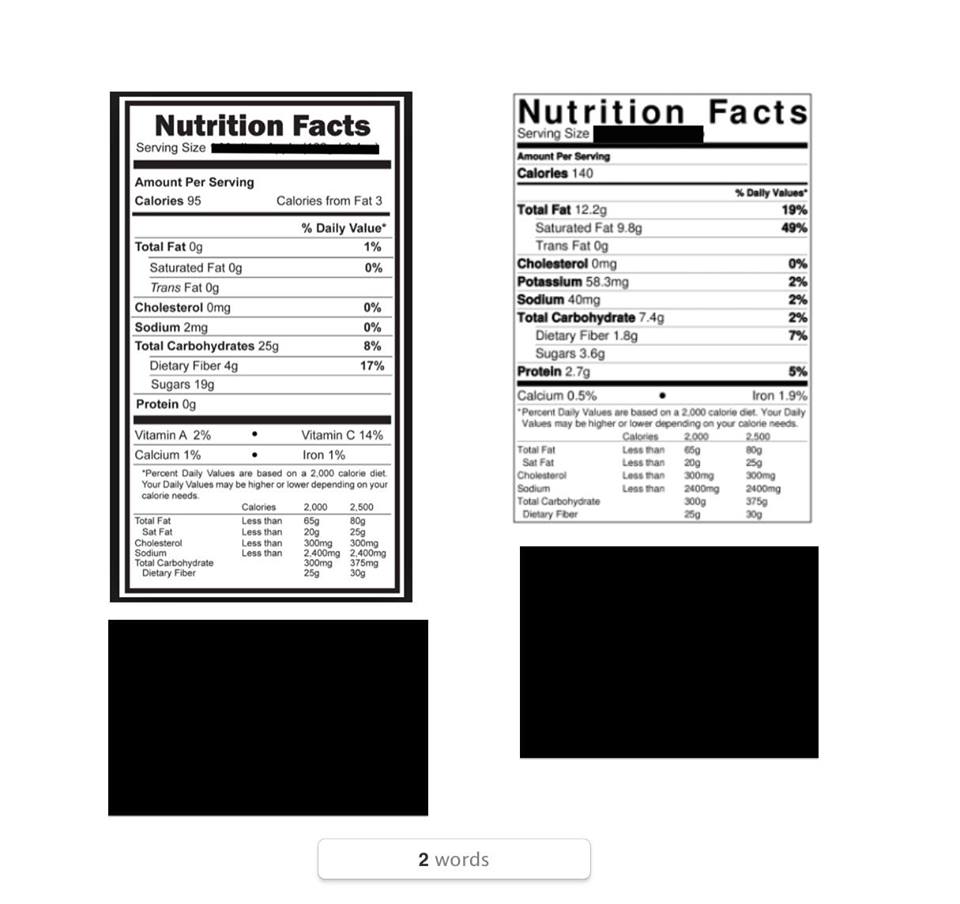
Of the two nutrition labels shown, which one would you choose for a snack and why?

label 1

Pause here and think about your answer (LEFT or RIGHT and WHY) before moving on…

Got it? OK, here are some comments from when I played this game on social media:

“Depends on activities but the one on the right has a ton of potassium and fat isn’t bad. If I need carbs I might think differently but I often don’t need as many carbs as a food has. Plus the carbs are from sugar on the left…”

“Probably the one on the right for nutritional completeness (and I have enough fat macros to handle it). However…if I just need quick carbs between workouts, the snack on the left is probably a good option.

“I would pick the one on the right because of the protein and potassium. The other seems like empty calories and too much sugar.”

Does your answer sound like these? Read on…

The product on the left is an apple. I would hope that most of us agree that this is a healthy food, or can be a part of a healthy lifestyle.

The product on the right is a snack-sized Reese’s Peanut Butter Cup. 1 cup size. Half a normal package. I would hope that most of would agree that this would fall into the “treat” category in a healthy lifestyle, and not something to eat on a regular basis (if one is trying to be healthy overall.)

labels final

I’m not bashing anyone’s answers or anyone’s personal choices. I just wanted to point out that it’s hard to tell if something is “healthy” by just reading the NUTRITION FACTS. The INGREDIENTS LIST is the most important piece of information about a food/product, in my opinion.

The amount of fat, protein, carbs, and even calories IS NOT AS IMPORTANT as where those macros come from (the ingredients).

The ingredients in an apple are: apple. Single ingredient, whole food. Grown not made. Yes, it has sugar grams but no one set that apple down and injected it with white table sugar. Sugar just exists in an apple in a natural, unprocessed form. Our bodies were designed to process this type of sugar naturally. 

However, the ingredients in the Reese’s are various. Sugar appears in one form or another, 4 times! In other words, there is a LOT of ADDED sugar. Someone intentionally put processed, refined sugar in that product. Our bodies process that sugar differently than the sugar from the apple.

This is part of what we are teaching in 90/10 Nutrition. Healthy eating is about INGREDIENTS first. If you want more info about our system of reading ingredients and how to implement a healthy eating lifestyle you can actually sustain forever, please reach out to me directly or check out the free nutrition downloads (including a 40 minute nutrition class I taught for my employer) in the shop tab on my website. 

If you are still reading, you won! You have learned a super important first step in healthy eating. Congratulations! I sincerely hope you will implement what you have learned here and see for yourself how it can improve your health and help you feel amazing! 

Fitness

Daily Walks Are Healthier Than You Think

The COVID-19 pandemic has people walking more than ever. Are you among those who can’t wait to get out for a walk in the neighborhood for some fresh air? Maybe the “shelter in place” order we’ve endured in recent months has you going stir crazy, so a walk is your way to just get out of the house. Well, guess what? You are doing more good for yourself than meets the eye. Read on to learn about some surprising benefits to your daily walk and let them inspire you to keep up the good work after the COVID-19 restrictions are lifted.

1. MOOD BOOSTER

Sometimes all you need is a little fresh air to change your attitude. We don’t need science to tell us that taking a daily walk can lift your mood even when we are feeling down. Just being outside has some magical mood improving powers. I can testify that being out for a walk helps decrease depression and can put emotions in an overall happier place.

2. GOOD BONES

As you age, bone density can decrease and make an injury from a fall much more severe. Believe it or not, walking can improve bone density and stop the loss of bone mass that is often associated with osteoporosis. Walking for up to 40 minutes a day may also help to reduce hip fractures and other injuries related to falls. This is common sense, really. The science of, “if you don’t use it, you lose it” applies here. We must keep moving as we age to stay strong and limber. Walking is an excellent low impact way to do that.

3. HEART HEALTH

Whether it’s hypertension or cardiovascular health, walking has been shown to have positive effects on the overall health of your heart. A consistent walking routine can help lower your blood pressure and prevent heart disease – two very common ailments for the 40 somethings on up. And while you’ll still want to consult a doctor before beginning an exercise routine, for anyone with existing heart conditions, walking can be a safer alternative to more vigorous forms of exercise.

4. BURN FAT

Losing weight and keeping it off is a little more complex than simply burning calories. In addition to healthy eating, finding ways to boost your metabolism can help reduce body fat. Walking has been shown to keep your internal furnace running hot so you can burn more calories during the day when you’re not exercising. The key is upping the pace. Try including 1–2 minutes of power walking every five minutes during your daily walk to get started, or walk on hilly or uneven terrain.

5. BABY STEPS

Since walking is considered safe on the joints and a low-impact activity, beginning a walking program before you start running or other forms of high-intensity exercise can help. After you become more comfortable with a fitness walking routine, try a walk-run program to ease yourself into running for longer distances.

6. RECOVERY AID

Even if you are accustomed to higher intensity workouts and are relatively fit, your body still needs time to rest and recover between workouts. Because walking is a low-to-moderate intensity exercise that gets the blood flowing and raises the heart rate, it can be an ideal recovery activity in between harder workouts. It can also help ease any joint, back and muscular pain associated with more extreme forms of exercise.

7. MENTAL HEALTH

Many of us have experienced new anxieties and stresses during this crazy time of COVID-19. Getting outside and exercising is an excellent way to clear your mind. Whether you take a short walk around the neighborhood or head to a park or forest, try to be more aware of your body, your surroundings and all that you have to be grateful for. Walking with a loved one helps us feel connected as you talk together, and talking things out loud is a great way to manage stress, discuss new ideas, make plans, etc. Walking alone offers opportunity to refocus your mind, pray, even vent. OK, maybe that’s just me. Anyway, taking this focused time alone or with a loved one while walking can have other positive effects on your health and well-being that go far beyond letting go of the worries of the day.

Fitness, Nutrition

Have A Snack – But Avoid These 5 Mistakes

Everyone loves a good snack. At its best, a snack can be the ideal pick-me-up after a really tough workout or a well-deserved mid-afternoon break at the office. But healthy snacking isn’t a slam dunk. At its worst, snacks can derail your healthy eating goals and ultimately sabotage your weight-loss. Here’s 5 common mistakes to avoid in your snack game.

Mistake #1 Skipping Snacks

One of the big problems I have with diets is they are always cutting something out. Whether it’s calorie counting, food restrictions, or obnoxious fasting rules, popular diets make us feel guilty for needing a snack. We don’t like being told we can’t have this or do that, especially when it comes to food. So dieters eventually cave for the thing they can’t have, get depressed that they failed, and quit.

I’m telling you right now – have snacks. In fact, eat like a Hobbit. At least target 3 meals a day with a mid-morning and mid-afternoon snack. Snacking helps you avoid getting hangry, keeps your energy up, and eating 4–5 smaller and more frequent meals throughout the day is a proven strategy for increased weight loss.

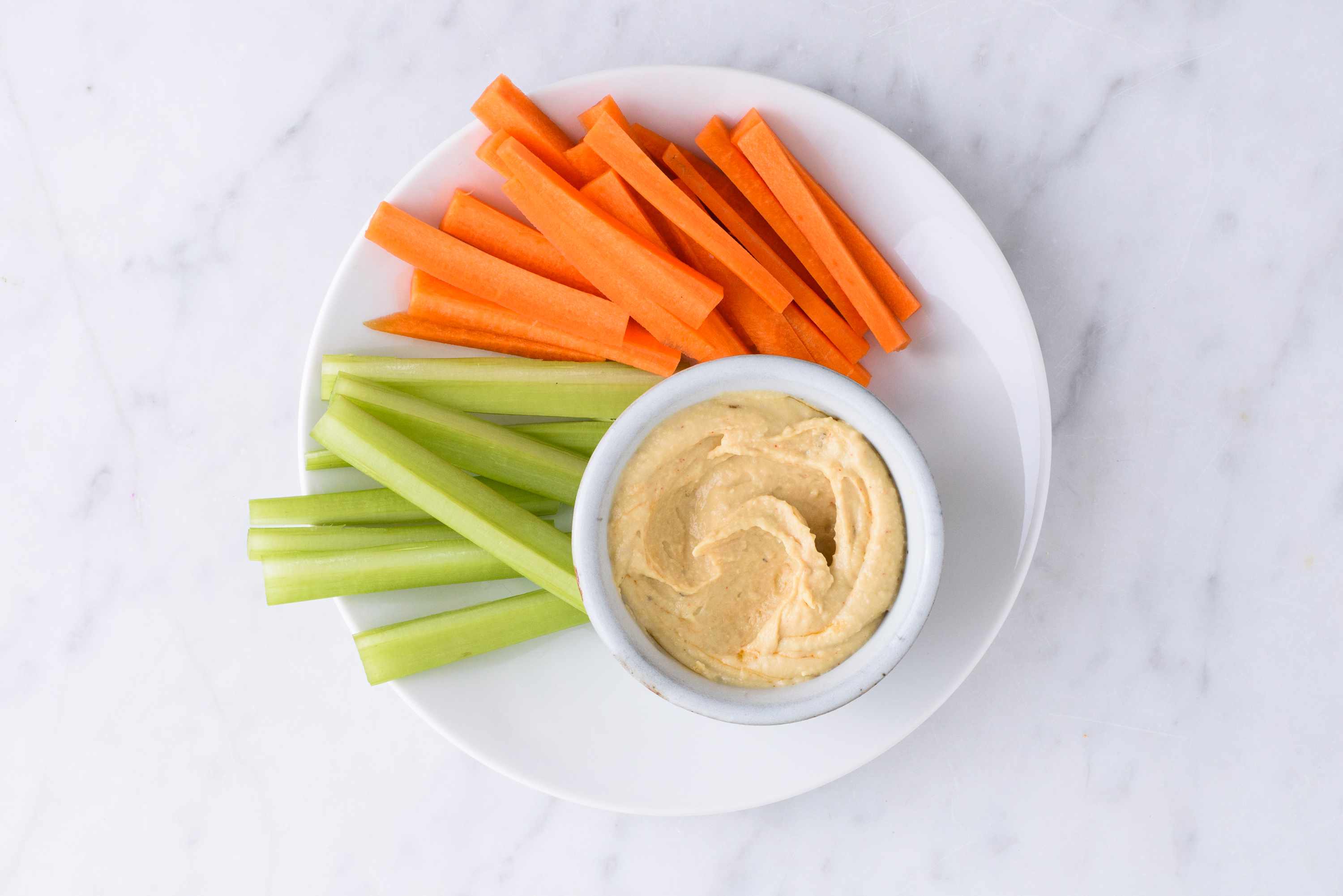
veggies-and-dip-1d96c27db1244efeab577ead84f3698aThe fix: Instead of snacking on rabbit food or some pre-packaged “low-cal” crackers or cookies that won’t satisfy you, try adding hummus or peanut butter to carrots or celery sticks. I eat an apple with peanut butter almost every day around 3 pm. Target a mix of protein and carbs in your snack choice. This more filling option won’t break the calorie bank and should help keep you from overeating later.

Mistake #2 Snacking When You’re Not Hungry

If you’ve ever reached for something sweet or salty out of pure boredom you’re definitely not alone. Such mindless eating can add up fast and prevent you from reaching your goals.

The fix: Before reaching for a snack, do a hunger check. Ask yourself, “Am I really hungry, or just bored, tired, stressed?” If you aren’t actually hungry, go for a big glass of water, take a short walk, or find something else to do. Being mindful about your food intake is key to reaching your goals. Remember your reasons why you want to eat healthy and let that drive you to make good choices.

Mistake #3 Incorrect Portion Sizes

Nuts, seeds and dried fruit are excellent, nutrient-dense snacks, but they can be easy to overeat if you’re not careful. Beware of portion sizes for such foods. Usually a handful is all you really need. Portion sizes are made easy when you choose whole fruits like apples, bananas, pears. Once you are used to using portion control containers, you won’t need to measure anything.

The fix: Instead of eating right out of a bag of nuts and seeds, serve yourself the appropriate portion size.

Mistake #4 Not Planning

Failing to plan is a plan to fail in your snack game. If you are serious about eating right, you need a plan. It includes bringing healthy food to work with you, and keeping the junk out of your kitchen at home.

apples-peanut-butter-cashew-butter-butter-snack-1296x728-header-1296x728The fix: Make snack prep a part of your regular routine. Keep some whole wheat crackers and real cheese or healthy homemade trail mix at the office. You can bring hard cooked eggs, egg cups, a small jar of peanut butter to go with your apple or banana, etc.

Mistake #5 Not Having The Right Macros

Both protein and fat are essential macronutrients that help keep you feeling full and satisfied. An ideal snack should contain a mix of both carbohydrates and protein/ fat. Your brain and central nervous system run exclusively on carbs (sugar) found in foods such as whole grains, beans, vegetables, fruit, milk and yogurt. You need protein such as meat, seafood, eggs, nuts, and seeds to sustain energy and fullness longer.

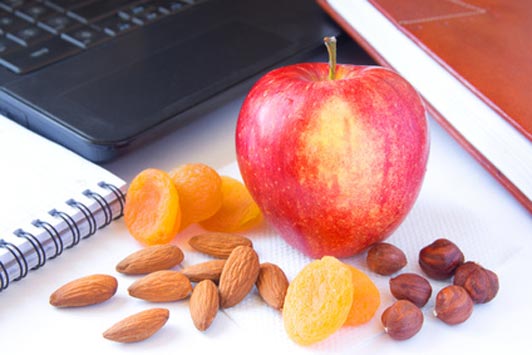
imageThe fix: Choose snacks that incorporate both a healthy fat or protein, like almonds for example, with your fruit. This will help you stay fuller longer and avoid extra servings at lunch or dinner because you’re starving.

What are your favorite healthy snacks?