On your personal journey to becoming your best self, one important activity to consider is the dreaded self assessment. This exercise takes the idea of “apply within” to a whole new level. Fret ye not; it’s not as bad as it sounds. Start by asking a simple question.
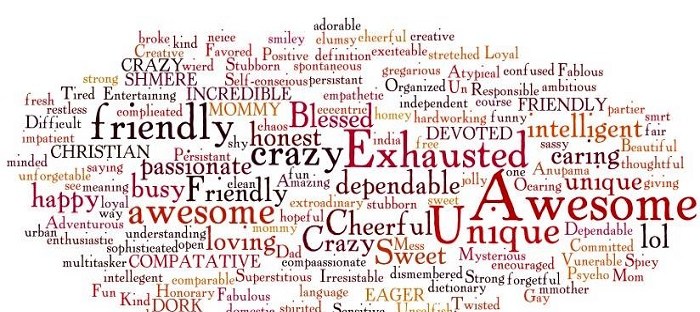
How would you describe yourself? Here’s an opportunity for a little personal reflection. Take a few minutes and WRITE DOWN your answers. If you are like me, the description is probably really nice, with some honest yucky stuff in it too. Now here’s the hard part. Ask someone close to you to describe you honestly. Be sure to tell them this is a ‘judgment free’ exercise and they are free to be honest and you promise not to be upset with the responses.
Remember, this exercise is designed to reveal the gaps between how you see yourself and how others see you and ultimately help you to be your best self. There are lots of ways to use the intel you gather, but lets keep it simple and positive.
1. For the descriptions provided by your friend, look carefully at the ones you did NOT identify yourself. Contemplate how you can further cultivate this descriptor, or mitigate it by some behavior change. Remember, this is how others see you. Whether you agree with their assessment or not, “perception is reality” and you’d prefer people to see you as you see you.
2. Celebrate the descriptors you matched with the ones provided by your friend. You know yourself pretty well. Even if some negative descriptors matched, at least you know what to work on.
3. Check in periodically with your friend and ask how you are doing with whatever trait you are interested in. This routine check up will go a long way to helping you be your best.
Need some help to get started? I found Tom Rath’s “Strengths Finder 2.0” to be especially helpful in learning who I am and what I’m good at. Another resource to try is 360Reach, which takes a fun twist on peer assessment with questions like, “What kind of cereal describes (you) and why?”
Forgiveness can be scary and difficult to deal with, yet I think it’s really important in helping us to be our very best. There are two sides to forgiveness; forgiving others and forgiving yourself. You might think I’ve forgotten about others forgiving you, but I didn’t.
While it is appropriate to be sincerely sorry for hurting someone, and appropriate to ask for forgiveness, we technically can’t control whether or not the other person will actually forgive us. We need to focus on what we can control, and that is our actions.
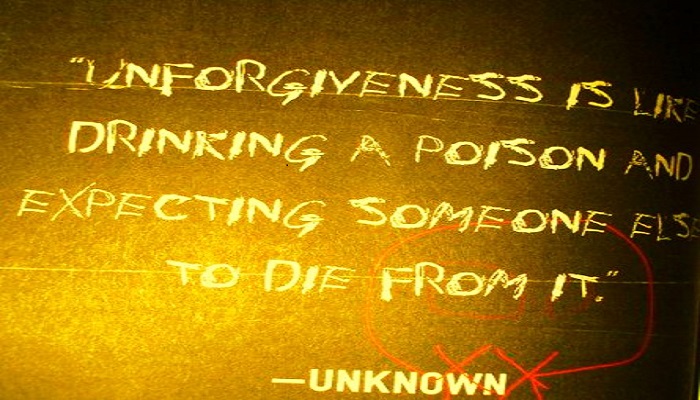
Forgiving others– The saying goes, “Unforgiveness is like drinking poison and expecting the other person to die.” If you think about it, this is perfectly true. Holding a grudge and being bitter or angry with someone who hurt you only hurts you more. The other person likely doesn’t even know you are mad at them. Even if they do know (and don’t care), why would you give that person the power to make you miserable while clinging to unforgiveness? Today’s challenge is to CHOOSE to forgive whomever it is that has you bitter, angry, hurt, etc. and embrace the FREEDOM of letting go of the pain. I’m not saying to forget it; memories are memories, the past is the past, what is done is done. I’m just saying to end the madness that bitterness and anger create in your head by choosing to forgive.
Forgiving yourself– Sometimes this is ever harder than forgiving someone else. I think it is for me. I’m pretty good at beating myself up over my past mistakes. Honestly, some mistakes still try to haunt me today. I have to choose the advice above to keep me from getting down. My past mistakes are part of what has shaped me to be who I am and where I am today. Hopefully I continue to learn from my mistakes and slowly but surely become better than I was yesterday. I don’t know about you, but I’m choosing to put the poison away.
If you feel like you have made too many mistakes to forgive yourself, I invite you to meet my friend Jesus. He is waiting to carry your burdens and help you find freedom from the past in his love, grace, and mercy. I would love to introduce you to Jesus if that sounds interesting to you.
What are your values? Values are NOT ethics or morals. Values are what is important to us, what we ‘value’, and what gives us PURPOSE. Most people have approximately 5-7 core values that identify who they are at their core. Each person’s values are unique to that person. Values reflect who we are on a daily basis, in everything we do at home and at work. When we align with our values on a daily basis, we have more energy and feel more fulfilled because we are leading from what’s important to us. When we don’t align with our values, we feel less authentic and become demotivated about our daily lives. So who are you at your core?
Think about what is important to you and write it down. It might be helpful to recall a great experience, or day, or time in life when you were on top of the world. What were you doing? How did you feel? Take detailed notes of this time and look for key words that describe what is important to you. Remember: Don’t pick values you think you should have. There are no right or wrong answers. You are trying to discover the values you know to be yours.
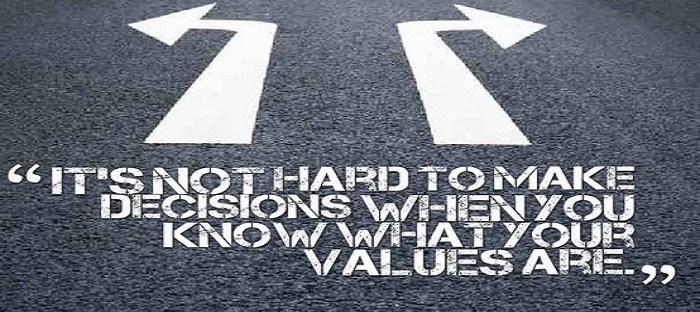
Why is this important? I’m glad you asked. Making decisions is simplified when you are living out your core values. When you know what is important to you, you know longer have to wrestle with the choice in front of you. You already know what to do; you simply decide in alignment with your core values. If you don’t choose according to your values, you will be miserable. We have all done this and it hurts. I think most of the stress in our life would be eliminated if we would simply choose in alignment with our values. The problem is that we don’t consciously think about what our values are on a daily basis.
So if you want to reduce stress in your life, live your best life, and be your best self then do this exercise.
1. Think about what is important to you, what you value, who you are at your core and WRITE IT DOWN. Choose words or phrases that help you identify your values so you can easily remember them.
2. Review your values often. Tattoo them in your mind. You may need to refer to your list for a while until it really sinks in. Post them in places you can see them often. Talk about them with those close to you.
3. When faced with a decision, choose in alignment with your values and experience the freedom and confidence of knowing you have chosen well!
If you want more help to figure out your values, or how to tie your values to your purpose, or to answer questions like, “What on earth am I here for?” I strongly recommend Rick Warren’s book “The Purpose Driven Life”.
ShareShare Reduce Stress with Values Based Decision Making
Stephen R. Covey’s 7 Habits Of Highly Effective People teaches timeless, universal principles to help us be our best. I couldn’t help but notice how nicely these habits apply to making me a better Project Manager.While this article is not meant to be an exhaustive commentary on Covey’s 7 Habits, perhaps you can relate to some of my observations.
Habit #1 Be Proactive (You’re in Charge)
Proactive means acting in anticipation of future problems, needs, or changes. Being proactive is a helpful quality for one who is to be successful and happy in life.
Unfortunately, many of us believe we are proactive when we really aren’t.
For example, it may surprise you to realize that failure to be proactive explains why you get upset about something that does not go your way. I’m sure you can think about many situations in hindsight and say, “Dang, if I had only ______, then this wouldn’t have happened.” Proactive people say in hindsight, “I’m sure glad I _____, so everything could work out like this.”
Don’t get me wrong, I’m not saying that being proactive will make everything work in your favor every time. I am saying that it definitely helps.
Proactive people take responsibility for their actions. People who are not proactive often find others to blame when things don’t go right. They say, “It’s not my fault. If “they” would have _____, then none of this would have happened.”
Personal responsibility is important in project management. Generally, the project manager is responsible for the success of the project. The PM is the leader, the orchestra conductor if you will, to make all the moving parts of a project come together at the right time for the right price. A PM needs to be proactive by asking lots of questions, engaging the experts, and following up on the details. Expecting someone else to do these important tasks is recipe for disaster.
Here are a few suggestions on how you can be more proactive with your projects today:
Are you waiting for someone to provide info, answer a question, or give a status report? Make a point to follow up with them today.
Did someone tell you that a deliverable would be ready at some date in the near future? Trust but verify that date is still accurate today to ensure there are no changes to the schedule.
At the start of your project, record the items that typically hold up the project or otherwise provide difficulty. Initiate communication with your team on how these items can be mitigated before they come up.
Habit #2 Begin with the End in Mind (Have a Plan)
Having a Plan is important in project management as you might imagine. Nothing can set up your project for success more than having a solid plan. You can read my thoughts on project planning in Planning for Success in Projects and Triathlon.
Planning and being proactive go together. Being proactive means you have a plan. The key is to be disciplined and follow the plan.
Knowing the end product or primary outcome is necessary to building a plan for how to get to the goal. That seems obvious, but the reality is that many projects fail for lack of a plan.
Habit #3 Put First Things First (Work First, Then Play)
The idea of First Things First seems easy when we are telling our kids to get their homework done before they can play with their friends. The same habit should apply to our work as well.
Have you ever started your work day with great intentions for all that would be accomplished by noon, but when noon comes you realize nothing was accomplished?How did that happen? Aside from losing the discipline of Habit #2, my guess is you got bogged down in low urgency, low importance tasks, or you found yourself fighting fires all morning.
Urgent – requiring immediate action or attention
Important – of great significance or value; likely to have a profound effect on success, survival, or well-being.
“What is important is seldom urgent and what is urgent is seldom important.” – Dwight D. Eisenhower
What can you do to incorporate First Things First in your projects?
Understand the difference between urgent and important. Eisenhower nails it.
Go back to Habit #2 and follow your plan
Recognize that many tasks are important to others, but not to you. Remember: “Bad planning on your part does not constitute an emergency on my part.”Sometimes you need to say ‘No’, or schedule it appropriately into your plan.
Limit mindless web surfing and other time wasting activities. Mental health breaks are necessary, but keep them in check to maximize your productivity. I like to incorporate exercise into my mental health breaks to care for my mind and body at the same time.
These first three habits are primarily inward or self-focused. To be successful in managing projects, I believe you have to manage yourself first. Live intentionally, purposefully, take responsibility for your actions, practice these three habits. The remaining four habits are outward focused or others focused. I’ll discuss them in a future post. I’d love to hear your ideas and tips for living these habits in your life and projects.





 Team Quadzilla