Fitness, Fortitude, Nutrition

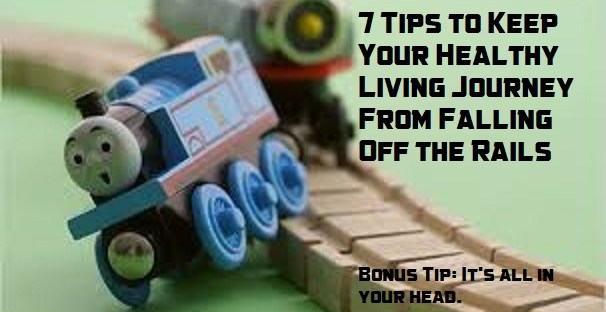
7 Tips to Keep Your Healthy Living Journey From Falling Off the Rails

Many people have fallen off the train to physical fitness. Maybe you can relate. Maybe you’ve been on the train (all aboard in January, right?) and fallen off multiple times. You are frustrated. It wasn’t your body that gave out on you though. Oh sure, you might have told yourself that your knee or back derailed your ride to fitness, but you know the truth: You chose to jump off the train. Maybe your results weren’t coming fast enough, maybe it was too hard, you were doing the wrong exercises, or other activities got in the way. There are a million excuses and yours is not new.


News Flash: Getting fit is hard. So is paying for medications, feeling stiff, weak, tired, and not being able to do the things you once did (or have always wanted to do). You choose. #toughlove

Getting fit (and staying fit) is a mental game more than a physical one. Most people approach fitness the wrong way, and it leads to failure. A mindset shift about fitness is required. Fitness isn’t a project with a defined start and end date. There is no “arrival.” There’s no retirement. Fitness is a process – a healthy living journey that never ends. Wrap your mind around the reality that you need to pursue a lifestyle of healthy habits and read on for more helpful tips to master the mental side of getting fit.

Set mindful goals

Set small reasonable goals and remember to focus on the process. Expect more internal negative feedback at the start than positive. You will be sore, and maybe hungry. You might get grumpy and want to quit. Health benefits are delayed for a while – longer than the instant gratification we all expect. Recognize that everyone struggles with new routine. Get used to being uncomfortable and know that it will be worth it if you don’t give up.

Don’t exercise – train

Exercising for the sake of exercising is terrible. We’re like a hamster on his wheel, mindlessly moving and loathing every minute of it. Kinda like how I feel about treadmills. Exercise on purpose. Train for something. Follow a plan or program. Sign up for a race or fitness event. When you finish, sign up for another one. Remember your driving force behind your fitness journey. Why are you really trying to get fit? How will you feel? What will you be able to do?

Be Social

Find other people to motivate you. Join a club or challenge group. Find a workout partner. Coach others. I have found the mutual accountability in helping others to be an awesome way to keep momentum in my healthy living journey. There is great power in being part of a group.

Change your Habits

Have you heard of Habit Stacking? It’s where you stack your new healthy habit on top of something you already do every day to help ensure you get it done. Plan ahead. Remove as much friction between you and the workout as possible. Set aside time in your calendar like any other meeting or appointment. Set your gear out the night before. Following a plan ensures you don’t show up to the gym with no idea how to maximize your results. We love working out at home because it eliminates so many of the common obstacles.

Define yourself

You are what you eat, you are what you do – not what you say you do. Talk to yourself and about yourself in a positive voice. “I am strong. I am healthy. I’m taking this time for me so I can be my best for everyone else.” You are a responsible person so you go to work every day. You don’t just skip work cuz you don’t feel like it. Same with your healthy habits. You are an active person, you are on a mission to be the best version of yourself, so you don’t ditch your program/ workout commitments.

Rest

Once you get on track, you love how you feel, you’re making progress, etc. you won’t want to stop. You still must listen to your body and rest. Give your body a chance to recover. But don’t use rest as an excuse to jump off the train. You can still eat right and do lower impact activity.

Change your routine as you age

Fitness isn’t a goal, it’s a lifelong process. It will change as you age. Adapt. Mix up your program. Avoid comparison with your younger self. Never quit. Find the activities that suit you. You may lose some speed and strength over time, but far slower than you would if you sat idle telling yourself you are too old or fat to do anything. Get moving. Conquer your mind. Do your thing. Press on!

Fitness, Nutrition

Have You Thought About Your Future Self?

Qgraph pic

The other day I was thinking about my personal, compelling WHY. You know, the REAL reason why I take my healthy living journey seriously. You do that too, right?

Wait, what?!?

I decided to let the famous Team Quadzilla closet door whiteboard illustrate something about all of our future selves that might be interesting to you. If not, then maybe you can make fun of my redneck whiteboard, my unpolished presentation, or my frumpy sweatpants. Catch the 4 minute ordeal HERE.

Fitness, Nutrition, Personal Development

6 Things Healthy People Do Every Morning

healthy morning

No matter your season of life, or the season of the year, it seems we are all VERY busy. We are so busy that one of the first things we sacrifice from our crammed schedule is self-care. We all know it’s important to take care of ourselves, but there is a lot of noise out there about what is really necessary to optimize our health. While there is certainly no cookie-cutter solution for everyone, below are six healthy habits that will set you up for success on your healthy living journey. Try incorporating them into your morning routine to make the rest of the day feel less chaotic.

  1. THEY EAT VEGGIES AT BREAKFAST

If you take time to eat breakfast (and you should), are you eating what you need to really feed your machine? I promise you can do better than toast or bowl of cereal. Aim for a balanced breakfast that includes protein, fiber, fat and a variety of colors from real food to keep you satisfied and prevent mid-morning cravings. I love knowing that my breakfast is jam packed with super healthy real food ingredients to jump start my day. Try these simple Spinach Egg Cups for a grab-and-go option.

2. THEY HYDRATE

Since your body gets dehydrated overnight, drinking water when you first wake up is a great idea. And proper hydration is crucial for glowing skin and maintaining healthy muscles and joints. I like to add lemon to my first big glass of water to wake up my digestive system. Fill up your water bottle for the day and plan to refill it a few times during the day. There are too many benefits to being well hydrated to list here, but suffice it to say that you need to drink lots of water.

3. THEY SWEAT IN THE MORNING

If you are like me, there are way too many easy excuses to skip exercising after work. Many people find they’re most successful with exercising if it happens before heading to the office. I love getting my workout done at home in the morning with the help of the greatest library of workout videos available streamed to any enabled device. Most take only 30 minutes to do and require little or no equipment. If home workouts, the local gym, or going for a run in the morning isn’t for you, find another way to get moving in the early hours of the day. That could mean parking farther away, taking the stairs or exercising at your desk. Just 15 minutes of moderate-to-intense activity daily can help you reach your healthy living goals.

4. THEY MAKE A GAME PLAN FOR DINNER

Not only is meal prepping a huge time saver but it also ensures you always have a healthy option on hand. Before leaving the house in the morning, make a game plan for dinner by defrosting proteins or using a slow cooker to do the work for you. It’s also helpful to find a recipe and write down your shopping list so you can pre-order your groceries (we love the Kroger ClickList) or swing by to pick them up on your way home. My go-to healthy eating resource, 90/10 Nutrition, offers a meal planning service and integrated shopping list app that makes it easy to plan your trip to the grocery store.

5. THEY TIME BLOCK THEIR DAY

Whether it’s emails or social media, there are plenty of distractions that can be obstacles to getting everything done. That’s why time blocking is a great tool. Review your top to-dos, and set aside a specific amount of time for completing them. Make sure your health priorities (such as a midday workout or meal-prepping) are in the plan, too. Schedule your morning routine like you do any other important appointment.

6. THEY REST

It’s important to ensure you’re getting enough sleep, but remember to account for the time required for your morning routine. Include a few minutes to relax I love to take some quite time to journal my prayers. Don’t feel guilty for taking a few minutes to enjoy your coffee, read the news, mediate or take a walk. Set yourself up for success by allowing for some rest time every morning.

Fitness

7 Reasons to Start Strength Training Today

workouts-at-home

If you think strength training is only for bodybuilders and athletes, it’s time to challenge your assumptions. Strength training offers several important benefits, and you don’t need to frequent a gym or own a bunch of equipment to get the job done.

Here are seven benefits of strength training:

  1. STRENGTHENS BONES

The fact is, by the time you celebrate your 30th birthday, you’ve already reached your peak bone mass. And if you’re not careful, your bones will gradually weaken, making them more susceptible to breaks and fractures. This is especially concerning for women, who represent a whopping 80% of the estimated 10 million Americans with osteoporosis. To keep your bones strong and sturdy, you need to challenge them. Strength training is one of the most potent bone-building weapons according to a research review in Clinical Cases in Mineral and Bone Metabolism.

“[Strength training makes] the muscles pull on the bones, causing them to slightly bend and ‘squeeze,’” says Michele Olson, PhD, FACSM., a senior clinical professor at Huntingdon College in Montgomery, Alabama. This “squeeze,” she says, increases the process of turning over and laying down new bone.

2. PREVENTS INJURIES

If you run, bike or play recreational sports, regular strength-training sessions can keep you healthy and injury-free. Many running and sport-related injuries are caused by muscle weaknesses, notes Janet Hamilton, MA, certified strength and conditioning specialist, registered clinical exercise physiologist and owner of Running Strong in Stockbridge, Georgia. For example, knee injuries in runners can often be traced to weakness in the hip muscles, Hamilton says; in particular, the medial glute muscle that powers lateral movement and keeps the hip stable. Strengthening this and other sport-specific muscles can lessen the impact on your joints, tendons and ligaments, keeping you running, jumping and lunging sans pain.

If you’re currently injury-free, you can maintain adequate strength with a couple of workouts per week, Hamilton says. On the other hand, if you need to address an underlying weakness, plan on doing specific rehab exercises 3–5 times per week.

3. BOOSTS ATHLETIC PERFORMANCE

Just as strength training can help you stay injury-free, it can also elevate your performance in your sport or activity. “Strong muscles will be better able to produce greater force, generate greater power and sustain for longer durations before fatigue or failure,” Hamilton explains.

How you structure your strength sessions depends on your primary activity. For example, if you’re an endurance athlete, you’ll benefit most from higher-repetition exercises (15 reps or more). If you prefer to play basketball or rugby, aim for lower-rep exercises (6 reps or fewer) to build power. I address this issue of strength training for endurance sports like triathlon in a short video.

4. HELPS LONGEVITY

Using data collected from more than 80,000 U.K. residents, researchers from the University of Sydney discovered strength training reduced risk of death from any cause by 23% and death from cancer by 31%, regardless of whether that training involved bodyweight-only or weighted exercises. If you add some good old-fashioned cardio, your risk of death from any cause is reduced by a total of 29%. To live long, researchers recommend strength training at least 50–60 minutes per week and doing at least 150 minutes of moderate-intensity cardio every week.

5. PREVENTS AGE-RELATED DECLINES IN MUSCLE MASS

Just as your bones quit bulking up around age 30, you also start losing muscle mass (also known as sarcopenia) at about the same time. Often, the older you get, the less you move, Olson says. This only speeds up your strength declines and makes everyday activities — like getting up from a chair and carrying groceries — incredibly challenging. Regular strength training can not only help you maintain your current muscle mass, it can also help you create new muscle. When you lift weights, you damage your muscle fibers. As your fibers repair themselves, they add more protein to each fiber, ultimately making them denser and stronger, Olson explains.

6. CURBS ANXIETY

New research from the University of Limerick, Ireland, reveals that lifting weights can ease anxiety, especially when done in group settings. After analyzing 16 studies on more than 900 subjects, researchers discovered that resistance training 23 times per week significantly improved anxiety symptoms regardless of session length. To keep anxiety at bay, grab your buddies for a group lifting session or join one of my Team Quadzilla virtual Challenge Groups.

7. BURNS MORE CALORIES AT REST

When it comes to torching calories, cardio typically gets all the credit. But while cardio burns more calories during exercise than strength training, building muscle through strength training allows you to burn more calories after exercise. This is because, unlike fat, muscle is a metabolically active tissue. In other words, every pound of fat you replace with a pound of muscle raises your basal metabolic rate or the number of calories your body burns at rest. According to Olson, one pound of muscle burns about 7 calories per day at rest, while fat only burns about half that amount.

To focus on muscle growth (also known as muscle hypertrophy), perform sets of 6–12 reps with a moderate weight and limit rest to 1–2 minutes between sets, as recommended by the American College of Sports Medicine (ACSM). Keep in mind: No matter how much muscle you add, it won’t be enough to out-burn the excess calories from a poor diet. So be sure to prioritize vegetables, fruits, healthy fats, proteins and whole grains.

Credit Lauren Bedosky and the myfitnesspal blog for doing the heavy lifting on this article.

Fitness, Personal Development

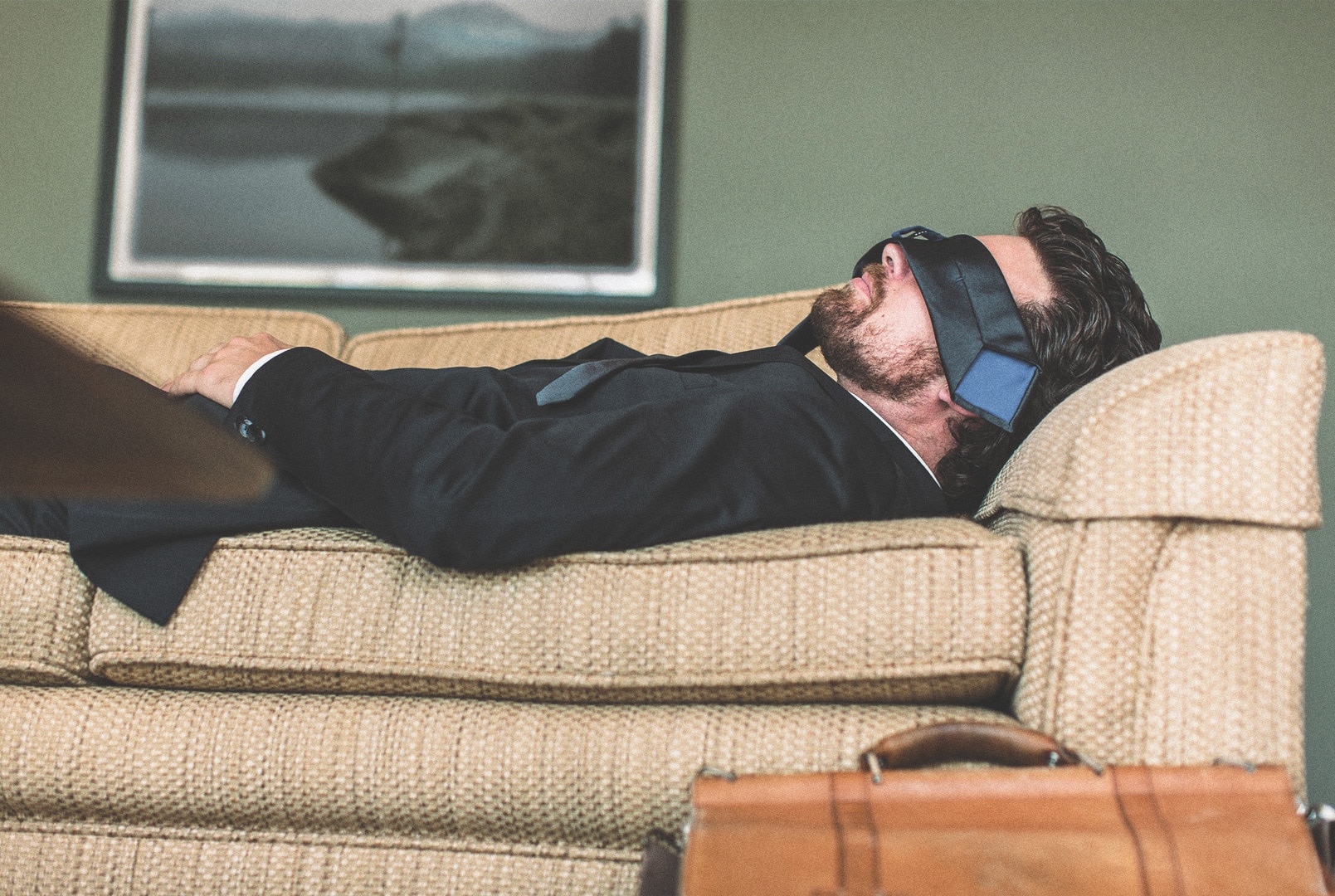
Snooze Now, ConQuer Later

I can remember taking ‘power naps’ in college. At very random times of day, I would just lay down for a few minutes between classes. My posse back then often did the same. We’d say, “I need a 10.” It was our code for nap time. Just 10-20 minutes is all that was needed. I remember feeling so much better afterwards. Naps really work. I steal one every now and then these days, but its not my habit. Maybe it should be. A quick glance through history books reveals a long line of influential nappers. Albert Einstein, Leonardo Da Vinci, and Thomas Edison were all known to take naps.

Their decision, it turns out, is backed by science.

Napping and productivity

The benefits of getting enough sleep are widely acknowledged, but why choose naps instead of catching more Zs at night? The simple answer is that it makes the second part of your day as productive as the first. About an hour after waking is considered our most productive time. Even if you consider yourself a night-owl, chances are your cognitive abilities are sharper after some shut-eye. It is more than common sense. It is science.

In a review of the many studies conducted on napping, Dr. Catherine Milner and Dr. Kimberly A. Cote find a host of productivity-related benefits. Napping improves reaction time, psychomotor speed, vigor, and vigilance. In one [study}(https://elibrary.ru/item.asp?id=7466161), participants saw their ability to complete additional tasks improve post-nap and in another, retirees saw improvements in episodic memory, visuospatial abilities, and general cognition. Yet another study on memory found that working-aged people were able to perform recall tasks better after a nap when compared to drinking coffee. The nap doesn’t need to be long: even a six-minute micro-nap improves declarative memory.

Napping and learning

Sleep is known to help consolidate memory and contribute to learning, but some scientists say the same benefits can be reaped from naps. Dr. Sara Mednick looks at how sleep impacts learning. In a 2003 study, she found that a 90-minute snooze is just about as good for learning perceptual skills as a full eight hours. Even better, the power of a nap adds to the learning potential experienced during regular sleeping hours.

Participants who napped in addition to their regular sleep schedule experienced “improvement, such that performance over 24 hours showed as much learning as is normally seen after twice that length of time.” The research suggests that if you’re struggling with complex learning tasks, a nap can help.

Napping and health

We know that getting enough sleep is important for overall health, but there is also evidence that napping, in particular, is a healthy habit. A 2016 study by the European Society of Cardiology compared the health of 386 patients with arterial hypertension to see how napping might impact their health.

Those that took mid-day naps had lower blood pressure and anatomical evidence of less blood pressure related damage. Napping was also associated with fewer medication prescriptions.

The benefits extend into real-world results. In a longitudinal study of over 23,000 healthy people, nappers had a much lower rate of coronary mortality. Those who napped occasionally had a 12% lower coronary mortality rate, while those who napped often had a 37% percent lower rate.

Towards a culture of napping

Napping is becoming popular because it is easier to coordinate than a full eight hours of blissfully uninterrupted shut-eye at night. Work hours are long and time with our families is precious. A twenty-minute nap can be slotted in between meetings or a longer snooze can take place over lunch, leaving free time at home to be spent on hobbies or with loved ones.

In China, public napping is commonplace. “It’s nothing unusual,” Chinese journalist Lorraine Lu writes. “If you get tired, you just put a cushion or pillow on your desk, lay your head on it and rest for 15 minutes.”

Aside from the workplace, subways and even Ikea are fair game. The same is true of several other Asia countries, and the afternoon siesta is a time-honored condition in many Spanish-speaking nations.

Though the United States is yet to catch up, some companies are coming around to the idea of corporate nap time. A 2011 poll found that 34% of respondents were allowed to nap at work and hundreds of sleep pods are popping up in offices, hospitals, and schools around the country.

If you aren’t one of the Americans already taking naps, there is no time like the present.

*credit belongs to Erin Wildermuth and the team at michaelhyatt.com for doing the heavy lifting on this article