Fitness, Nutrition

12 Bad Habits That Are Making You Fat

News flash: your metabolism slows as you age. In a review of data on energy expenditure, researchers found getting older is associated with progressive declines in basal metabolic rate. On top of that, many daily habits can drain your metabolism even further, making it easier to pack on the pounds.
But you don’t have to go down without a fight. Address the following list of bad habits and watch your metabolism and energy levels improve.

Bad Habit #1: Skip breakfast

Eating a nutritious breakfast is a great way to start your day. Because your metabolism slows during sleep, eating can fire it up and help you burn more calories throughout the day.

When you eat breakfast, you’re telling your body that there are plenty of calories to be had for the day. When you skip breakfast, the message your body gets is that it needs to conserve rather than burn any incoming calories.

Rush University Medical Center

Bad Habit #2: Eating the wrong breakfast

OK, so it’s about more than just eating something in the morning. Your body is like a finely tuned machine and it needs to be fueled properly with real food. If you grab a sugary donut or eat a muffin in the car, you’re setting yourself up to crash later. Instead, choose something with filling protein and fiber like eggs, Greek yogurt and berries or whole-wheat toast topped with peanut butter.

Bad Habit #3: Sitting too much

Going from your office chair to your car to your couch can lead to a very sedentary routine. And sitting for extended periods puts your body into energy-conservation mode, which means your metabolism can suffer. Solution: consider adding some movement while at your desk, or try a Team Quadzilla Fitness Challenge.

Sitting for long periods is thought to slow metabolism, which affects the body’s ability to regulate blood sugar, blood pressure and break down body fat.

UK National Health Service

Bad Habit #4: Neglecting strength training

Cardio is great, and it can quickly burn calories, but once you’re done running or cycling, your calorie burn quickly returns to normal. When you do HIIT and resistance-based workouts, however, your calorie burn stays elevated for longer as your muscles repair themselves. Per the American Council on Exercise (ACE): “Strength training is a key component of metabolism because it is directly linked to muscle mass. The more active muscle tissue you have, the higher your metabolic rate.” And, according to ACE, a pound of muscle burns an additional 4–6 calories daily compared to a pound of fat.

Bad Habit #5: Not eating enough protein

Protein feeds your muscles, promotes satiety, and is an important component to sustain a healthy weight. Eat too little, and you may have trouble building or maintaining muscle mass — and per the above, we know muscle’s importance to metabolism. Also, protein requires more energy to break down than carbs or fat, so you’ll burn more calories during digestion.

Bad Habit #6: Not drinking enough water

In a study published in The Journal of Clinical Endocrinology & Metabolism, researchers found drinking 500 milliliters of water (about 2 cups) increases metabolic rate by 30%, and that spike lasts for more than an hour. So, drink water throughout the day to stay hydrated, and you’ll get the added benefit of a boosted metabolism.

Bad Habit #7: Stressing out

When stress levels increase, your body produces a hormone called cortisol. Cortisol leads to increased appetite, cravings for comfort foods, decreased desire to exercise and reduced sleep quality — all things that negatively impact metabolism. So, while you can’t always control your stress levels, managing stress can go a long way toward protecting your body’s internal fire.

Bad Habit #8: Binging refined carbs

If you eat sources of refined carbs like white bread or pastries regularly, it could be slowing down your metabolism. Research shows those who consumed the most refined carbs burned fewer calories and had higher rates of the appetite-stimulating hormone ghrelin than those who adopted lower-carb diets that focused on complex carb sources.
“Refined carbohydrates from the diet turn into blood sugar very quickly; blood sugar is used for energy by the body [but] if it’s not used for energy, it can quickly turn into fat stores,” explains Lee Murphy, RD, senior lecturer of nutrition at the University of Tennessee.
Carbohydrates are important for energy, but skip refined carbs in favor of fiber-rich, unprocessed carbohydrates such as sweet potatoes and other starchy vegetables and whole-grain bread or pasta.

Bad Habit #9: Ignoring dairy

According to research published in the journal Nutrients, people with the highest intake of milk, cheese, yogurt and other dairy products had the lowest rates of obesity. This is part of a growing body of research linking dietary calcium to improved regulation of energy metabolism.
“Dairy products are sometimes known as metabolism boosters, in part, because they contain protein and calcium — both possibly helping maintain muscle mass while potentially promoting weight loss,” says Murphy.
Before you start eating dairy at every meal, Murphy cautions your calorie counts and fat intake should remain within recommended guidelines.

Bad Habit #10: Sleeping in a warm room

A small study found sleeping in a cool room — either leaving the air conditioning running in the summer or turning down the heat before bed in the winter — could increase levels of so-called brown fat, which burns calories to generate heat. The ideal overnight temperature, according to the research: a cool 66ºF (19ºC).

Bad Habit #11: Not sleeping enough

One bad night’s sleep is enough to leave you feeling sluggish, impair your cognitive processing, and make you more likely to overeat. String together several nights in a row — or a lifetime of inadequate sleep — and science shows decreased metabolism and hormonal imbalances may follow.

Bad Habit #12: Chowing on fast food

You already know ordering a burger and fries at the drive-thru adds a lot of extra calories, “but it could also cause your metabolism to slow to a crawl,” says Whitney Linsenmeyer, PhD, RD, assistant professor of nutrition at Saint Louis University and spokesperson for the Academy of Nutrition and Dietetics. While you might be more likely to reach for a higher-fat meal in times of stress, “the high-fat content takes more time to digest,” she explains.
This can slow down metabolism, while stress compounds the problem. In one study, women who experienced at least one stressor over the past 24 hours burned 104 fewer calories after eating a meal containing 930 calories and 60 grams of fat than those who were not stressed. The difference could add up to an 11-pound weight gain in one year.

So there you have it. How many of these bad habits do you relate to? Fret ye not, there is hope. Take one at a time and work on it with small reasonable goals and ask someone to hold you accountable. Success follows your consistent work on the commitment to be better every day. Special thanks to Kevin Gray and Jodi Helmer for doing some heavy lifting on this article.

Fitness, Nutrition

How I Can Afford Shakeology

I must admit, I didn’t always love Shakeology.

Even though I researched Shakeology’s ingredients and thought they were amazing, for a long time, I was into making my own real food smoothies.

Due to budget constraints, I thought that making my own smoothies from scratch was the best I could do, and the best I could afford. They were healthy all right, but they didn’t taste very good!

But when I decided to take a chance on the 100% money back, bottom of the bag guarantee, I ordered a Challenge Pack, which came with a 30-day supply of Shakeology, and signed up as a Team Beachbody Coach to get the biggest discount.

A short time later, Angie appreciated the many benefits of Shakeology so she needed her own supply if we were to both drink it daily. Now we buy 2 bags of Shakeo every month (Vegan Chocolate and Vegan Tropical Strawberry), and we wouldn’t have it any other way.

I know what you’re thinking: Dang, that’s expensive, so how can I swing it?

Well, with just a few tweaks to our spending habits we found it extremely doable. Here’s how we do it…

How I Can Afford TWO bags of Shakeology Every Month

Things we DO NOT buy:

• We DO NOT buy fancy coffee drinks. This sounds crazy to some of you who “need” coffee like air, but we don’t do coffee at all. This is easy for us. It is possible to wean yourself off coffee. Take baby steps; reduce the drive thru trips at first, and pay yourself for the money you save. That jar will add up fast. You can replace your foo-foo coffee with a much cheaper home brew. Ask yourself why you need coffee. Is it the taste of coffee (and all the sweetners that go with it), or is the the caffeine shot? Either way, the Cafe Latte Shakeo has you covered.

• We DO NOT buy gum, candy, cookies, snackie things, or desserts. It wouldn’t make any sense to care enough about our health that we buy the best shake on the planet to nourish ourselves with and then turn around and tear down our health by filling our body with junk food. Truth be told, you will occasionally find treats in our house – for special occasions, for Brandon, etc., we are human after all. But we are quite picky about the ingredients of our treats (whole grain tortilla chips, Kind bars, fruit popsicles, etc.)

• We DO NOT eat out very often. Some months, we eat out twice (or order in), and other months, we eat out zero. We buy good food from the store and make good meals at home.

• We DO NOT subscribe to cable TV. We watch so many things online. We haven’t paid for cable in 15 years and don’t miss it at all.

• We DO NOT have a fancy phone or expensive plan. Angie’s phone is 3 generations old, and I’ve never owned a phone other than what is provided for work.

• We DO NOT have a gym membership. Instead, we work out right in the living room, at the touch of the remote, with Beachbody On Demand programs that are created by some of the best trainers on the planet. Plus, it costs me ZERO gallons of gas getting to and from my workouts.

• We DO NOT buy extra vitamins and minerals. Because Shakeology delivers dense superfood ingredients, and with our healthy eating strategy, we do not need additional supplements. Note: I’m not saying you can immediately quit ALL vitamins/ supplements recommended by your doctor to treat your special circumstances, but it’s very possible that you can!

Why I Think Shakeology Is a Great Deal

• Shakeology helps curb my junk food cravings.*† Because it’s so nutritionally dense, Shakeology gives my body what it needs in a form that can be easily absorbed. Plus, it’s so incredibly delicious that it feels like I’m having a treat. It’s the best of both worlds!

• Shakeology is super convenient. Just add it to water and it mixes easily. Or take 2 minutes and blend it with ice, banana, frozen fruit, peanut butter, or whatever suits you (find tons of delicious recipes here) to make a super filling meal. That’s how we roll.

• Shakeology is packed with nutrient dense real food. I used to buy separate “superfoods” to add to my smoothies. Then I realized that I was spending way more on my separate ingredients per month, even from discount sources, than I would spend on Shakeology.

Compared to what I used to spend, I’m actually saving money by purchasing Shakeology!

Why My Body Loves This Stuff

Before becoming a Shakeology fan, when I looked into the ingredients of other shakes there was always something in them that made it a compromise for my health goals.

I have a digestive health issue, so there are some ingredients I have to watch out for. Shakeology is the first shake that is filled with ingredients that are ALL the ones that I can have. I drink the Plant-Based Vegan flavors and have been thriving on them.

During the time that I thought I could not afford Shakeology, even though I was very impressed with it, I still thought I didn’t need it. But once I took inventory on the benefits I was experiencing (regular digestion, less bloating, more energy & mental clarity, improved skin, boosted immunity, etc.) I realized that I was not getting this result from all the other homemade tricks I made, or the cheap powders and potions I tried. I was convinced that Shakeology is all that I was looking for, and more.

And yes, I drink it every single day! It’s “bottom of the blender good.”

My Secret Weapon

I believe that Shakeology affects my body in the best possible way when I drink it every day. If I only drank it every other day, my results would not be as great. If I only drank it a couple times a week, my results would be even less.

I get great results because I drink it every single day. It’s my secret weapon. It wasn’t until I had been using it every day for a while that I realized what a difference Shakeology could make in my life, and I can say with 100% confidence that it works.

It is so powerful, simply because it is a blend of some of the most densely nutritious ingredients that money can buy — and to me, it’s worth it. I am worth it. My health is worth it.

Ready to take the next step?

Then set yourself up for success with a Beachbody Challenge Pack: You get Shakeology, a full year of unlimited workouts on Beachbody On Demand, and a free Team Beachbody Coach (me) who can help support and motivate you to stay on track. Start here!

*These statements have not been evaluated by the Food and Drug Administration. This product is not intended to diagnose, treat, cure, or prevent any disease.

†Vitamins C, B6, and B12 contribute to normal energy-yielding metabolism.

Nutrition

Stop Using These 7 Health Buzzwords

These days there are so many so-called superfoods and labels on packaged foods that it’s hard to know what’s really healthy and what’s hype. Why does a green juice need to have “vegan” on it or a salsa need to say “gluten free,” when both foods are naturally those things?
“On one hand, ‘buzzwords’ definitely work as far as traction and traffic go — they can help get someone to read an article that may be very helpful and informative, and they are what everyone is Googling,” says Keri Glassman, RD, founder of Nutritious Life. “But it’s important to keep in mind that many times a buzzword is just that and you need to read beyond the word.”
This is especially true because not all buzzwords have a standard definition, nor do they mean a certain food is healthy. “One of the things that happens is that they create a health halo around a particular food. We think, ‘Oh, that’s going to be better because it’s a non-GMO gummy bear,” says Leslie Bonci, MPH, RD, owner of Active Eating Advice. “So then we overlook the fact that it’s still a cookie or a cheese puff, and we consume unnecessary calories and spend more than we normally would.”
Be especially wary of these seven buzzwords dietitians are sick of hearing:

1. NATURAL

While it may seem as though, ‘Duh, who wants to eat something unnatural?’, this term isn’t defined by the FDA, so from a packaged food standpoint, it can really be anything, Glassman says.

2. CLEAN

“Clean means free of what?” Bonci asks. “This is not a term that provides any useful or helpful direction.”

3. SUPERFOOD

We can all admit this term is overused. First it was acai, then it was kale and then quinoa. Now almost anything gets labeled a superfood. “What makes one food more super than another?” says Bonci, noting that different foods are high in different nutrients, plus a lot of the claims about superfoods are just that — claims, not proven scientific facts. “Nobody can only eat acai berries and call it a day,” Bonci says. “And you’re not jeopardizing your health if you’re not eating superfoods.”

4. FAT-FREE

“Research has shown that fat is our friend,” Glassman says. “And it’s well known now that when fat is removed, other ingredients like sugar are added to make up for it.” That added sugar often makes fat-free or low-fat foods have just as many calories as the regular version. Plus, fats help the body absorb many vitamins in addition to keeping you full.

5. -FREE

Bonci goes a step further and says to avoid a label saying a food is “free” of anything. “It doesn’t mean it’s any better, and oftentimes the foods never had that ingredient anyway,” she says. “It’s one thing if you need to watch out for gluten or dairy, but we have transcended that. There’s gluten-free water.”

6. NON-GMO

“Here again, foods that would never have GMO ingredients in the first place get slapped with this label because food companies know many consumers are concerned about GMOs,” Bonci says. There are only eight genetically modified crops commercially available in the US: papaya, sugar beets, corn, soybeans, cotton, canola, alfalfa and squash. If none of those foods are on the ingredients list, then of course it’s GMO-free.

7. SIMPLY MADE

“Nobody is going to put ‘complicated’ on the label,” Bonci says, adding that “anything in a package had to go through some processing.” That doesn’t make the food any better or worse per se. Plus, “you don’t see ‘simply made’ on an apple, but it grows on a tree from the ground,” Bonci says.

About the Author: Brittany Risher
Brittany is a writer, editor and digital strategist specializing in health and lifestyle content. She loves experimenting with new vegan recipes and believes hummus is a food group. To stay sane from working too hard, she turns to yoga, strength training, meditation and scotch.

Fitness, Nutrition

Losing Weight In Your 40’s And Beyond – 4 Tips

News Flash: People who may have maintained their weight easily in their 20s and 30s, start to feel more challenged when they pass the big 4-0. Can I get an AMEN?! We shouldn’t be surprised since we know we’ve begun to lose lean muscle mass and experience far more hormone fluctuations at midlife and beyond. So we ask ourselves:

Am I doomed to that middle-age spare tire and growing bigger in all the wrong places?

The golden rule of weight loss — eat less than you your body burns — is more difficult as you age because your body changes metabolically. The internal furnace simply doesn’t burn as hot as when you were younger. But that doesn’t mean you have to give up – as so many mid-lifers do.

As with any healthy habit, the key to success is consistency and mindfulness. So maybe you’ll need to be more focused and dedicated to your goals than when you were younger. Read on for some tips:

1. CONSIDER YOUR EATING PATTERNS
The good news about getting older is you’ve had time to understand how nutritional changes affect your health. You’ve gained experience about the impact of certain food choices, and now it’s time to put that knowledge to use. As metabolism slows with age, you might not be able to get away with some of the indulgences that your body used to forgive you for.

That doesn’t mean you must starve yourself or jump on the latest fad diet. Rather, it should prompt you to be more conscious about your choices and patterns, including portion sizes, the timing of your meals and snacks, and the choices of the foods you eat.
You are smart enough to know your unhealthy habits regarding food, so this is the time to address them mindfully.

2. ADDRESS PORTION SIZES
It’s no secret our culture works against our plans to maintain a healthy weight. Processed foods and fast food options abound, and our frantic pace of life increases the temptation to shove anything into our mouth NOW. Cooking at home is de-emphasized in favor of convenience, and portion sizes have changed significantly from even a couple decades ago.

Packaged food “serving size” doesn’t necessarily mean that’s how much you should eat. Tracking portion size is super helpful. Consider using the popular Beachbody Portion Fix containers and nutrition guide* to help you see what you should be eating every day. You will be surprised at how full you will feel when you eat the right foods in the proper portions.

3. WATCH CARBS AND CALORIES
Carbs and calories are not all evil. It’s the QUALITY of the carbs and calories that counts. Processed foods are often “empty calories” that offer the double whammy of little sustained energy, and only short term hunger satiation. Resist the temptation to choose pre-packed, processed foods with long ingredients lists on the label. At the same time, you need to eat, so resist the temptation to starve yourself to lose weight. Whole, real food is best.

When you’re older, keep in mind that your metabolism is already slowing down, and starving yourself will only reduce your metabolism. The ‘starvation effect’ means that your body holds onto fat when you don’t eat enough, so your suffering completely backfires.

4. LIFT HEAVY STUFF
Science: As you age, your muscle mass loss causes your resting metabolic rate to decrease, changing your calorie-burning mechanism. In other words, your internal furnace does not run as hot as it used to. That can be even more pronounced by a poor diet, smoking, alcohol use, sedentary behavior and genetics.

Further, as muscle tends to turn to fat when not used, you may also lose balance, coordination and strength. This is why it’s so important to keep active as you age. Don’t be one who retires to the lazy-boy because you are too weak to walk, pedal, travel, play with your grandkids, etc. But the good news is you can increase strength starting today, regardless of your starting point.

Resistance training performed a few times per week can not only help you regain what was lost, but can also increase bone mass, and studies have suggested it might improve sleep, help cardiovascular health, boost your mood and a list of other benefits.

It can be more challenging to lose or maintain weight as you get older. But getting more conscious about what, when and why you’re eating — and adding strength training* to your routine can help you age better.

*For more information about nutrition plans, exercise plans, building healthy habits, etc., reach out to me for personalized advice and resources.

Fitness, Nutrition

Reading Food Labels – Let’s play a game!

Everyone likes games, right? Especially when you are guaranteed to WIN. Let’s play!

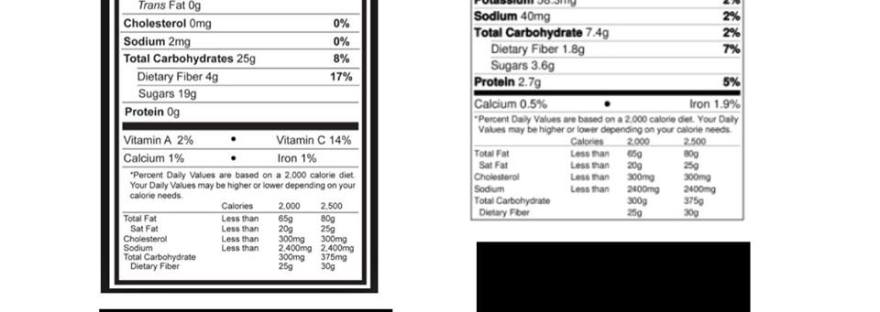
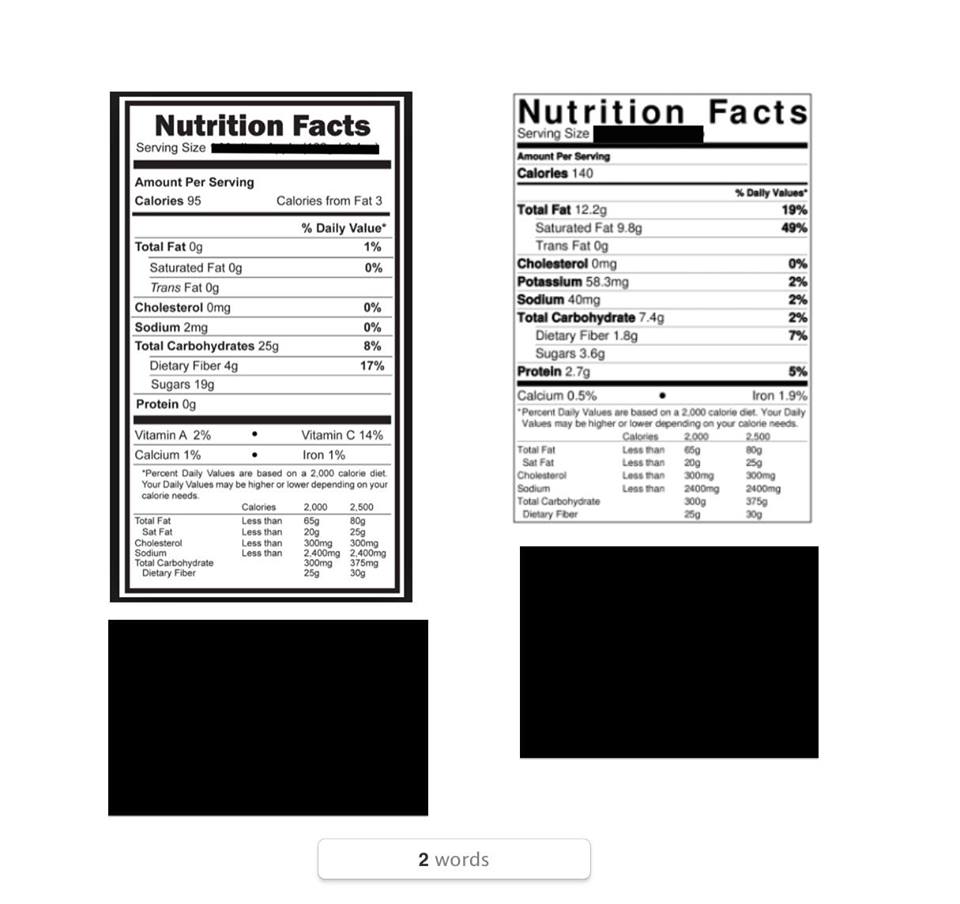
Of the two nutrition labels shown, which one would you choose for a snack and why?

label 1

Pause here and think about your answer (LEFT or RIGHT and WHY) before moving on…

Got it? OK, here are some comments from when I played this game on social media:

“Depends on activities but the one on the right has a ton of potassium and fat isn’t bad. If I need carbs I might think differently but I often don’t need as many carbs as a food has. Plus the carbs are from sugar on the left…”

“Probably the one on the right for nutritional completeness (and I have enough fat macros to handle it). However…if I just need quick carbs between workouts, the snack on the left is probably a good option.

“I would pick the one on the right because of the protein and potassium. The other seems like empty calories and too much sugar.”

Does your answer sound like these? Read on…

The product on the left is an apple. I would hope that most of us agree that this is a healthy food, or can be a part of a healthy lifestyle.

The product on the right is a snack-sized Reese’s Peanut Butter Cup. 1 cup size. Half a normal package. I would hope that most of would agree that this would fall into the “treat” category in a healthy lifestyle, and not something to eat on a regular basis (if one is trying to be healthy overall.)

labels final

I’m not bashing anyone’s answers or anyone’s personal choices. I just wanted to point out that it’s hard to tell if something is “healthy” by just reading the NUTRITION FACTS. The INGREDIENTS LIST is the most important piece of information about a food/product, in my opinion.

The amount of fat, protein, carbs, and even calories IS NOT AS IMPORTANT as where those macros come from (the ingredients).

The ingredients in an apple are: apple. Single ingredient, whole food. Grown not made. Yes, it has sugar grams but no one set that apple down and injected it with white table sugar. Sugar just exists in an apple in a natural, unprocessed form. Our bodies were designed to process this type of sugar naturally. 

However, the ingredients in the Reese’s are various. Sugar appears in one form or another, 4 times! In other words, there is a LOT of ADDED sugar. Someone intentionally put processed, refined sugar in that product. Our bodies process that sugar differently than the sugar from the apple.

This is part of what we are teaching in 90/10 Nutrition. Healthy eating is about INGREDIENTS first. If you want more info about our system of reading ingredients and how to implement a healthy eating lifestyle you can actually sustain forever, please reach out to me directly or check out the free nutrition downloads (including a 40 minute nutrition class I taught for my employer) in the shop tab on my website. 

If you are still reading, you won! You have learned a super important first step in healthy eating. Congratulations! I sincerely hope you will implement what you have learned here and see for yourself how it can improve your health and help you feel amazing!