faith, Family

In Your Singleness | Letter To My Son

I’m sharing a series of “letters” originally written by Vince Miller. I regard Vince as a trusted resource for wisdom and insight on faith and family especially as it pertains to men and fathers. His bio is at the bottom of the post. Look him up. What follows is his work entirely. Vince communicates the messages I want my son to hear in a far more clear and concise way than I could ever say. Consider using these as conversation starters. I encourage you to share these letters with the important men in your life.

“Husbands, love your wives, as Christ loved the church and gave himself up for her.”

Ephesians 5:25

Companionship is a Worthy Desire

If you are looking for companionship, friendship, and a relationship with a woman, know that this is a worthy desire. And having the aspiration to one day be married to an awesome woman is a declaration of the desire for a relationship and to one day become a husband and a father. It also indicates an awareness of our passion for an ongoing connection. Even Adam, the first man, wanted a relationship, and God saw that it was good for him not to be alone—therefore, God created woman.

But during your single years, you have an opportunity. It’s the opportunity to develop spiritually and hone a character that’s worthy of a long-term relationship. Right now, you have the chance to become the man God wants you to be—aside from the titles husband, father, or leader. I know many married men and fathers who wish they had invested more time in character and spiritual development before marriage. Even though the challenges of relationships refine us, it’s crucial during your singleness to become the man God wants you to be today. You must find your identity in Christ today. It will be the anchor for your life regardless of the titles you hold tomorrow, including husband, father, and leader.

Four Things to Consider While You’re Single

One | Learn self-leadership

All men need to learn self-leadership. Discovering the value of self-leadership as a single man is a great asset. I don’t know any woman who is not attracted to a man who can lead himself effectively. A man who cannot lead himself is destined for relational issues in all other parts of life. Self-leadership is an intentional exercise. It affects many aspects of a man’s life: timeliness, responsibility, conflict, self-care, grooming, building healthy relationships, avoiding unhealthy ones, and setting priorities. Self-leadership involves organizing our lives around priorities and values that lead to purposeful action rather than leaving each moment to happenstance.

Here’s a potential question that might get you thinking about your self-leadership.

“What are my honest relational priorities, and what’s my plan for getting there?”

As a man, you must begin to determine your relational priorities now. Let’s say you define your priorities in this order.

  1. A vibrant relationship with God that gives glory to Him.
  2. Career fulfillment that positively impacts others.
  3. Core relationships that influence self and others.
  4. An active relationship with my family of origin.
  5. A committed God-honoring marriage.
  6. God-fearing children.

Now, these are only broad examples, and you can borrow them if you like. But as a single man, naming these “relational priorities” in this way will allow you to begin devising a plan and determining the self-leadership needed for the course. While at present, you cannot do much about tending to a marriage or children, you can devise a plan for becoming a man that a wife and child would love and respect. And you can give a lot of attention to the first four priorities on the list above. You can devise a plan and focus on becoming the man God wants you to be. And by leading yourself in the present, you will be more prepared for leadership in marriage and of a family with children. But you must determine personal priorities first and then take a little time to reflect on how you are going to lead yourself there.

Having identified what’s on your priority list, you now need to develop an intentional plan for getting there. This is where self-leadership moves from reflection into action. Perhaps there will be several small steps in each area where you can live out your priorities. Leaders are intentional, and your intentionality—while you are single—will serve you now, and if you get married, it will serve you later. So, start by leading yourself now.

DO THIS:

  • Make a list of relational priorities (or borrow mine).
  • Reflect on what is needed to get there.
  • Set one goal in each priority.

Two | Determine your values and grow into them

If you haven’t taken the time to write down or state your values, you need to do so. A value is a stated measurement for a standard of behavior. Declaring values is a considerable step toward maturation and stewarding your life and calling. Many leaders I’ve met in life state business values and require employees to live by them, but they fail to know or declare their personal values. Determining, stating, and living by your values are essential steps toward finding a woman who shares these values. Just think about it for a minute. What could be worse than working for an employer or being a relationship with a person who does not share your values? Just so you know—it’s miserable.

Take a couple of minutes to reflect on the following question:

“What values guide your life, and how would you define those values?”

Let’s say, for a moment, that a value you possess or aspire to hold is honesty. Rather than just recognizing this, define it. Write down the implications of living a life of honesty. Consider how the application of that value may influence your actions, attitudes, motives, and relationships with others and God. Don’t make the mistake of thinking of values as dull ideas. Instead, think of them as living measures that influence your actions, attitudes, and motives. You might state the value of honesty this way:

“In all that I do, I will speak honestly, seek the truth, and do my best to live transparently with others.”

Because it’s written down, stated, and rememberable, your value has the potential to become a guiding principle. And as you look forward to marriage, you can aim to find someone who either shares or supports your value of honesty. If not, it might be a deal-breaker, not because of the person but the value.

DO THIS:

  • Make a list of three values you possess or aspire to possess.
  • Define these values in your own way.
  • For one week, evaluate your actions, attitudes, and desires, using these three values.

Three | Discover your identity in singleness

Men and women sometimes get married because they believe they are missing out on something in their current situation and feel a spouse will fill that void. While there is much to be said about a man and woman becoming “one flesh,” we need to remember that Jesus offers the relationship that completes us—not a spouse.

A relationship with Christ is one of perfect grace, mercy, forgiveness, and love, which cannot be found in any human relationship. Your relationship with Christ is the ultimate relationship and primary to every other relationship. Coming to a place of contentment in your singleness with Christ is part of living out your identity in Christ. And why is this important? Well, because your identity is not found in marriage. Marriage doesn’t take the place of one’s identity in Christ; it only compliments that identity. Remember, in singleness you are a complete person in Christ. Regardless of popular opinion, your spouse will not complete you—Jesus does.

Four | Get to know yourself

Finally, you need to know yourself. This is a lifelong pursuit. So begin today to get to know who you are in all kinds of circumstances, for in marriage or companionship, you will not be able to hide.

Here are ten questions to reflect on today:

  1. What do you believe is possible for you?
  2. What activity in your life gets you fired up?
  3. How would you like others to perceive you?
  4. What is something you love doing, even when you are tired?
  5. What do you fear about a job or a relationship?
  6. What have you done in your life that makes you proud?
  7. What is your most significant self-limiting belief?
  8. Who is your role model?
  9. Who is a person that you don’t like but spend time with?
  10. What is one failure that you have turned into your greatest lesson?

God made you unique, and as a man who lives in a broken world, you have unique capabilities and vulnerabilities. Know and get to know your strengths and weaknesses as you encounter friendship. You will learn some lessons as you go, but be willing to get to know yourself as you do. This exercise in self-awareness will benefit you, your future wife, and your future children. Be committed to self-improvement and getting to know yourself through the phases and stages of life.

I love you, son—Dad

Vince Miller is an author and speaker to men around the world on topics that include manhood, masculinity, fatherhood, mentorship, and leadership. He has authored 16 different books for men and is hosted on major video platforms like RightNow Media and Faithlife TV. He hosts a weekly podcast, writes weekly articles, and provides daily thoughts from God’s Word all just for men. He is a 27-year ministry veteran and the founder of Resolute a Men’s Ministry Platform that provides bible studies aimed at building better men found at www.beresolute.org

Family

You Always Bite The One You Love

By Dr. James Dobson

Isn’t it curious how in the midst of a nasty family argument we can shake out of the bad mood the instant the telephone rings or a neighbor knocks on the door?

Sometimes those we love are treated the worst, and kids are quick to notice this hypocrisy. Have you ever been brought up short by a small voice questioning this sudden turn to kindness after twenty minutes of fire and brimstone?

The late Mark Hatfield, a longtime senator from Oregon and the father of four kids, said his wife stung him once by saying, “I just wish you were as patient with your children as you are with your constituents.”

He isn’t alone. We’re all guilty at times of what I call “split vision,” treating certain people with forbearance while heaping contempt on others under our own roof. We assume the worst; we pounce on every shortcoming. We never miss an opportunity to deliver a corrective harangue. And in the process, we wound the people we care about the most.

Isn’t it time to cut one another a little slack at home? If, in fact, we love our spouses and our children and our parents as much as we say we do, one way to show it is to give them the kind words we bestow on our casual acquaintances.

Fortitude, Personal Development

Life Lessons from Rocky

Our family recently watched all 6 Rocky movies. It had been long enough since I’d seen any of them that I forgot much of the story. Of course I remembered Mr. T as Clubber Lang, Apollo Creed, and Ivan Drago, but I totally forgot about Hulk Hogan as Thunderlips along with much of the good story telling about real life. I was surprised at the positive messages in these boxing movies. I don’t care for boxing at all, in fact I think it’s a barbaric sport, but I can’t deny the positive life lessons taught in these movies. Read on for my insights from these movies in hopes that they will encourage you as they do me.

We Are All Overcomers

A central theme in the Rocky stories is heart or fortitude. Fortitude is the mindset that you will not be defeated no matter the obstacle, sacrifice, suffering, and pain. The body will only go as far as the mind will allow it. That’s why I like to say, “Healthy living starts between your ears.” Rocky had his mind right even if his body was never like that of his opponents. He won because of his heart. He would never give up. That’s mental fitness and fortitude.

You and I are not striving to overcome the physical beating a boxer takes, but we all have our personal battles. Maybe it’s defeating a doubt that we can’t do/ be something. Maybe it’s fear that we will fail, or never measure up. Maybe there’s a bad habit we wish we could conquer. Maybe it’s a bitterness or resentment that eats at us. We all have something to overcome. Rocky reminds us that we are overcomers and when our driving force to “win” is stronger than the excuses and obstacles, we can do amazing things. https://youtu.be/D_Vg4uyYwEk

No Regrets

In the 6th movie, Rocky is old and long retired living a quiet life as restaurant owner in Philly. Without spoiling the story, he gets this “itch” to fight again and he can’t shake it. Fighting is what he’d always done. Boxing is what brought him the most joy and satisfaction, how he was known, how he identified himself. Despite his age, there was still a fire in his belly to fight again. He called this fire “stuff in the basement.” https://www.youtube.com/watch?v=Et_Bdct1T0U

It seems strange that he would want to fight again because it really is crazy, but are we any different? I’m not. Life is short, health is not guaranteed, and I believe we all have a secret desire to not have regret. We don’t want to regret NOT doing the thing we always wanted to do, but were too afraid to go for it. We wonder, “Could I have really done X?” Rocky asked this question and he went for it, despite all the odds and obstacles. Despite what other people thought of his goal, Rocky went for it. I believe he is challenging us to do the same. https://youtu.be/KFLgYy2VHV0

What is your “stuff in the basement?” The thing in your heart that kind of eats at you to do, but you keep pushing it back down for all the list of excuses you’ve come up with over the years. Maybe it’s time to “let the beast out.” It doesn’t have to be an audacious physical goal either. Maybe it’s to do your part to restore a broken relationship, or confront a loved one, or to change jobs, or move away. I don’t know what it is, but you do.

Love Fiercely

I was not expecting to learn about marriage and family from Rocky, but it’s in there. Watching Adrian love and support Rocky is convicting and heartwarming at the same time. Man, she loved Rocky fiercely. Despite his flaws, which are many, she was always there to love, encourage, and support her husband. I’m convinced that Rocky would never have won any fights without the knowledge that Adrian was in his corner no matter what.

They yelled at each other. https://youtu.be/SDe3qE_aw8Q They argued. Mostly Adrian was right. But they reconciled quickly and let love rule their relationship. It’s beautiful. I love this quote:

“Adrian has gaps, I have gaps, but together…no gaps.”

Rocky Balboa

He knew he needed Adrian and he loved her deeply, cared for her, and always wanted the best for her no matter what. Marriage is meant to help complete the individual through mutual sacrificial loving. It’s how God designed us. Flawed as they are, Rocky and Adrian demonstrate this love well.

Family is important to Rocky and Adrian. He often talked about “home team” particularly with his son in Rocky V. When Rocky lost sight of his “home team,” Adrian was there to draw him back and the family was strengthened for it. Rocky even loved Paulie, Adrian’s drunken loser brother by forgiving him often when Paulie treated him or Adrian poorly https://www.youtube.com/watch?v=fp80snqeI3w, and even when he squandered their fortune. Because Paulie was family, Rocky did all he could to love him despite his flaws and failures. A great example for us all.

Work Works

In all the movies, Rocky’s training plan was old school, fundamental, blood, sweat, and tears hard work. He didn’t have the fancy facilities or equipment, latest techniques or technology, or cutting edge gurus on his team. He didn’t take steroids or chemical supplements to improve his strength or stamina. The guy just worked. Hard. The Russian Drago in Rocky IV had all the stuff and he still lost.

I can’t get past this illustration applying to today’s multi-billion dollar health and fitness industry. All the gimmicks and gizmos, machines, pills, and chemical concoctions that promise to make you look like a superhero with minimal time and effort. Baloney. What really works is work. Doing the hard work consistently over time and having a team around you to support, care, encourage you along the way. Dang, sound a lot like Team Quadzilla. Just sayin’.

So there you have it: My take on the Rocky series and some of what we can learn about winning at life. What life lessons from Rocky resonate with you?

faith, Family

How To Feel Differently About Your Spouse

Feelings have no engine of their own.  In most cases, they are pulled around by thoughts and actions. Therefore, if you are going to see a change in the way you feel about your spouse, then, first of all, you will have to change the way you are treating them.  This is why I often say, “Never expect to feel any different about your marriage unless you are willing to do something different.”

I have come across many a spouse that seems to be waiting for their feelings to mysteriously change before they start treating their mate in a different manner. The only problem is that they are waiting for something that does not exist.

The Proverbs 16:3 Principle

Proverbs 16:3 gives us some insight on this subject. It says:

“Commit thy works unto the Lord, and thy thoughts shall be established.”

If you will notice, God’s Words tells us that the external can positively affect the internal. In other words, Proverbs is teaching us that in that in order to move the inside, sometimes, the outside must be the first to change.

Imagine if I obtained a train car, painted the word feelings on it, and set it all by itself on the tracks. Let us also go a little further and assume that it is hundreds of miles away from where I would want it to travel.

First off, this train car may describe some of you in that your feelings for your spouse may be far away from where they once were at another time in your marriage.

Secondly, the train car may also portray how you feel in that you sense that you are all alone and emotionally stuck.

Getting the Train Car Called Feelings to Move

The question is how are we going to get that train car to move in a positive direction? We could sit back and wait for it to move on its own accord, yet I am sure that would accomplish little. We could have long conversations about possible solutions, but that would also be to no avail.

Ultimately, the only plausible way for forward progress to begin is to hook an engine to that train car and proceed down the tracks.

In like manner, husbands and wives that are seeing very little movement in their feelings toward one another must find a similar engine. I call it an engine called action. Once this occurs, it is almost always just a matter of time before they start to feel differently toward their spouse. 

There’s always Something You Can Do

I certainly understand that there are people with chemical imbalances, hormonal problems, or physiological issues that may throw their feelings off. I am fully aware of such cases. I also understand that there are heart issues such as hurt, unforgiveness, and bitterness that take time to heal. Nevertheless, I have found that even in the most difficult of cases, there is always some way to start showing kindness in a tangible way so that a spouse can eventually start to feel differently about their marriage. It is not only a Biblical step, but I have also found it to be extremely effective.

Credit to Dr. Raymond Force of Hitting Home Ministries for the content of this article.

faith, Family, Personal Development

Be Offensive – 15 Ways To Your Best Offense | Letters To My Son

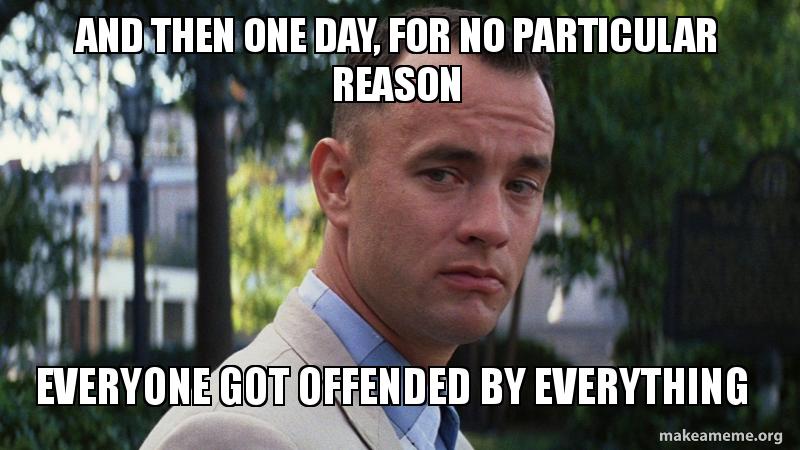
We live in a world where people are being trained to be offended. It appears we live in a time when it’s nearly heroic for people to point out the offenses of another. Maybe this is because we’ve more recently supported social approaches that promote sensitivity, which appears to have escalated into hypersensitivity. Men need to learn the virtue of being sensitive.

However, I wonder if this has led to a culture of men who are over-sensitive in fear of being attacked? I know some men who feel they are on the verge of being attacked for being born male. Which raises the question:

Have we become so fearful of offenses and offending others that we have lost our offense?

Let me be clear; there’s nothing masculine or Godly about being offensive in what we say or how we say it. Sexual innuendos, lewd joking, perverse gestures, or even a “hint” of an immoral action is not appropriate or honoring for a man of God. However, this does not mean we need to forgo some offense. By offense, I mean “taking assertive and positive action.” Offensive action is when we develop an organized and forceful campaign to achieve something. In this culture of growing over-sensitivity, too many men give way to fear that perpetuates more fear. It’s a fear of taking action due to concern about hypersensitive responses. This concern can result in living life overly cautious, hesitant, and indifferent because of undercurrents and trends that have endorsed and reward a culture of fear and passivity. Resultantly, we end up training ourselves to respond defensively or not at all. This defensive strategy leads to tragic results in a man’s life when it continues for too long or when we fail to act offensively. In addition, when emotions like guilt and shame reinforce our inaction, we remain enslaved to non-action. In the Bible, we see tragic examples of this repeatedly; men who were defensively inactive when they should have been actively offensive.

Son, never miss an opportunity for greatness by being overly cautious or supporting any system that does. Sometimes you need some offensive—in word and deed. But do not fail to be sensitive, as every situation does not dictate offensive responses.

My quick list below is a compilation of two things with each point. First, there are activities that you should stop doing that prevent offensive action. Second, you must assume a corresponding movement that is appropriately offensive. I have made mistakes in these areas along the way, and in some other areas, I still make mistakes. Think of this list as being similar to offensive strikes in a sport. They are strategies for bringing the ball forward that move us from being defensive to being optimistically offensive.

My goal is for you to be a greater man than I. If you take action, even with a handful of these suggestions, you should experience tremendous results in your life.

ONE | Reconciliation

Stop giving excuses for the times that you have harmed others with your words or actions; be offensive, and seek forgiveness from others. On numerous occasions, I have failed to reconcile relational issues. Explaining, blaming, and deflecting are defensive strategies. They are not offensive. However, reconciliation is an offensive move.

TWO | Sin

Stop hiding sin. Be offensive by taking action that diminishes the power of sin. Confession, repentance, and accountability work against our desire to protect wrongdoing; rather, they bring it into the open. There are sins that I embraced for too long because I chose to conceal them.

THREE | Leadership

Stop waiting for your leadership moment; it may not come. Choose to be on the offensive and seize the leadership moments before you. There is always a leadership void waiting to be filled. I have made the mistake of thinking that I needed to be invited to a leadership table to be a leader, and this faulty thinking. Influence is leadership, and you have opportunities for influence right in front of you, right now—lead into them.

FOUR | Speaking Up

Stop being quiet when you see injustice. Be offensive and discover the power of speaking the truth in love. I have made the mistake of turning a blind eye to injustices happening right before me. While their action was wrong, my inaction was worse.

FIVE | Transparency

Stop repressing your feelings, passion, and ideas; this can turn into aggression or depression. Be offensive by being appropriately transparent. Keeping your feelings to yourself will stunt your emotional growth and delay your relational maturity.

SIX | Opportunity

Stop complaining about not getting opportunities. Be offensive and create an opportunity where there is none. I have made this mistake, and it causes us to embrace a victim mentality.

SEVEN | Saying Yes

Stop saying “no”; be offensive and say “yes” to more new opportunities. I have missed a few fun opportunities because of this.

EIGHT | Saying No

Stop saying “yes” to everything, be offensive and say “no” to the right things. Make a good decision against yourself. I have said yes to way too many things and found out I could not keep all of the commitments.

NINE | Persistence

Stop wussing out, when something is hard, be offensive by being persistent than others. I have found much of life is learning to be committed longer than others.

TEN | Asking For Help

Stop aimlessness. When you don’t know something, be offensive, and ask for help. Men make the mistake of living in hidden ignorance because they arrogantly refuse to invite help.

ELEVEN | Women

Stop waiting for the right girl to approach you, be offensive, and approach her. Women like offensively minded men. That’s how your mom and I met. She made a snarky remark to men, and I thought it was attractive, so I turned on the offensive.

TWELVE | Spiritual Habits

Stop believing spiritual maturity happens by accident, be offensive, and build discipline now. Regular prayer, bible reading, worship, and journaling are good habits that will pay off for you down the road. I wish I would have built healthier spiritual habits earlier in my life.

THIRTEEN | Character Flaws

Stop letting that one character problem hold you back; be offensive, and manage your character issues. It takes a while to learn how to handle them effectively. If you start now, it’ll benefit your relationships with respect to play, school, work, dating, marriage, and family. I have made the mistake of maintaining the same character flaw because I never learned how to manage it effectively. This required a lot of reconciliation along the way. Therefore, defeat the need for excessive reconciliation with offensive character adjustments.

FOURTEEN | Vulnerabilities

When are you most vulnerable, be offensive. Cancel that appointment, subscription, event, or meeting. I have made the mistake of staying committed to harmful patterns and destructive relationships for too long. If it makes you vulnerable to sin, act quickly.

FIFTEEN | Accountability

Stop avoiding accountability. Be offensive by inviting other great men into your life who will drive you to be better. The longer you wait to develop these relationships, the further behind you will be in your development as a man and man of God. Men need brothers; never forget this.

In the end, life is not a spectator sport. It also is not intended to be only played defensively. We must engage as men. Be offensive.

I love you, son—Dad.

Vince Miller is an author and speaker to men around the world on topics that include manhood, masculinity, fatherhood, mentorship, and leadership. He has authored 16 different books for men and is hosted on major video platforms like RightNow Media and Faithlife TV. He hosts a weekly podcast, writes weekly articles, and provides daily thoughts from God’s Word all just for men. He is a 27-year ministry veteran and the founder of Resolute a Men’s Ministry Platform that provides bible studies aimed at building better men found at www.beresolute.org