Fitness, Personal Development

Snooze Now, ConQuer Later

I can remember taking ‘power naps’ in college. At very random times of day, I would just lay down for a few minutes between classes. My posse back then often did the same. We’d say, “I need a 10.” It was our code for nap time. Just 10-20 minutes is all that was needed. I remember feeling so much better afterwards. Naps really work. I steal one every now and then these days, but its not my habit. Maybe it should be. A quick glance through history books reveals a long line of influential nappers. Albert Einstein, Leonardo Da Vinci, and Thomas Edison were all known to take naps.

Their decision, it turns out, is backed by science.

Napping and productivity

The benefits of getting enough sleep are widely acknowledged, but why choose naps instead of catching more Zs at night? The simple answer is that it makes the second part of your day as productive as the first. About an hour after waking is considered our most productive time. Even if you consider yourself a night-owl, chances are your cognitive abilities are sharper after some shut-eye. It is more than common sense. It is science.

In a review of the many studies conducted on napping, Dr. Catherine Milner and Dr. Kimberly A. Cote find a host of productivity-related benefits. Napping improves reaction time, psychomotor speed, vigor, and vigilance. In one [study}(https://elibrary.ru/item.asp?id=7466161), participants saw their ability to complete additional tasks improve post-nap and in another, retirees saw improvements in episodic memory, visuospatial abilities, and general cognition. Yet another study on memory found that working-aged people were able to perform recall tasks better after a nap when compared to drinking coffee. The nap doesn’t need to be long: even a six-minute micro-nap improves declarative memory.

Napping and learning

Sleep is known to help consolidate memory and contribute to learning, but some scientists say the same benefits can be reaped from naps. Dr. Sara Mednick looks at how sleep impacts learning. In a 2003 study, she found that a 90-minute snooze is just about as good for learning perceptual skills as a full eight hours. Even better, the power of a nap adds to the learning potential experienced during regular sleeping hours.

Participants who napped in addition to their regular sleep schedule experienced “improvement, such that performance over 24 hours showed as much learning as is normally seen after twice that length of time.” The research suggests that if you’re struggling with complex learning tasks, a nap can help.

Napping and health

We know that getting enough sleep is important for overall health, but there is also evidence that napping, in particular, is a healthy habit. A 2016 study by the European Society of Cardiology compared the health of 386 patients with arterial hypertension to see how napping might impact their health.

Those that took mid-day naps had lower blood pressure and anatomical evidence of less blood pressure related damage. Napping was also associated with fewer medication prescriptions.

The benefits extend into real-world results. In a longitudinal study of over 23,000 healthy people, nappers had a much lower rate of coronary mortality. Those who napped occasionally had a 12% lower coronary mortality rate, while those who napped often had a 37% percent lower rate.

Towards a culture of napping

Napping is becoming popular because it is easier to coordinate than a full eight hours of blissfully uninterrupted shut-eye at night. Work hours are long and time with our families is precious. A twenty-minute nap can be slotted in between meetings or a longer snooze can take place over lunch, leaving free time at home to be spent on hobbies or with loved ones.

In China, public napping is commonplace. “It’s nothing unusual,” Chinese journalist Lorraine Lu writes. “If you get tired, you just put a cushion or pillow on your desk, lay your head on it and rest for 15 minutes.”

Aside from the workplace, subways and even Ikea are fair game. The same is true of several other Asia countries, and the afternoon siesta is a time-honored condition in many Spanish-speaking nations.

Though the United States is yet to catch up, some companies are coming around to the idea of corporate nap time. A 2011 poll found that 34% of respondents were allowed to nap at work and hundreds of sleep pods are popping up in offices, hospitals, and schools around the country.

If you aren’t one of the Americans already taking naps, there is no time like the present.

*credit belongs to Erin Wildermuth and the team at michaelhyatt.com for doing the heavy lifting on this article

Family, Fortitude, Personal Development

Why Am I So Angry?

By Wanda Walborn

Violence levels are on the rise in our nation and world, and the Church is not exempt from its impact. As those who love God, how do we address anger as a natural part of our soul care and then help others diffuse the anger in their lives too? There are many forms of anger, so don’t be too quick to assume that you are not an angry person.

Anger is a strong feeling of displeasure and antagonism aroused by a sense of injury or wrong. Healthy anger can act as a powerful force for producing change in our lives at every level. It can be a gift that signals things are not OK.

What Does the Bible Say About Anger?

There are three types of anger mentioned in Scripture. The first type includes a stewing or festering that brews just below the surface and doesn’t come out. The Greek word for this type of anger is parogismos used in Ephesians 6:4, exhorting fathers to not provoke their children to anger.

The second type of anger occurs when something important to you is threatened or damaged. The Greek word is orgizo used in Ephesians 4:26—“Be angry (orgizo), but do not sin; do not let the sun go down on your anger (parogizo) and give no opportunity to the devil.” Paul is saying to feel the anger but not to sin by refusing to deal with the festering anger below the surface, which gives the devil a place in your life.

The third type of anger is what Galatians 5:20 refers to as “outbursts of anger” or “fits of rage.” The Greek word is thymos, or rage, which passionately erupts and then cools down quickly, whereas the orgizo is indignation that gradually builds and settles in.

Five Signs of Indirect Anger 

Many people don’t think they have a problem with anger but are sarcastic, passive aggressive, numb, depressed, or apathetic. Each of these expressions is an indication of indirect anger.

1. Sarcasm

The word sarcasm means “tearing of flesh.” It is intended to cut a person but is covered with a façade of humor.

2. Passive aggression

Passive-aggressive people pretend everything is fine. Then they say things to others, often acting like a victim, to get other people to confront or speak for them, because they can’t approach the person with whom they have a problem. This type of manipulation is calculated and driven by anger.

3. Depression

Depressed people turn their anger inward rather than choosing to express it outwardly. In an attempt to keep the peace, they push down all negative feelings to avoid hurting the people around them.

4. Numbness

People who feel numb have shut down emotionally to survive. Long-term chaotic or abusive situations cause them to close off emotionally to cope. They no longer feel joy or pain. They live in a constant state of numbness, and their anger has become frozen.

5. Apathy

Apathy is a sign that passion and hope are gone. Not caring is the only way a hurting person endures the pain. Apathy is a logical conclusion to an emotional issue. Rather than caring and feeling continual hurt, fear, or powerlessness, a person chooses not to care so he or she can function in everyday life.

angry_mom

Imperfect Parent

In 1992 I became pregnant with our fourth child. My anger toward the other three children surpassed the usual irritations or annoyances of typical childish behavior, and I found myself overreacting to almost everything they did.

If they spilled their drinks at the table, I went into a rage. If they started whining at the grocery store, I would take them into the bathroom or car and spank them. They were just tired and needed compassion, but what they got was frustration and an anger that forced them into unhealthy obedience. I felt disrespected, humiliated, and exposed as a bad mother because they wouldn’t listen to me, and I used my power to make them pay.

As I look back now, I realize I felt shame over their behavior. It makes no sense that I expected an 18-month-old, 2-year-old, and 4-year-old who were tired and hungry to handle a long day that ended at the grocery store without complaint. But I did. My parenting revolved around what other people would think and not about what my children needed.

This feeling of shame intimidated me into silence, and it wasn’t until I heard a sermon at church that it was OK not to be OK that I felt a dam burst inside of me. I finally determined to be honest about my feelings and seek the help I needed.

When I told my husband about my over-the-top behavior toward our children, he initially passed my anger off as just a reaction to a bad day. I continued to confess to him my actions toward the children when he wasn’t around to show him how bad it really was. Thankfully, he didn’t respond with more shame but encouraged me to talk with our senior pastor (the one who preached the sermon about not being OK), and I began to meet with him and his wife for the next four months to deal with the root of my anger instead of the symptoms.

The interesting part of the story is that my husband was the associate pastor of the same church. I was a pastor’s wife and treated my children that way. How shameful! I believed the lie that I should be perfect as the pastor’s wife; therefore, my children should be perfect too.

anger.is_.danger

What’s Under the Anger?

During my prayer counseling sessions, I learned of six emotional causes underlying anger. Anger is what presents itself to others, but the primary emotion is underneath the anger. Understanding these six causes helped me identify the hurt and deal with it.

1. You’re afraid.

Fear can be a strong emotion causing people to feel weak, vulnerable, and powerless, so they rise up in anger to push people away and regain a sense of control. The rush of adrenaline that accompanies anger makes a person feel strong and hides the hidden terror.

2. Your opinion is invalidated.

Everyone wants to be heard whether in a business meeting or at the dinner table. A person’s opinion is simply his or her viewpoint on a topic. To criticize someone’s viewpoint or, worse yet, ignore the person completely, can cause anger. This is often seen in autocratic homes where one parent is always right and children aren’t allowed to have different opinions.

3. Your way is blocked.

This attitude is where road rage stems from—“Get out of my way!” Whether a person’s car is cut off on the freeway, or the budget is cut dissolving the business plan, or a 2-year-old is told no, anger results. It is probably the most volatile of all the underlying causes because it erupts spontaneously.

4. You’re hurt.

When a person is hurt, the offense is either turned inward, leading to despair or depression, or turned outward, leading to anger and bitterness. When turned inward, the person seeks to contain the anger by taking it out on him/herself, and self-rejection and self-hatred results. Turning the hurt outward can lead to blame and seeking revenge toward the person who hurt you. The healthy response to hurt is to feel the sadness, loss, and pain of the wounding.

5. Your personhood is attacked.

Name calling and inappropriate comments about your gender, ethnicity, sexuality, or beliefs fit this category. Oftentimes, these comments are made sarcastically or with a joking tone to get a laugh. Outwardly people might smile or play along, but inwardly the very core of the person has been touched, and it hurts.

6. Your expectations are unmet.

The angry person flies off the handle because of an unfulfilled expectation that is never spoken to the person receiving the anger. The angry person assumes the expectation is obvious, so he or she doesn’t need to communicate it directly. It should just be known. This happens in any relationship with assumptions and poor communication.

Anger leaves a wake of pain. The next time you get angry, pause for a moment and sift through these six areas to identify the underlying cause of your anger. It can help you communicate clearly and avoid many arguments and disagreements in your relationships.

How Do I Get Rid of My Anger?

We can’t rid ourselves of anger because it is an emotion; however, we can learn to appropriately deal with the real issue underlying the anger so it doesn’t fester or spew in unhealthy ways to hurt people around us. Here are five ways to self–check your anger level for your personal soul care.

1. Acknowledge the way in which anger generally surfaces in your life—aggression, passive-aggressiveness, sarcasm, numbness, apathy, depression, or rage.

2. Ask the Holy Spirit to help you identify the underlying issue as the source: fear, invalidation, blocked goals, woundedness, attacks on your personhood, or unmet expectations.

3. Ask for help so you don’t suffer in silence. Telling a close friend, spouse, or counselor about your anger disarms its power in your mind.

4. Grieve the loss accompanying the pain to process all the feelings surrounding the incident.

5. Choose to forgive the offender. Forgiveness does not always mean reconciliation for those who have hurt you and may not ever involve a conversation with the other person. Rather, forgiveness eliminates bitterness from forming in your heart to torment you and cut off intimacy with God and those you love. Satan is a roaring lion looking for someone to devour. Let us not allow our unresolved anger to be the entry point of our destruction.

It’s been 24 years since I came clean with my husband and began to deal with my anger in a healthy way. I still feel anger, but it doesn’t control me as it once did. You too can be free from anger’s grip. Go beneath it and diffuse it. 

faith, Family, Fortitude, Personal Development

How to Stop Worrying

worry

I recently woke up inspired to write the following journal entry. I hope it encourages and challenges you as it does me.

Worry says, “God is not big enough.” This is a terrible accusation for the Ultimate Creator of the universe who holds all things in this mighty hand. There is a pride and selfishness in worry that we don’t recognize. When we worry, we assume the burden only for ourselves. No one, not even God, can help us. “I must bear it all alone,” is the message we tell ourselves. Boo-hiss!

You, O Lord have saved us from our sins. Your promises are certain, you never fail. You tell us to cast our cares upon you, to take your light & easy yoke upon us, to trust you in everything, because you love us even more than we could love ourselves.

conquer2

When we worry, it should send a signal to our hearts that there is something to surrender to the Lord. The work of surrender should be our task – not the enduring or solving the thing we worry about. The surrender is the real work though. We must conquer our mind which wars against surrender and favors of our natural carnal survival instinct.

To be clear, surrender is not “giving up.” Not even close. I think of it more like a transfer of burden from me to God. Don’t we all want some help with our burdens?

worry 2

Worry is often an unreasonable fear, in my opinion. Fear of the unknown, fear of the future. Remember being a kid when your parents made you try something new? It was scary at first, but since you trust them, you eventually go for it. Inevitably, it turns out great. So much fun, so much easier, so good, so tasty, etc. As parents we do the same for our kids too. We want the best for them. We want them to experience all that is good and enjoyable in the world. So why do we not trust God to do even more for us? Have we forgotten that God is our Heavenly Father and we are his beloved children?

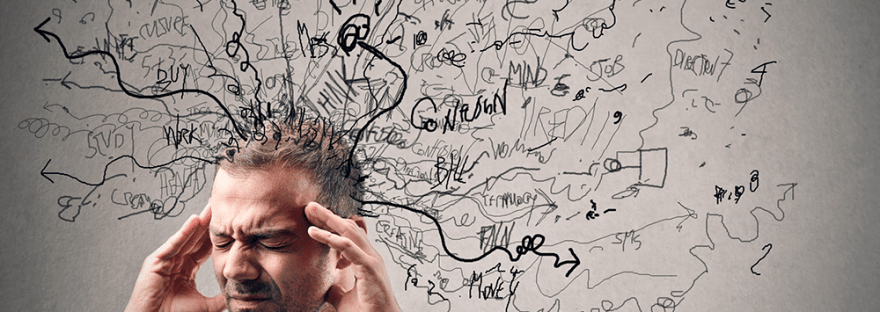
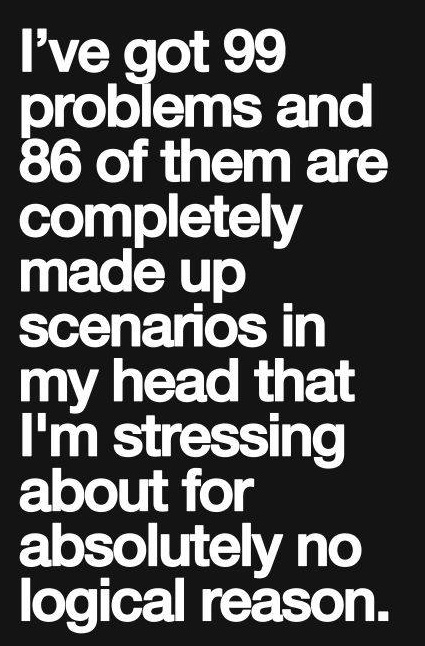
Also, have you noticed how many times we worry over things that NEVER happen? We worry about the “what ifs” and we come up with some crazy ones, don’t we? Well, stop it. God wants the best for us and he actually knows the future. We should trust God and surrender our worry to his capable hands. #preachingtomyself

The antidote to worry is trust. Trust is only as good as the object for which the trust is placed. We have a choice to make in the face of our worry. Will we choose to trust ourselves and our lousy capacity to predict the future, or will we trust in God who knows everything and is in control of everything?

I understand that trusting in God is not easy. Denying ourselves is the opposite of our human nature. I often wrestle with surrendering to God. I’m convinced that my way is better. After I fall on my face, I realize that God’s way is always best. It might be hard to deny myself and trust God, but it is always best. Honestly, it is such a great relief to leave the “worrisome things” to God. It’s the best stress reliever.

FAST FORWARD 2 WEEKS

God has a funny way of making these type of life lessons come to life in real time for me. As I’m preparing this article, I get tested with some pretty stressful work situations. Instead of practicing what I’m writing about, I revert to my old nature and experience high stress with all its symptoms – exhaustion, irritability, upset stomach, loss of appetite and stress eating at the same time (yeah, that really happens to me), anger, depression, etc. Yuck. After a few days, I calmed down enough to realize what I was doing and made a mental adjustment. I transferred my burden to the Lord. Just as he promises, everything changed in my outlook. The circumstances haven’t changed, but my attitude and mindset did. Praise the Lord! The chains of the stress are gone and I am free to be my very best through the circumstances. #workinprogress #underconstruction

For some of you, these concepts about God may seem foreign or even offensive to you. You may have ways to cope with your worries that don’t involve God, and would say I’m weak or crazy. Maybe so. But I’m willing to bet that someday your way will not work, and whenever your Jedi mind trick or destructive behavior you try leaves you still looking for answers, remember this: The truth is that God loves you more than you could ever know, and His great desire is for you to know Him and experience all the freedom, peace, and good that comes with a personal relationship with God. I would love to talk with you about how you can enjoy freedom from worry through a personal relationship with the God of the universe.

     “Humble yourselves, therefore, under God’s mighty hand, that he may lift you up in due          time. Cast all your anxiety on him because he cares for you.” – 1 Peter 5:6-7

Fortitude, Personal Development

Going for the Bronze Medal

having-an-i-am-third-marriage

The Winter Olympic Games is interesting whether you appreciate figure skating and curling or not. Have you been watching? There are so many great stories of people beating all odds to fulfill their Olympic dream. Hearing the athletes explain the sacrifices made and injuries overcome to be the very best at the one specific event for the Olympic games is inspiring.

For most athletes competing in the games, their dream is to compete at the highest level of their sport and they don’t really expect to win. For others though, the pressure to win gold is astronomical. Can you imagine having worked your entire life, literally, for one event – one race at a specific time and place and you know you must perform better than you’ve ever done before for a chance at gold? Your family, friends, and your entire country (it feels) are counting on you to win. Phew!

In a similar way though, we are all trying to win gold. We live in a world that covets, pursues, and praises achievement above pretty much everything else. Think about it. Everyone has the “gold medal” they must achieve. For some it’s financial freedom or being rich. For others it’s the perfect body, perfect mate, perfect house, perfect kids. Maybe it’s the dream job, dream experience, or dream retirement. Maybe it’s just having your way or being happy – whatever that means to you. For everyone, there is that thing. The personal gold medal. What’s yours?

In my personal study I’ve come to realize that all these typical “gold medals” we have for ourselves are ultimately unsatisfying. There are stories of Olympians who sell their medals, just as there are stories of people like you and me who work themselves sick to achieve their gold medal only to find out it wasn’t so great after all and they are left feeling discouraged and disappointed. Can you relate?

I think there is a better way. What if we went for the bronze medal – 3rd place, instead of gold? Try to follow me here. The pursuit of gold is very selfish. Yes, Olympians are racing for their country and maybe for a special cause or person, but ultimately it’s a selfish pursuit. All our “gold medal” pursuits are equally selfish. And they leave us wanting more. What if we didn’t live for ourselves and the “looking out for #1” and “it’s all about me” mindset? Gasp! How could we?!?

Ever heard of the I Am Second movement? It basically says that we should live for God, submitting ourselves to his purposes, his ways and by doing so we reap the benefits of living a fully satisfied life. Thousands of people including many celebrities are on board. They put themselves second instead of first. Silver instead of gold. If you are a Christian, this is the way we should live. God first, me second.

But we can take it a step further, which brings us to the point of this blog. By pursuing the bronze medal, 3rd place, we are saying God first, others second, then me. Ka-Pow!

Equation for you math wizards: Love God + Love Others = Fully Satisfied Life

Imagine if we applied this to our marriages… instead of an “I’m Number One” mindset, we chose to love our spouses with an “I am third” attitude… first and foremost comes our Savior, than you (my husband/my wife) whom I am called to joyfully serve, and then me. Oh, to be sure, there is a time and place for appropriate self-care, but more often than not, things are a bit out of balance in that department. #preachingtomyself

“Just as selfishness is a sure marriage killer, an attitude of service and sacrifice—the “I’m Third” philosophy—is an indisputable marriage builder.” –Dr. James Dobson

This is servant leadership, and it’s the best way to live. Amen? Can you imagine what marriage would be like if the heart’s desire of both partners was to joyfully serve the other? How might our work relationships improve? Dang, if everyone lived this way think what the Facebook news feed would look like!

Part of my personal journey is learning how to live this out. I’ve got a long way to go for sure, but I’ve been around enough to know my gold medals do not satisfy. “I’m Third” is unconventional, counter cultural, and radical – which is why I’m betting it works. Seems like this kind of mindset shift is just what the world needs right about now, don’t you think?

Fortitude, Personal Development

How To Break A Bad Habit

how-to-break-bad-habits-778x1024

If you set some significant goals this year, you might be feeling the challenge of sticking with them already. That’s especially true if you have a BAD HABIT holding you back.

Deeply ingrained habits are hard to break—but not impossible. There are a few steps you can take to break that bad habit, which I will explain now. Fasten your seat belts! This could change your life. 

Step 1. Admit the Challenge

Half the power of habits is our LACK OF AWARENESS. When we do become aware of a habit working against us, we have to ADMIT it’s inhibiting our progress. It doesn’t have to be life-threatening to be serious. It simply has to be standing in the way of your goals.

Most of us don’t take the time to sit still and THINK about such things. While I highly recommend some daily quiet time to focus your mind and take a regular sober self-assessment, start with remembering WHY you set the goal in the first place. Then think about what is holding you back. Write it down. Say this to yourself right now, with as much conviction as you can muster: “I have a problem with [fill in the blank].”

The good news is that whatever the impediment, you’re not alone. Other people have faced it, too. And from their success you can take courage that you can overcome it as well. All it takes is determination, a plan, and a trustworthy friend.

Step 2. Understand How Habits Work

Once the bad habit is identified, we need to understand how it works in order to break its power over us. A habit has three components:

The TRIGGER. This is often something we see with our eyes. But it can involve the rest of our senses as well.

The BEHAVIOR. Normally, we think of the behavior as the habit itself: overeating, procrastination, whatever. But it’s only our response to the trigger.

The REWARD. More than the physical sensation we experience, this is the dopamine hit the behavior produces.

The trick is that we begin experiencing the reward at the point of the trigger—even before we act. Your brain gives you a dopamine hit every time your eyes encounter something you associate with the reward. It’s like a feel-good credit card. The fun comes now; the bill comes later.

This where we get tripped up. Because it’s our human nature to look at, think about, and pay attention to is whatever we’ve done in the past that was immediately rewarded, we have to practice delayed gratification. Believe in your heart that the future reward is far greater than the instant & temporary reward. 

So think about the habit you want to break. Can you identify the trigger? This is where the sober self-assessment comes in handy. Everybody struggles with a warped view of themselves. Surprised? Most of us think too low of ourselves (I’m not good enough, not qualified, not worthy, etc.) Newsflash: YOU ARE A MASTERPIECE!

You were made for more than the bad habits and their empty and temporary rewards. An accurate view of yourself gives you the key to discovering your life purpose which will go a long way to helping you achieve your goals. Take encouragement from this verse from my favorite book: Ephesians 2:10 – “For we are God’s workmanship, created in Christ Jesus for good works, which God prepared beforehand so that we would walk in them.”

You’ve admitted you have a bad habit you want to change, you understand a bit more how habits work and hopefully have identified the trigger, and hopefully you’ve taken a sober self-assessment. Next let’s address MINDSET in clarifying what you want (the goal or good habit).

habits

Step 3. Flip the Switch

Have you ever tried really hard to NOT think about the thing you don’t want to (the trigger to the bad habit) only to find you are even MORE drawn to it? Yeah, me too. It’s normal. Thinking about defeating the bad habit will often send you right into the thing you are trying to avoid. The ‘trick’ is to REPLACE the thoughts with something else. This takes some practice, but it works.

It’s creating a new association for the trigger. You likely can’t make the trigger go away, so you have to relate the trigger to something positive instead. For example, say my bad habit is mindless eating. I always seem to be eating when I watch TV. Instead of not watching TV, I need to recognize that doing so is a trigger for me to eat snacks. So instead I need to consciously think of a new association when watching TV. Maybe I’ll chew gum, or drink water instead. Maybe I can do push-ups during commercials! That might also help minimize TV time!

Give your brain a new focus. In my example, the behavior was to eat snacks, but now you chew gum or drink water. Similar behavior, but much healthier. The point is to find something you can DO to change your focus to something different and better.

Another key to the mindset part of breaking bad habits is addressing your WHY. I talk/ write about this often because it is so powerful and effective to personal achievement. You need to have a personal, compelling reason(s) WHY you want to change. It’s not enough to say you want to quit smoking because it is bad for you. Why is it bad for YOU? What might quitting mean to your future self? How might quitting smoking affect your family? What will you do with the money you save from not buying smokes? Ask yourself these types of questions until you find the reason that truly motivates you to do this hard thing of breaking the bad habit. Go to this reason when you struggle, when you are tempted, when it gets really hard to resist. Your WHY will help keep you motivated.

If you’ve made it with me this far, I have good news. This is the home stretch. Just a couple more points to digest and you are on your way to slaying your bad habits for good! 

Let me be the first to agree with you that it is EASY to read (and write) about breaking bad habits. It’s really hard to actually DO it. I know. I share this info to encourage you, but also for my own good. I’m preaching to myself here.

By now you understand more about bad habits than you probably wanted, and maybe you’ve had some success in your journey to kick it already – which is awesome! 

But how do you keep up the good work over the long term? Thanks for asking. 

I have a couple ideas:

Track Your Progress. Not surprisingly, there are several free apps you can get to help you trade your bad habits for good ones. I prefer a journal and/ or written checklist or calendar to help me stay the course. Either way, it’s important to have a way to record your progress. It helps hold you accountable, serves as a reminder, and gives you a record of your journey so you can look back on it.

Tell a friend. This is REALLY important. Yep, it might be uncomfortable to share what you are doing, but a couple things happen when you get an accountability partner. One, it confirms to you that you are serious about replacing a bad habit. And two, you have a trusted friend who cares about you and will be there for you when times get tough. It’s really hard to replace bad habits all alone. Get someone to help you be accountable and maybe invite them to do it with you.

Never give up. Transformation won’t happen overnight. You must persevere through hard times. Keep an eye on the prize. Remember your WHY and how great it will be to have freedom from the “old you” or the bad habit that has kept you down for so long. When you hit a setback in your journey, remember that you don’t have to start all over. Just get back on track from where you left off. You can do it!

528739481-good-habits

Humans are bent toward addiction, to habit, routine, call it what you want. The key is to make sure that you are “addicted” to good habits – the ones that lead to the results you want and help you to take care of what is really important to you.

If this information is helpful or encouraging to you, would you please leave a comment? Feedback helps me to know I’m connecting with you and providing value to your life.