Family, Fortitude

ConQuer Your Past Pains

If you’ve been ALIVE for any length of time, then you have pains. I’m talking about emotional pain. We all carry some “baggage” from our past – things we’ve said and done, or the things that others have said or done to us. It hurts bad. Or maybe we’ve become numb to the pain and we just kind of exist with it, like a prisoner on a life sentence with no chance for parole. Such pains are impossible to forget and seemingly impossible to get past. There is a desire to “get over it,” move on, and no longer allow the past pain to affect our attitude, outlook, and behavior today, but it’s hard. Are you nodding your head with me?

So how do you get over the past? The million dollar question has a pretty simple answer. Simple, but not easy. The first step is to realize what you’re REALLY trying to accomplish. What does it REALLY mean to get over the past?

You can’t change what happened. There’s no time machine that can send you back to relive the past. What’s done is done.

Now don’t get me wrong. I’m not saying that your situation is hopeless. What I’m saying is that you first have to be clear about what you can and cannot change. You CAN get over your past (as I’ll explain). But you can NOT change events that already occurred.

The good news is that you don’t have to change the past in order to get over it. What you have to change is the MEANING of the past.

Think for a moment. Was there ever a time in your life when something horrible happened and you thought, “Why is this happening to me?” But then a few years later you looked back and you could answer that question. In retrospect, you understood why it happened. At first, it seemed like the world was caving in. Later, it all made sense.

In fact, very often, we eventually realize that bad times are part of a process that leads to something good!

It’s the events that FOLLOW bad times that determine the ultimate meaning of those times. In other words, it’s your future that determines your past; not the other way around. And since YOU are in charge of your future, then YOU determine the meaning of your past.

It’s interesting to think about this in the context of an age-old question: Do we have free choice or is everything predetermined? The answer is YES. Everything is predetermined AND we have free choice.

It’s like when you play a card game. You get dealt a hand. And you have no control over the cards you get dealt. It’s predetermined.

But you also get to play that hand. You also have free choice.

Ultimately, it’s the COMBINATION of the hand you’re dealt and the way you play it that determines the outcome. And it’s the outcome that shapes your view of the original hand you were dealt.

God deals you a hand. There’s nothing you can do to change that. But you get to play that hand. You get to respond to the events of your life. And it’s your response, your actions in the future, which determine the meaning of the events in your past.

So how do you get over the past? You don’t have to get over the past. The past is over! What’s important is the MEANING the past has for you NOW. And the MEANING of your past is determined by your actions in the future.

The people who have the best lives/ marriages/ relationships are people who went through hell in some way. They “got over” their past because they used it as a catalyst to IMPROVE their situation. In other words, the painful events inspired them to change themselves.

If you make the right moves, you will come to view certain events as birth pains that led to a new AND IMPROVED life/ marriage/ relationship. THAT’S how you “get over” the past.

It’s strange how life works sometimes, but if you play your hand right, your hurts become part of your healing. And, in fact, when it comes to relationships, it’s usually bad times that awaken people to search for new ways.

Thanks to Mort Fertel for doing the heavy lifting on this article. I’m grateful for his insight on the illustration about the cards we are dealt.

faith, Family, Personal Development

You Are Not A Failure | Letter To My Son

I’m sharing a series of “letters” originally written by Vince Miller. I regard Vince as a trusted resource for wisdom and insight on faith and family especially as it pertains to men and fathers. His bio is at the bottom of the post. Look him up. What follows is his work entirely. Vince communicates the messages I want my son to hear in a far more clear and concise way than I could ever say. Consider using these as conversation starters. I encourage you to share these letters with the important men in your life.

Failure isn’t fatal, but failure to change might be.

John Wooden

You build on failure. You use it as a stepping stone. Close the door on the past. You don’t try to forget the mistakes, but you don’t dwell on it. You don’t let it have any of your energy, or any of your time, or any of your space.

Johnny Cash

Son, you will fail; this happens. But this does not mean you are a failure. The assumption that “you are a failure” is a powerful and defeating thought that can paralyze a man. It’s a recording that sometimes plays in the mind that men struggle to silence. It’s one of the five powerful voices I believe all men hear (if you remember my previous letter on this subject). I think this is partially because many men falsely believe that to be a man, we must “man-up” by appearing strong, confident, and courageous, even when we feel weak, confused, and lost. This false belief thus devastates men in moments of failure. Which is why when we fail, we sometimes believe we are a failure.

Please note, experiencing failure and feeling the impact is a good thing for all men. The last thing we need is insensitivity to this pain. Appropriate levels of pain, in the form of regret and guilt, are good for all men. And why? Well, because pain is an indication of pending danger. Insensitivity to pain will only lead to callousness and other, more harmful decisions to self and others. Yet, inflicting needless suffering on ourselves by allowing a failure to convince us that we are a failure is also not helpful. While you and I are both sinners, we are redeemed by Christ and given a new identity as sons of God. Your identity is marked permanently not by your failure but by His grace, and your identity is forever changed. Accepting this is sometimes too good to be true, so it’s easy for men to go back to the perpetual failure of the former life and the old yoke of slavery.

..and do not submit again to a yoke of slavery.”

Galatians 5:1

As men, we live in this great tension, and here is how I describe it. First, our former identity is marked entirely by sin. In fact, the Bible calls us “sinners.” Yes, God’s Word is clear; our identities before Christ are marked by perpetual sin. “For all have sinned and fall short of the glory of God.” (Romans 3:23) So in one sense, and at one time, all men were perpetual failures. We were, (notice the use of the past tense of the verb,) a complete and total failure.

Second, yet we also know that “the free gift of God is eternal life in Christ Jesus our Lord.” (Romans 6:23) And this gift results in us having the opportunity to believe in his name, giving us “the right to become children of God.” (John 1:12) Jesus also says, “No longer do I call you servants, for the servant does not know what his master is doing; but I have called you friends, for all that I have heard from my Father I have made known to you.” (John 15:15) So your identity has changed from sinner to son, from failure to friend.

Third, we must choose to live in this new identity as sons and friends. Yet we know, the voice of the past will call to us. In moments of failure, we will be tempted to listen to the voice of the former man and the old identity. It will call to you and say, “I am a failure.” Its call will be compelling and clear because only you will hear its voice within your mind. This voice will present evidence to you from your own life to support your incorrect perceptions. Do not doubt my words, son, the courtroom of your mind will offer a convincing case. And yet, the tension between a former identity and your new identity has a present reality. 

For our sake he made him to be sin who knew no sin, so that in him we might become the righteousness of God.

2 Corinthians 5:21

Think about that and ponder on it for a second—you are the “righteousness of God.” Let that set in. That’s your identity. You are not a failure. You are instead a son of righteousness

So the next time you fail your response should be to understand the pain, accept it, learn from it, and then before the failure begins to poison your thinking about your identity, bring to mind that Scripture says, you a “son of righteousness” saved by God’s grace. You are not a failure. Do not let that thought preach to you, rather let the truth preach to you. And why should you do this? Because the most important thought about you is not what others think about you, what you think about you, but what God thinks about you. This is the only thought that matters.

As you learn to do this, you will discover something about the fails in your life—that God is up to something. That he is working out something magnificent in you every time you fail. He is teaching you to trust more and more in him. Notice what the apostle Paul says about his perpetual failing.

But [God] said to me, “My grace is sufficient for you, for my power is made perfect in weakness.” Therefore I will boast all the more gladly of my weaknesses, so that the power of Christ may rest upon me. For the sake of Christ, then, I am content with weaknesses, insults, hardships, persecutions, and calamities. For when I am weak, then I am strong. – 2 Corinthians 12:9-10

Do you see it? Failure gives way to opportunity—the opportunity to trust less in self and more in God. With failure, we encounter grace, discover perfect power, contentment, and the paradox of strength in weakness. For the man who is strong in himself is not strong; he is only pretending to be strong. Instead, the man who embraces his weakness (through failure) is genuinely strong because he is strong in God.

I love you son. Remember you are not a failure. Dad.

Vince Miller is an author and speaker to men around the world on topics that include manhood, masculinity, fatherhood, mentorship, and leadership. He has authored 18 different books for men and is hosted on major video platforms like RightNow Media and Faithlife TV. He hosts a weekly podcast, writes weekly articles, and provides daily thoughts from God’s Word all just for men. He is a 27-year ministry veteran and the founder of Resolute a Men’s Ministry Platform that provides bible studies aimed at building better men found at www.beresolute.org. See his latest book and small group study Called to Act: 5 Uncomplicated Disciplines for Men.

Fortitude, Personal Development, Uncategorized

Quit To Win – Part 2

What follows is Part 2 in the I Quit series. If you missed Part 1, you can read it HERE.

Instead of striving so hard to never quit, never give up, and knock myself out to get what I believe I want, maybe I should just quit. Yeah, that’s right. Sometimes you need to quit to win at life. I’ll explain.

Striving to be a better human and quitting are two sides of the same coin. Certainly there are things we can and must do to live to our full potential, so don’t get me wrong. Self-control, self-discipline, loving well, doing what is right even when it’s hard, are all very necessary beliefs/ behaviors/ habits we need to work on. But there are also many things we must quit if we are to be the person God has made us to be and to live with the inner peace, joy, and fulfillment we all seek.

Following is another example of something to quit that has the power to make the world a better place. This is me preaching to myself. I hope this helps you as well.

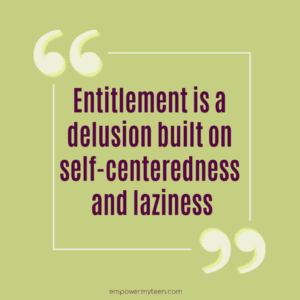
I quit the attitude of entitlement

In our culture of the “easy button” with everything made to be fast, easy, convenient, and cheap, it seems we must battle like never before to avoid an attitude of entitlement. No one wants to admit they are entitled, but we behave as though we are. We are getting soft. We expect things to go our way, for others to be agreeable to us, and that somehow life owes us – someone owes us anyway. I deserve, I need, gimme, gimme, gimme.

Well, guess what? Life is hard. The longer I travel this journey of life, the more I realize that believing I deserve anything, or that life should be easier, or that others should think and behave the way I want them to, is counterproductive and foolish. The truth is I’m responsible for my life, which means I’m also to blame for the frustrations I live with. Even when things go “bad” – and they surely will – I still have control over how I choose to respond.

Brief rabbit trail here. Have you ever thought about the root of most of your frustrations? If you are honest with yourself, it is very likely because in that moment, in that situation, you are not getting what you want. Let’s practice exercising self-control and emotional intelligence to realize that we are not entitled to our desires and preferences all the time. I digress.

Entitlement is a disease and it’s highly contagious. I know people sick with this attitude of entitlement and they are not fun to be around. They are highly selfish, often complaining, rarely happy, and unaware of their sickness. Further, such people want to spread their sickness with anyone close enough to hear them.  Entitlement can also be caught without personal contact by way of social media, TV, movies, books, news, etc. I’m telling you, the sickness of entitlement is dangerous.

What is the remedy? Personal responsibility, plain and simple. When I fully own my choices (and the consequences of my choices), I have greatly increased control over what I get in life than the person ill with entitlement. When I own my mistakes, learn from them, and forgive myself for them, I grow and become a better human. Blaming others destroys the growth opportunity that mistakes and failures provide. The benefits of personal responsibility make living with the sickness of entitlement seem especially lame, so I quit my attitude of entitlement by pursuing increased personal responsibility in every area of my life.

Fitness

Daily Walks Are Healthier Than You Think

The COVID-19 pandemic has people walking more than ever. Are you among those who can’t wait to get out for a walk in the neighborhood for some fresh air? Maybe the “shelter in place” order we’ve endured in recent months has you going stir crazy, so a walk is your way to just get out of the house. Well, guess what? You are doing more good for yourself than meets the eye. Read on to learn about some surprising benefits to your daily walk and let them inspire you to keep up the good work after the COVID-19 restrictions are lifted.

1. MOOD BOOSTER

Sometimes all you need is a little fresh air to change your attitude. We don’t need science to tell us that taking a daily walk can lift your mood even when we are feeling down. Just being outside has some magical mood improving powers. I can testify that being out for a walk helps decrease depression and can put emotions in an overall happier place.

2. GOOD BONES

As you age, bone density can decrease and make an injury from a fall much more severe. Believe it or not, walking can improve bone density and stop the loss of bone mass that is often associated with osteoporosis. Walking for up to 40 minutes a day may also help to reduce hip fractures and other injuries related to falls. This is common sense, really. The science of, “if you don’t use it, you lose it” applies here. We must keep moving as we age to stay strong and limber. Walking is an excellent low impact way to do that.

3. HEART HEALTH

Whether it’s hypertension or cardiovascular health, walking has been shown to have positive effects on the overall health of your heart. A consistent walking routine can help lower your blood pressure and prevent heart disease – two very common ailments for the 40 somethings on up. And while you’ll still want to consult a doctor before beginning an exercise routine, for anyone with existing heart conditions, walking can be a safer alternative to more vigorous forms of exercise.

4. BURN FAT

Losing weight and keeping it off is a little more complex than simply burning calories. In addition to healthy eating, finding ways to boost your metabolism can help reduce body fat. Walking has been shown to keep your internal furnace running hot so you can burn more calories during the day when you’re not exercising. The key is upping the pace. Try including 1–2 minutes of power walking every five minutes during your daily walk to get started, or walk on hilly or uneven terrain.

5. BABY STEPS

Since walking is considered safe on the joints and a low-impact activity, beginning a walking program before you start running or other forms of high-intensity exercise can help. After you become more comfortable with a fitness walking routine, try a walk-run program to ease yourself into running for longer distances.

6. RECOVERY AID

Even if you are accustomed to higher intensity workouts and are relatively fit, your body still needs time to rest and recover between workouts. Because walking is a low-to-moderate intensity exercise that gets the blood flowing and raises the heart rate, it can be an ideal recovery activity in between harder workouts. It can also help ease any joint, back and muscular pain associated with more extreme forms of exercise.

7. MENTAL HEALTH

Many of us have experienced new anxieties and stresses during this crazy time of COVID-19. Getting outside and exercising is an excellent way to clear your mind. Whether you take a short walk around the neighborhood or head to a park or forest, try to be more aware of your body, your surroundings and all that you have to be grateful for. Walking with a loved one helps us feel connected as you talk together, and talking things out loud is a great way to manage stress, discuss new ideas, make plans, etc. Walking alone offers opportunity to refocus your mind, pray, even vent. OK, maybe that’s just me. Anyway, taking this focused time alone or with a loved one while walking can have other positive effects on your health and well-being that go far beyond letting go of the worries of the day.

faith, Family, Fortitude

The 5 Voices All Men Hear | Letters To My Son

The world is in a constant conspiracy against the brave. It’s the age-old struggle: the roar of the crowd on the one side, and the voice of your conscience on the other

Douglas MacArthur

The Secret to Listening to the Right Voice

Son, I think being a man requires tremendous strength and courage. Even more, it requires a keen awareness of where to focus that strength and courage. Understanding this is crucial to your growth and development as a man, leader, and one day, husband and father. In fact, the advice I am about to give you could be some of the most important that I ever give. It took me years to understand what I’m about to tell you, but if you hold on to this lesson, it will aid you all your life.

Five voices are incessantly screaming at men. These five voices, as I call them, are heard several times during a given day. Given the circumstances of that day, certain voices will be louder than others. But these voices have incredible power over men. They have the ability to direct our thoughts, attitudes, and actions. This means they have the potential to lead you toward life and godliness or loss and destruction. If you can grow in awareness when you hear them, identify them, and redirect them, then you will experience great success in this life.

My sheep hear my voice, and I know them, and they follow me.

Jesus in John 10:27

Voice #1 — The Man That I Think I Am

And they said to him, “Grant us to sit, one at your right hand and one at your left, in your glory.”

Mark 10:37

Every man wants to be legendary. We want to hold a trophy, stand on the platform, and be praised by fans on the world’s stage. And some days, you’re going to think you’re a legend but only in your own mind. This insidious thought is a dangerous voice for men to follow. It’s evidence of our deepest arrogance, and it must be addressed before our imminent fall. Pride comes in many forms, but it ultimately plants a thought in our mind, which impacts our beliefs, attitudes, and actions. The result of this is rather ugly and makes us look stupid. I wonder if James and John felt this way when they made the statement above. The only trophy they held on this day was the award for being the “Most Stupid.”

I’m sure you have bumped into a few arrogant guys in life. Men who are masters at their skill, talent, or gift have allowed their mastery to master them. These men are destined for a great fall, so don’t be this man. Avoid the fall by being cautious of the sex appeal of this voice.

Voice #2 — The Man Others Think We Are

And the Pharisees and the scribes grumbled, saying, “This man receives sinners and eats with them.”

Luke 15:2

Yes, it’s true: others have a wonderful plan for our lives. If you haven’t discovered this yet, you soon will. Bosses, coaches, teachers, and friends project a manner of thinking and acting to us or about us. I promise that they will reinforce their voices with Tweets, Snaps, and posts. With or without malicious intent, their propaganda doesn’t always correctly reflect who we are; it’s their perspective. Their view is right to them, whether we like it or not. Yet, we have the choice to listen to this or not.

The truth is, these sound bites from others are often compelling voices that affect men. In the moments when we are emotionally vulnerable, they can be persuasive and leading, but you need to remember that you are not the sum of what others think about you. In fact, their voices may be genuine, but genuinely wrong, and lead you down a path of destruction.

As your identity is forming, the voice of influential friends, coaches, and teachers will be loud to you. You might end up believing that what they say about you is true. Take caution, because this leads to you living up only to what others expect of you—which could be off-course. Many men have chased after this voice, and then run from one voice to the next, and ended up confused and exhausted. Even Jesus ignored these voices when they led down ungodly paths; note the soundbite above from the religious leaders. Don’t follow these ungodly voices or believe what they say about you.

Voice #3 — The Man We Think Others Think We Are

We seemed like grasshoppers in our own eyes, and we looked the same to them.

Numbers 13:33

This voice may appear a little confusing when you first hear it, but stay with me for a minute or two. This voice is the one we hear when we lie down at night, staring at the ceiling. It speaks to us as we reflect on the happenings of the day, considering that occasional failure— it’s the voice of our mind talking to our soul about what others think about us. Unfortunately, this voice has incredible power because it develops thoughts about ourselves in our minds that, combined with emotions, construct systems of belief about who we are.

The voice of “what we think others think” is a deceptive voice because it is both powerful and private. I cannot tell you how many times in my younger years, I lied awake in bed at night with thoughts about myself and what others think about me. These voices disturbed me for years. In bed, many men hear the voice of an unloving father, an unappreciative wife, an unsatisfied boss, an unsupportive coach, and an unreliable friend—and believe that they, the man, are responsible for the voice. Men replay the sounds of these tapes, privately shaming themselves, ruminating only on failure and allowing these voices to control their lives.

Voice #4 — The Man We Actually Are

For I have the desire to do what is right, but not the ability to carry it out.

Romans 7:18

At some point, you are going to come face-to-face with the most challenging voice any man hears: the voice of your sin. Yes, we men inflict harm intentionally or unintentionally, which results in suffering for others. You are already aware of this. But occasionally, you will hear the weightier voice of sin. You will feel sin’s full weight, which is more than just making a mistake or hurting someone else; it’s an offense against God. Some days this voice will be so weighty it will feel overwhelming. It will bring you to your knees so much so that you will see no way out. When this happens, I want you to remember you are not the first to feel this way. Even the apostle Paul felt this way, and he let us know this in the sentence above. While I want to say ignore this voice, this voice is true. Son, we all sin. We screw things up. We make mistakes. We have, indeed, offended God. But it’s not the end of the story. This voice teaches us and motivates us to look for a solution and a better voice, which brings us to the last voice—the one you need to hear.

Voice #5 — The Man God Says We Are

This is my beloved Son, with whom I am well pleased.

Matthew 3:17 – God speaking to Jesus

In the end, there is only one voice that you should hear. One voice to heed. One voice that is true. It’s the voice of God. What God says and says about you is the only truth you should believe. The other sounds we hear are gibberish soundbites in a world that is lost and confused. God’s voice is the only true one. God’s is the only one that matters. It’s God’s voice that spoke you into existence. It’s God’s voice that echoes across time. It’s God’s voice that extends grace, love, mercy, and forgiveness to you when you hear voices that say you don’t deserve it. It’s your Father’s voice that utters the most beautiful sentence you will ever hear, “This is my son [insert your name], with whom I am well pleased.”

Son, I can barely hold back tears in writing this letter to you. It’s God’s voice all men long to hear. Stop chasing the other voices. Shun them. Turn a deaf ear to them. Listen to only one from the God and Father who created you. It’s he you follow, listen only to him. His voice is trustworthy, confident, and dependable.

He was still speaking when, behold, a bright cloud overshadowed them, and a voice from the cloud said, “This is my beloved Son, with whom I am well pleased; listen to him.

Matthew 17:5

Vince Miller is an author and speaker to men around the world on topics that include manhood, masculinity, fatherhood, mentorship, and leadership. He has authored 16 different books for men and is hosted on major video platforms like RightNow Media and Faithlife TV. He hosts a weekly podcast, writes weekly articles, and provides daily thoughts from God’s Word all just for men. He is a 27-year ministry veteran and the founder of Resolute a Men’s Ministry Platform that provides bible studies aimed at building better men found at www.beresolute.org